

cyclized, is known in plants. It is involved in the synthesis of
antibiotic molecules such as flavonoids, furanocoumarins,
aucubin, or cinnamate. These molecules are not generally
regarded as antibiotics and few examples are known in
microorganisms. Aminoglycosides such as kanamycin,
neomycin, and gentamicin are antibiotics containing
aminocyclitol and amino hexoses. Biosynthetic genes of
kanamycin and gentamicin have been described in Streptomyces kanamyceticus (Kharel et al. 2004).
The biosynthesis of peptidoglycan is the target of
antibiotics β-lactam such as penicillin, amoxicillin, carbenicillin, and cephalosporin. The antibiotic molecule
inactivates one of the two active sites of the enzyme
known as penicillin-binding protein (PBP). The protein
possesses transpeptidase and glycosyltransferase activities.
The antibiotics mentioned form a covalent bond with the
ÀOH group of serine in the active site of transpeptidase,
after which it cannot be active anymore. The polymers of
peptidoglycan are no longer connected by peptide bonds
between them, and the structure of peptidoglycan is weakened, which, coupled to the osmotic pressure, can cause lysis
of the cell. The cell can also inactivate antibiotics if it is able
to synthesize a β-lactamase enzyme that can hydrolyze
the antibiotics into a nonactive form. Also some microorganisms such as streptomycetes produce inhibitors of
β-lactamase as clavulanic acid and react synergistically
with other β-lactams (Challis and Hopwood 2003).
Vancomycin is a glycopeptide that inhibits transpeptidation of peptidoglycan covering two D-alanine (D-Ala)
into the ends of the peptide monomers of peptidoglycan,
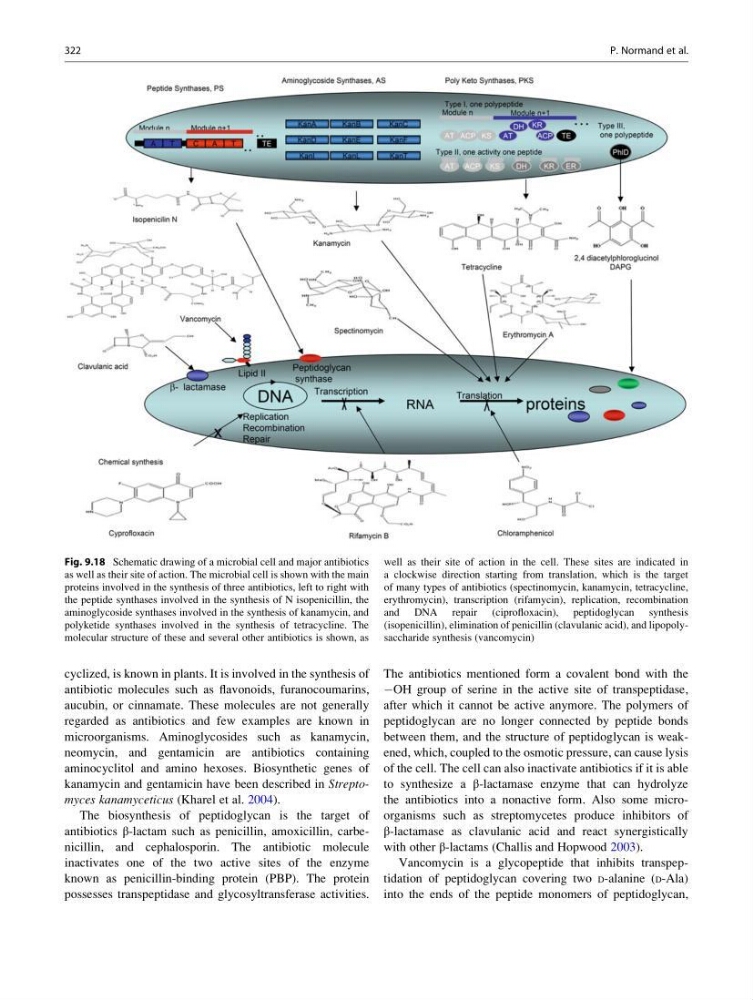
Fig. 9.18 Schematic drawing of a microbial cell and major antibiotics
as well as their site of action. The microbial cell is shown with the main
proteins involved in the synthesis of three antibiotics, left to right with
the peptide synthases involved in the synthesis of N isopenicillin, the
aminoglycoside synthases involved in the synthesis of kanamycin, and
polyketide synthases involved in the synthesis of tetracycline. The
molecular structure of these and several other antibiotics is shown, as
well as their site of action in the cell. These sites are indicated in
a clockwise direction starting from translation, which is the target
of many types of antibiotics (spectinomycin, kanamycin, tetracycline,
erythromycin), transcription (rifamycin), replication, recombination
and DNA repair (ciprofloxacin), peptidoglycan synthesis
(isopenicillin), elimination of penicillin (clavulanic acid), and lipopolysaccharide synthesis (vancomycin)
322
P. Normand et al.
antibiotic molecules such as flavonoids, furanocoumarins,
aucubin, or cinnamate. These molecules are not generally
regarded as antibiotics and few examples are known in
microorganisms. Aminoglycosides such as kanamycin,
neomycin, and gentamicin are antibiotics containing
aminocyclitol and amino hexoses. Biosynthetic genes of
kanamycin and gentamicin have been described in Streptomyces kanamyceticus (Kharel et al. 2004).
The biosynthesis of peptidoglycan is the target of
antibiotics β-lactam such as penicillin, amoxicillin, carbenicillin, and cephalosporin. The antibiotic molecule
inactivates one of the two active sites of the enzyme
known as penicillin-binding protein (PBP). The protein
possesses transpeptidase and glycosyltransferase activities.
The antibiotics mentioned form a covalent bond with the
ÀOH group of serine in the active site of transpeptidase,
after which it cannot be active anymore. The polymers of
peptidoglycan are no longer connected by peptide bonds
between them, and the structure of peptidoglycan is weakened, which, coupled to the osmotic pressure, can cause lysis
of the cell. The cell can also inactivate antibiotics if it is able
to synthesize a β-lactamase enzyme that can hydrolyze
the antibiotics into a nonactive form. Also some microorganisms such as streptomycetes produce inhibitors of
β-lactamase as clavulanic acid and react synergistically
with other β-lactams (Challis and Hopwood 2003).
Vancomycin is a glycopeptide that inhibits transpeptidation of peptidoglycan covering two D-alanine (D-Ala)
into the ends of the peptide monomers of peptidoglycan,
Fig. 9.18 Schematic drawing of a microbial cell and major antibiotics
as well as their site of action. The microbial cell is shown with the main
proteins involved in the synthesis of three antibiotics, left to right with
the peptide synthases involved in the synthesis of N isopenicillin, the
aminoglycoside synthases involved in the synthesis of kanamycin, and
polyketide synthases involved in the synthesis of tetracycline. The
molecular structure of these and several other antibiotics is shown, as
well as their site of action in the cell. These sites are indicated in
a clockwise direction starting from translation, which is the target
of many types of antibiotics (spectinomycin, kanamycin, tetracycline,
erythromycin), transcription (rifamycin), replication, recombination
and DNA repair (ciprofloxacin), peptidoglycan synthesis
(isopenicillin), elimination of penicillin (clavulanic acid), and lipopolysaccharide synthesis (vancomycin)
322
P. Normand et al.