

ACP domain as PKS type I and II (Shen 2003) but incorporate the substrates previously activated as acyl-CoA
derivatives (Funa et al. 1999).
The modular NRPS are enzymes similar to type I PKS
except that they incorporate amino acids into the structure of
the antibiotic. An amino acid is recognized by the
adenylation domain (A), activated by ATP, and then forms
an aminoacyl-AMP after transfer to the peptidyl carrier
protein (PCP) also known as thiolation domain (T). This
domain that contains the T phosphopantetheine acts as a
cofactor essential for its enzymatic activity (Stack et al.
2007). The peptide bond formation between the two amino
acids is catalyzed by the condensation domain (C). NRPS
modules may have other domains with enzymatic activities
leading to epimerization of amino acids (domain E)
converting the amino acid “L” shape D or cyclization (Cy
domain) or the oxidation of certain acids (Ox domain).
Vancomycin is an antibiotic synthesized in part by the
NRPS (Fig. 9.20).
Both types of NRPS and PKS enzymes, united in a
molecule (hybrid molecule), may participate in the
biosynthesis of an antibiotic. The same appears to be the
case in the biosynthesis of rapamycin. Other enzymes may
also contribute to the modification of the antibiotic molecule
such as acyl transferases or glycosyltransferases that add
sugars or acyl groups. This is the case in the biosynthesis of
vancomycin. These changes alter the solubility of antibiotics
or their half-life or even their activity, so many studies have
focused on this theme. PKS and PS genes are widely
distributed in the genomes of Actinobacteria, Bacillus, and
Pseudomonas (Donadio et al. 2007). These genes are the
largest known in bacteria; the genome of Frankia alni, for
example, has a gene encoding a PKS 19299nt coding an
enzyme of a molecular weight larger than 660 kDa. That of
Streptomyces coelicolor contains a gene encoding a 22392nt
NRPS of about 800 kDa, or 25 times the average size of
bacterial genes. This enormous size is related to the need
for a long series of reactions involving highly reactive
intermediates without setting these intermediaries free in the
cytoplasm where they could block normal cellular functions.
The phenylpropanoid pathway, which assembles units of
isopentenyl diphosphate into long linear chains partially
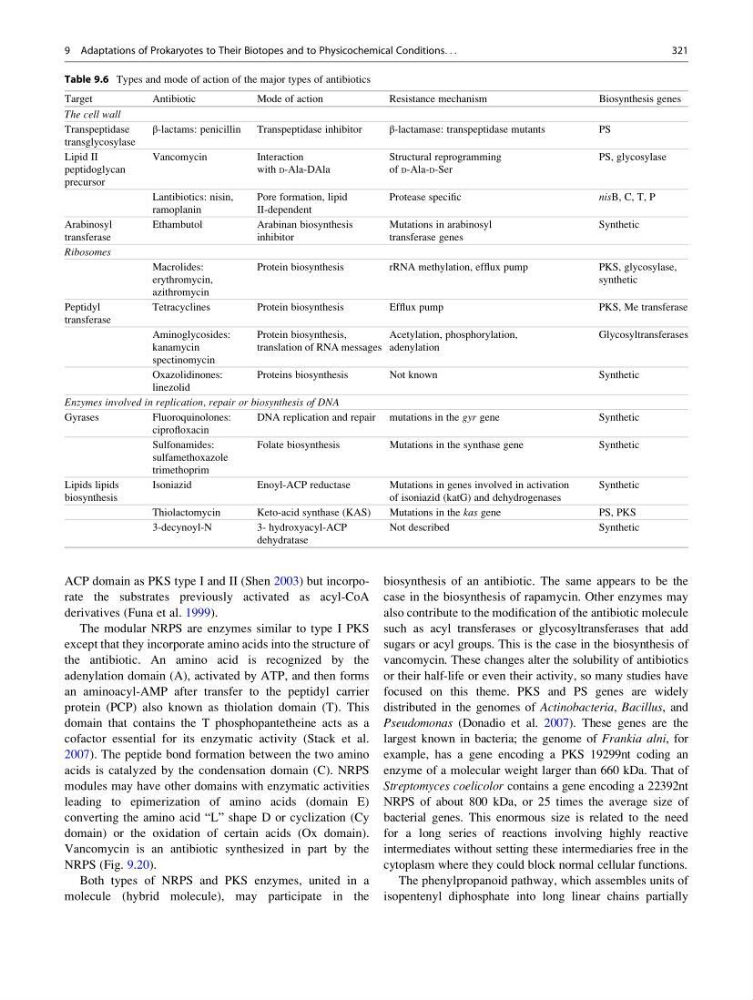
Table 9.6 Types and mode of action of the major types of antibiotics
Target
Antibiotic
Mode of action
Resistance mechanism
Biosynthesis genes
The cell wall
Transpeptidase
transglycosylase
β-lactams: penicillin
Transpeptidase inhibitor
β-lactamase: transpeptidase mutants
PS
Lipid II
peptidoglycan
precursor
Vancomycin
Interaction
with D-Ala-DAla
Structural reprogramming
of D-Ala-D-Ser
PS, glycosylase
Lantibiotics: nisin,
ramoplanin
Pore formation, lipid
II-dependent
Protease specific
nisB, C, T, P
Arabinosyl
transferase
Ethambutol
Arabinan biosynthesis
inhibitor
Mutations in arabinosyl
transferase genes
Synthetic
Ribosomes
Macrolides:
erythromycin,
azithromycin
Protein biosynthesis
rRNA methylation, efflux pump
PKS, glycosylase,
synthetic
Peptidyl
transferase
Tetracyclines
Protein biosynthesis
Efflux pump
PKS, Me transferase
Aminoglycosides:
kanamycin
spectinomycin
Protein biosynthesis,
translation of RNA messages
Acetylation, phosphorylation,
adenylation
Glycosyltransferases
Oxazolidinones:
linezolid
Proteins biosynthesis
Not known
Synthetic
Enzymes involved in replication, repair or biosynthesis of DNA
Gyrases
Fluoroquinolones:
ciprofloxacin
DNA replication and repair mutations in the gyr gene
Synthetic
Sulfonamides:
sulfamethoxazole
trimethoprim
Folate biosynthesis
Mutations in the synthase gene
Synthetic
Lipids lipids
biosynthesis
Isoniazid
Enoyl-ACP reductase
Mutations in genes involved in activation
of isoniazid (katG) and dehydrogenases
Synthetic
Thiolactomycin
Keto-acid synthase (KAS)
Mutations in the kas gene
PS, PKS
3-decynoyl-N
3- hydroxyacyl-ACP
dehydratase
Not described
Synthetic
9 Adaptations of Prokaryotes to Their Biotopes and to Physicochemical Conditions. . .
321
derivatives (Funa et al. 1999).
The modular NRPS are enzymes similar to type I PKS
except that they incorporate amino acids into the structure of
the antibiotic. An amino acid is recognized by the
adenylation domain (A), activated by ATP, and then forms
an aminoacyl-AMP after transfer to the peptidyl carrier
protein (PCP) also known as thiolation domain (T). This
domain that contains the T phosphopantetheine acts as a
cofactor essential for its enzymatic activity (Stack et al.
2007). The peptide bond formation between the two amino
acids is catalyzed by the condensation domain (C). NRPS
modules may have other domains with enzymatic activities
leading to epimerization of amino acids (domain E)
converting the amino acid “L” shape D or cyclization (Cy
domain) or the oxidation of certain acids (Ox domain).
Vancomycin is an antibiotic synthesized in part by the
NRPS (Fig. 9.20).
Both types of NRPS and PKS enzymes, united in a
molecule (hybrid molecule), may participate in the
biosynthesis of an antibiotic. The same appears to be the
case in the biosynthesis of rapamycin. Other enzymes may
also contribute to the modification of the antibiotic molecule
such as acyl transferases or glycosyltransferases that add
sugars or acyl groups. This is the case in the biosynthesis of
vancomycin. These changes alter the solubility of antibiotics
or their half-life or even their activity, so many studies have
focused on this theme. PKS and PS genes are widely
distributed in the genomes of Actinobacteria, Bacillus, and
Pseudomonas (Donadio et al. 2007). These genes are the
largest known in bacteria; the genome of Frankia alni, for
example, has a gene encoding a PKS 19299nt coding an
enzyme of a molecular weight larger than 660 kDa. That of
Streptomyces coelicolor contains a gene encoding a 22392nt
NRPS of about 800 kDa, or 25 times the average size of
bacterial genes. This enormous size is related to the need
for a long series of reactions involving highly reactive
intermediates without setting these intermediaries free in the
cytoplasm where they could block normal cellular functions.
The phenylpropanoid pathway, which assembles units of
isopentenyl diphosphate into long linear chains partially
Table 9.6 Types and mode of action of the major types of antibiotics
Target
Antibiotic
Mode of action
Resistance mechanism
Biosynthesis genes
The cell wall
Transpeptidase
transglycosylase
β-lactams: penicillin
Transpeptidase inhibitor
β-lactamase: transpeptidase mutants
PS
Lipid II
peptidoglycan
precursor
Vancomycin
Interaction
with D-Ala-DAla
Structural reprogramming
of D-Ala-D-Ser
PS, glycosylase
Lantibiotics: nisin,
ramoplanin
Pore formation, lipid
II-dependent
Protease specific
nisB, C, T, P
Arabinosyl
transferase
Ethambutol
Arabinan biosynthesis
inhibitor
Mutations in arabinosyl
transferase genes
Synthetic
Ribosomes
Macrolides:
erythromycin,
azithromycin
Protein biosynthesis
rRNA methylation, efflux pump
PKS, glycosylase,
synthetic
Peptidyl
transferase
Tetracyclines
Protein biosynthesis
Efflux pump
PKS, Me transferase
Aminoglycosides:
kanamycin
spectinomycin
Protein biosynthesis,
translation of RNA messages
Acetylation, phosphorylation,
adenylation
Glycosyltransferases
Oxazolidinones:
linezolid
Proteins biosynthesis
Not known
Synthetic
Enzymes involved in replication, repair or biosynthesis of DNA
Gyrases
Fluoroquinolones:
ciprofloxacin
DNA replication and repair mutations in the gyr gene
Synthetic
Sulfonamides:
sulfamethoxazole
trimethoprim
Folate biosynthesis
Mutations in the synthase gene
Synthetic
Lipids lipids
biosynthesis
Isoniazid
Enoyl-ACP reductase
Mutations in genes involved in activation
of isoniazid (katG) and dehydrogenases
Synthetic
Thiolactomycin
Keto-acid synthase (KAS)
Mutations in the kas gene
PS, PKS
3-decynoyl-N
3- hydroxyacyl-ACP
dehydratase
Not described
Synthetic
9 Adaptations of Prokaryotes to Their Biotopes and to Physicochemical Conditions. . .
321