

Several studies on pathogenic bacteria also show a regulation of the expression of virulence genes by di-cGMP
(Kulasakara et al. 2006). This is the case for V. cholerae for
which it was shown that the di-cGMP inhibited virulence
genes. The vieSAB operon encodes a two-component system
VieS/VieA. The response regulator VieA has three conserved
domains (REC-EAL-HTH) and is essential for the expression
of toxT, which encodes a transcriptional activator of virulence
genes encoding cholera toxin and associated pili. The prejudicial effect of a mutation in VieA on the expression of virulence
genes is attributed to the loss of the PDEA activity of VieA and
an increase in the intracellular concentration of di-cGMP in the
mutant. These results are confirmed by inhibiting the production of cholera toxin in vitro by overexpression of a DGC
(Tischler and Camilli 2005). The proposed model for activation of virulence genes involves activation by an unknown
factor of the histidine kinase VieS that will phosphorylate the
REC domain of VieA. VieA-P will autoactivate transcription
of the vieSAB operon with as a consequence a significant
increase in the PDEA VieA which will reduce the intracellular
concentration of di-cGMP and allow the expression
of virulence factors (Fig. 9.14).
A number of targets of c-di-GMP have been identified in
recent years highlighting the great diversity of mechanisms
of action of c-di-GMP that may act at the functional, translational, or transcriptional level. Among the receptors c-diGMP are (Krasteva et al. 2012):
• PilZ domain proteins such as the YcgR protein in E. coli
which functions, after binding to c-di-GMP, as a molecular flagellar motor brake or BscA and Alg44, which are
the subunits of the cellulose synthase of G. xylinus and
Membrane
CheA
CheW
Periplasm
Cytoplasm
Bacterium
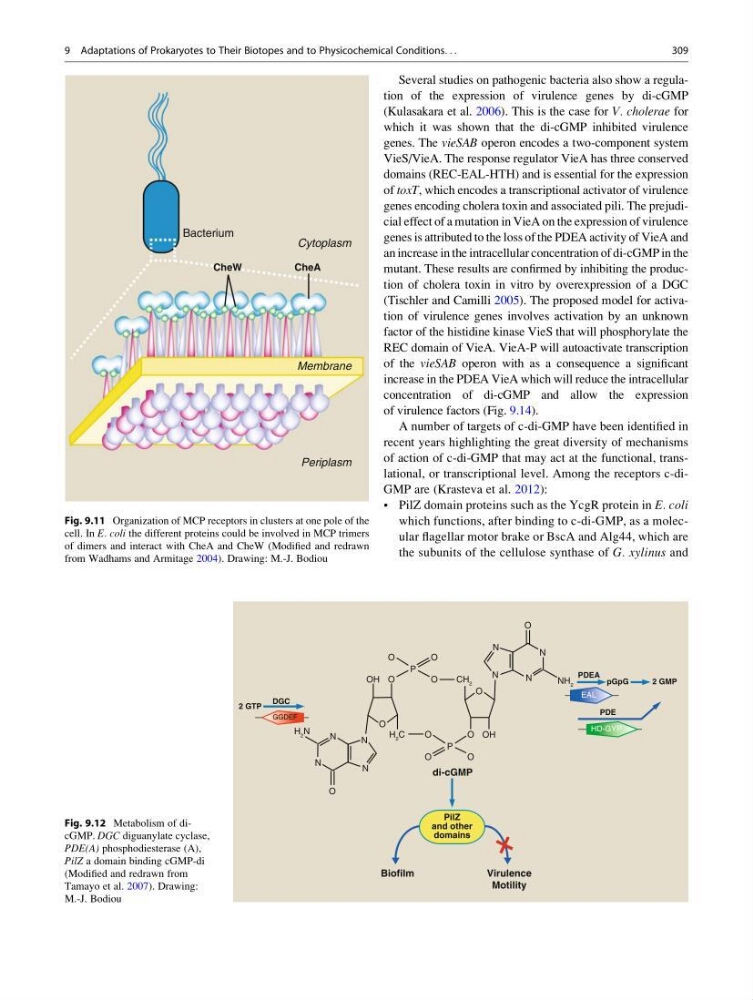
Fig. 9.11 Organization of MCP receptors in clusters at one pole of the
cell. In E. coli the different proteins could be involved in MCP trimers
of dimers and interact with CheA and CheW (Modified and redrawn
from Wadhams and Armitage 2004). Drawing: M.-J. Bodiou
2 GTP
DGC
Biofilm
Virulence
Motility
O
N
N
N
N
N
N
N
H 2 N
O
O
O
O
O
OH
OH
P
O
O
O
O
P
CH 2
H 2 C
NH 2
O
di-cGMP
PDEA
pGpG
2 GMP
PilZ
and other
domains
GGDEF
EAL
HD-GYP
PDE
N
O
Fig. 9.12 Metabolism of dicGMP. DGC diguanylate cyclase,
PDE(A) phosphodiesterase (A),
PilZ a domain binding cGMP-di
(Modified and redrawn from
Tamayo et al. 2007). Drawing:
M.-J. Bodiou
9 Adaptations of Prokaryotes to Their Biotopes and to Physicochemical Conditions. . .
309
(Kulasakara et al. 2006). This is the case for V. cholerae for
which it was shown that the di-cGMP inhibited virulence
genes. The vieSAB operon encodes a two-component system
VieS/VieA. The response regulator VieA has three conserved
domains (REC-EAL-HTH) and is essential for the expression
of toxT, which encodes a transcriptional activator of virulence
genes encoding cholera toxin and associated pili. The prejudicial effect of a mutation in VieA on the expression of virulence
genes is attributed to the loss of the PDEA activity of VieA and
an increase in the intracellular concentration of di-cGMP in the
mutant. These results are confirmed by inhibiting the production of cholera toxin in vitro by overexpression of a DGC
(Tischler and Camilli 2005). The proposed model for activation of virulence genes involves activation by an unknown
factor of the histidine kinase VieS that will phosphorylate the
REC domain of VieA. VieA-P will autoactivate transcription
of the vieSAB operon with as a consequence a significant
increase in the PDEA VieA which will reduce the intracellular
concentration of di-cGMP and allow the expression
of virulence factors (Fig. 9.14).
A number of targets of c-di-GMP have been identified in
recent years highlighting the great diversity of mechanisms
of action of c-di-GMP that may act at the functional, translational, or transcriptional level. Among the receptors c-diGMP are (Krasteva et al. 2012):
• PilZ domain proteins such as the YcgR protein in E. coli
which functions, after binding to c-di-GMP, as a molecular flagellar motor brake or BscA and Alg44, which are
the subunits of the cellulose synthase of G. xylinus and
Membrane
CheA
CheW
Periplasm
Cytoplasm
Bacterium
Fig. 9.11 Organization of MCP receptors in clusters at one pole of the
cell. In E. coli the different proteins could be involved in MCP trimers
of dimers and interact with CheA and CheW (Modified and redrawn
from Wadhams and Armitage 2004). Drawing: M.-J. Bodiou
2 GTP
DGC
Biofilm
Virulence
Motility
O
N
N
N
N
N
N
N
H 2 N
O
O
O
O
O
OH
OH
P
O
O
O
O
P
CH 2
H 2 C
NH 2
O
di-cGMP
PDEA
pGpG
2 GMP
PilZ
and other
domains
GGDEF
EAL
HD-GYP
PDE
N
O
Fig. 9.12 Metabolism of dicGMP. DGC diguanylate cyclase,
PDE(A) phosphodiesterase (A),
PilZ a domain binding cGMP-di
(Modified and redrawn from
Tamayo et al. 2007). Drawing:
M.-J. Bodiou
9 Adaptations of Prokaryotes to Their Biotopes and to Physicochemical Conditions. . .
309