

regulate the facultative anaerobic metabolism of E. coli, or
as independent proteins in the signaling system of Bacillus
subtilis controlling sporulation (KinA/Spo0F/Spo0B/
Spo0A). Phosphorelay systems likely allow to multiply
the regulatory sites, thus providing more flexibility in the
signaling pathway. In eukaryotes, hybrid histidine kinases
constitute the majority of HK.
Dephosphorylation of the RR that allows the system
to return to the initial state or to modulate the intensity
of the response is provided by an autophosphatase RR
activity. The half-life of phosphorylated RRs ranges from
a few seconds to several hours. In many cases, the
dephosphorylation of the RR is accelerated by external
phosphatases or by a protein phosphatase activity of the HK.
The analysis of sequenced bacterial genomes has allowed
to classify RRs depending on the nature of their effector
domain (Galperin 2006). Transcriptional regulators represent about 66 % of all RRs (Table 9.4). Some RRs have an
effector domain with enzymatic activity, diguanylate
cyclase (GGDEF), phosphodiesterase (EAL), or protein
phosphatase (PP2C), for example, and are integrated into
complex signaling networks. 14 % of RRs are made up of an
isolated receiver domain (REC) and can be part of a
phosphorelay (Spo0F) or a molecular component of a system
involved in chemotaxis as in the case of E. coli CheY.
9.2.2.3 The Chemotaxis Signaling System
Mobile bacteria can move toward attractive molecules
(sugars, amino acids) and inversely move away from repellent compounds. This phenomenon is called chemotaxis.
The movement of flagellated bacteria such as Escherichia
coli is characterized by a series of straight runs punctuated
by rapid tumblings, corresponding to counterclockwise
(CCW) and clockwise (CW) rotations, respectively, of the
flagellar motor (Fig. 9.8). The probability that an E. coli cell
stops its run and tumbles depends on its immediate chemical
environment compared to that encountered a few seconds
before. The tendency to tumble is enhanced when the
Stimulus
Response
N
N
P
HK
RR
His
O
OH
Asp
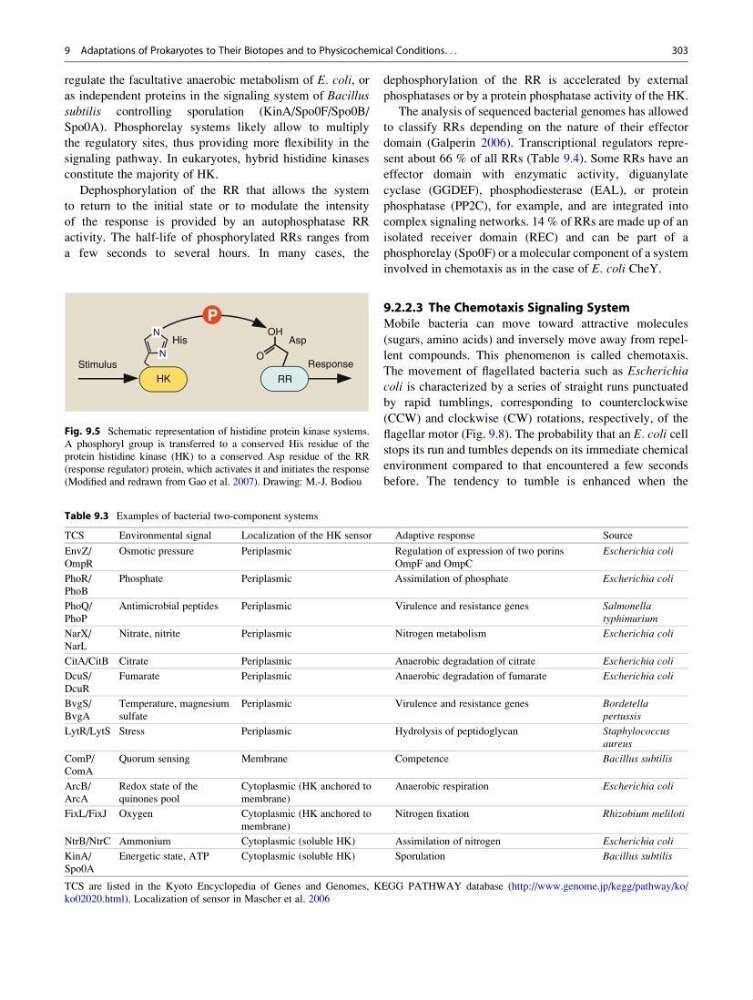
Fig. 9.5 Schematic representation of histidine protein kinase systems.
A phosphoryl group is transferred to a conserved His residue of the
protein histidine kinase (HK) to a conserved Asp residue of the RR
(response regulator) protein, which activates it and initiates the response
(Modified and redrawn from Gao et al. 2007). Drawing: M.-J. Bodiou
Table 9.3 Examples of bacterial two-component systems
TCS
Environmental signal
Localization of the HK sensor
Adaptive response
Source
EnvZ/
OmpR
Osmotic pressure
Periplasmic
Regulation of expression of two porins
OmpF and OmpC
Escherichia coli
PhoR/
PhoB
Phosphate
Periplasmic
Assimilation of phosphate
Escherichia coli
PhoQ/
PhoP
Antimicrobial peptides
Periplasmic
Virulence and resistance genes
Salmonella
typhimurium
NarX/
NarL
Nitrate, nitrite
Periplasmic
Nitrogen metabolism
Escherichia coli
CitA/CitB Citrate
Periplasmic
Anaerobic degradation of citrate
Escherichia coli
DcuS/
DcuR
Fumarate
Periplasmic
Anaerobic degradation of fumarate
Escherichia coli
BvgS/
BvgA
Temperature, magnesium
sulfate
Periplasmic
Virulence and resistance genes
Bordetella
pertussis
LytR/LytS Stress
Periplasmic
Hydrolysis of peptidoglycan
Staphylococcus
aureus
ComP/
ComA
Quorum sensing
Membrane
Competence
Bacillus subtilis
ArcB/
ArcA
Redox state of the
quinones pool
Cytoplasmic (HK anchored to
membrane)
Anaerobic respiration
Escherichia coli
FixL/FixJ Oxygen
Cytoplasmic (HK anchored to
membrane)
Nitrogen fixation
Rhizobium meliloti
NtrB/NtrC Ammonium
Cytoplasmic (soluble HK)
Assimilation of nitrogen
Escherichia coli
KinA/
Spo0A
Energetic state, ATP
Cytoplasmic (soluble HK)
Sporulation
Bacillus subtilis
TCS are listed in the Kyoto Encyclopedia of Genes and Genomes, KEGG PATHWAY database (http://www.genome.jp/kegg/pathway/ko/
ko02020.html). Localization of sensor in Mascher et al. 2006
9 Adaptations of Prokaryotes to Their Biotopes and to Physicochemical Conditions. . .
303
as independent proteins in the signaling system of Bacillus
subtilis controlling sporulation (KinA/Spo0F/Spo0B/
Spo0A). Phosphorelay systems likely allow to multiply
the regulatory sites, thus providing more flexibility in the
signaling pathway. In eukaryotes, hybrid histidine kinases
constitute the majority of HK.
Dephosphorylation of the RR that allows the system
to return to the initial state or to modulate the intensity
of the response is provided by an autophosphatase RR
activity. The half-life of phosphorylated RRs ranges from
a few seconds to several hours. In many cases, the
dephosphorylation of the RR is accelerated by external
phosphatases or by a protein phosphatase activity of the HK.
The analysis of sequenced bacterial genomes has allowed
to classify RRs depending on the nature of their effector
domain (Galperin 2006). Transcriptional regulators represent about 66 % of all RRs (Table 9.4). Some RRs have an
effector domain with enzymatic activity, diguanylate
cyclase (GGDEF), phosphodiesterase (EAL), or protein
phosphatase (PP2C), for example, and are integrated into
complex signaling networks. 14 % of RRs are made up of an
isolated receiver domain (REC) and can be part of a
phosphorelay (Spo0F) or a molecular component of a system
involved in chemotaxis as in the case of E. coli CheY.
9.2.2.3 The Chemotaxis Signaling System
Mobile bacteria can move toward attractive molecules
(sugars, amino acids) and inversely move away from repellent compounds. This phenomenon is called chemotaxis.
The movement of flagellated bacteria such as Escherichia
coli is characterized by a series of straight runs punctuated
by rapid tumblings, corresponding to counterclockwise
(CCW) and clockwise (CW) rotations, respectively, of the
flagellar motor (Fig. 9.8). The probability that an E. coli cell
stops its run and tumbles depends on its immediate chemical
environment compared to that encountered a few seconds
before. The tendency to tumble is enhanced when the
Stimulus
Response
N
N
P
HK
RR
His
O
OH
Asp
Fig. 9.5 Schematic representation of histidine protein kinase systems.
A phosphoryl group is transferred to a conserved His residue of the
protein histidine kinase (HK) to a conserved Asp residue of the RR
(response regulator) protein, which activates it and initiates the response
(Modified and redrawn from Gao et al. 2007). Drawing: M.-J. Bodiou
Table 9.3 Examples of bacterial two-component systems
TCS
Environmental signal
Localization of the HK sensor
Adaptive response
Source
EnvZ/
OmpR
Osmotic pressure
Periplasmic
Regulation of expression of two porins
OmpF and OmpC
Escherichia coli
PhoR/
PhoB
Phosphate
Periplasmic
Assimilation of phosphate
Escherichia coli
PhoQ/
PhoP
Antimicrobial peptides
Periplasmic
Virulence and resistance genes
Salmonella
typhimurium
NarX/
NarL
Nitrate, nitrite
Periplasmic
Nitrogen metabolism
Escherichia coli
CitA/CitB Citrate
Periplasmic
Anaerobic degradation of citrate
Escherichia coli
DcuS/
DcuR
Fumarate
Periplasmic
Anaerobic degradation of fumarate
Escherichia coli
BvgS/
BvgA
Temperature, magnesium
sulfate
Periplasmic
Virulence and resistance genes
Bordetella
pertussis
LytR/LytS Stress
Periplasmic
Hydrolysis of peptidoglycan
Staphylococcus
aureus
ComP/
ComA
Quorum sensing
Membrane
Competence
Bacillus subtilis
ArcB/
ArcA
Redox state of the
quinones pool
Cytoplasmic (HK anchored to
membrane)
Anaerobic respiration
Escherichia coli
FixL/FixJ Oxygen
Cytoplasmic (HK anchored to
membrane)
Nitrogen fixation
Rhizobium meliloti
NtrB/NtrC Ammonium
Cytoplasmic (soluble HK)
Assimilation of nitrogen
Escherichia coli
KinA/
Spo0A
Energetic state, ATP
Cytoplasmic (soluble HK)
Sporulation
Bacillus subtilis
TCS are listed in the Kyoto Encyclopedia of Genes and Genomes, KEGG PATHWAY database (http://www.genome.jp/kegg/pathway/ko/
ko02020.html). Localization of sensor in Mascher et al. 2006
9 Adaptations of Prokaryotes to Their Biotopes and to Physicochemical Conditions. . .
303