

of an effector domain that is generally a DNA-binding
domain. In a phosphorylated form, the response regulator
(RR-P) will activate or repress target genes and trigger the
adaptive response of the cell.
In the case of the EnvZ/OmpR system of E. coli
(Fig. 9.7), an increase in osmotic pressure will result in an
increased rate of autophosphorylation of EnvZ that in turn
will phosphorylate OmpR. OmpR-P represses transcription
of ompF, the gene that encodes a porin (protein that allows
the passage of metabolites across the outer membrane of
Proteobacteria) with a wide pore and inversely will activate
transcription of ompC that encodes a porin with a smaller
pore size.
Besides, the classical two-component systems are
systems that have phosphorelay domains with supplementary Asp (REC) and His (HPT) residues (Fig. 9.7). These
areas can be present in the HK; these HKs will then be
referred to as hybrid as in the ArcB/ArcA system, which
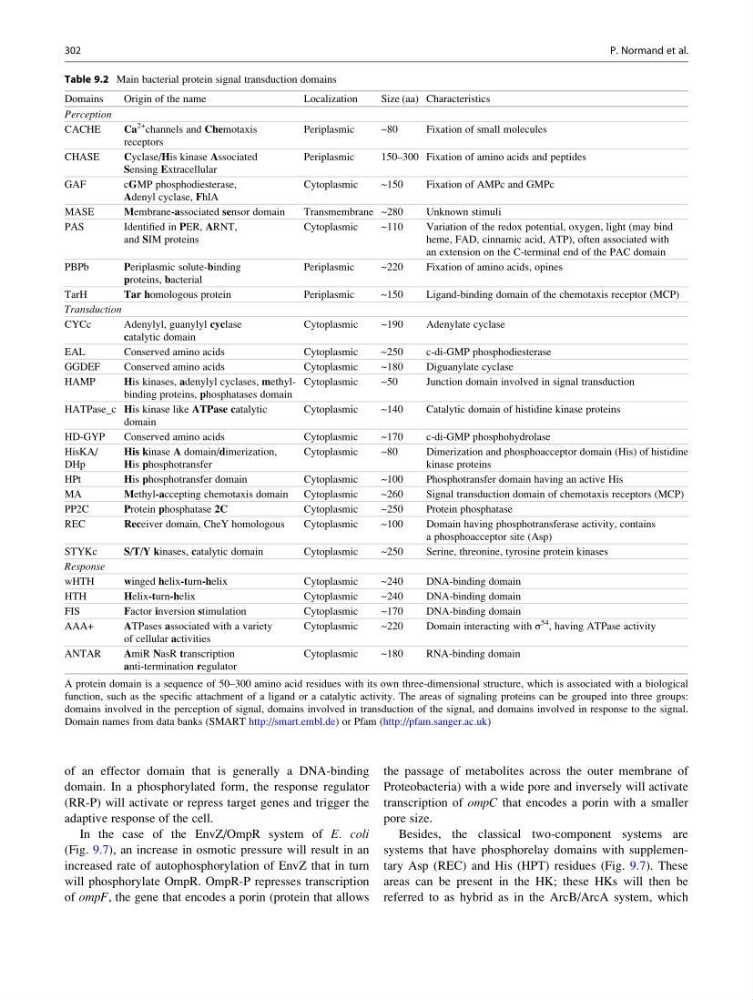
Table 9.2 Main bacterial protein signal transduction domains
Domains
Origin of the name
Localization
Size (aa) Characteristics
Perception
CACHE
Ca
2+ channels and Chemotaxis
receptors
Periplasmic
~80
Fixation of small molecules
CHASE
Cyclase/His kinase Associated
Sensing Extracellular
Periplasmic
150–300 Fixation of amino acids and peptides
GAF
cGMP phosphodiesterase,
Adenyl cyclase, FhlA
Cytoplasmic
~150
Fixation of AMPc and GMPc
MASE
Membrane-associated sensor domain
Transmembrane ~280
Unknown stimuli
PAS
Identified in PER, ARNT,
and SIM proteins
Cytoplasmic
~110
Variation of the redox potential, oxygen, light (may bind
heme, FAD, cinnamic acid, ATP), often associated with
an extension on the C-terminal end of the PAC domain
PBPb
Periplasmic solute-binding
proteins, bacterial
Periplasmic
~220
Fixation of amino acids, opines
TarH
Tar homologous protein
Periplasmic
~150
Ligand-binding domain of the chemotaxis receptor (MCP)
Transduction
CYCc
Adenylyl, guanylyl cyclase
catalytic domain
Cytoplasmic
~190
Adenylate cyclase
EAL
Conserved amino acids
Cytoplasmic
~250
c-di-GMP phosphodiesterase
GGDEF
Conserved amino acids
Cytoplasmic
~180
Diguanylate cyclase
HAMP
His kinases, adenylyl cyclases, methylbinding proteins, phosphatases domain
Cytoplasmic
~50
Junction domain involved in signal transduction
HATPase_c His kinase like ATPase catalytic
domain
Cytoplasmic
~140
Catalytic domain of histidine kinase proteins
HD-GYP
Conserved amino acids
Cytoplasmic
~170
c-di-GMP phosphohydrolase
HisKA/
DHp
His kinase A domain/dimerization,
His phosphotransfer
Cytoplasmic
~80
Dimerization and phosphoacceptor domain (His) of histidine
kinase proteins
HPt
His phosphotransfer domain
Cytoplasmic
~100
Phosphotransfer domain having an active His
MA
Methyl-accepting chemotaxis domain Cytoplasmic
~260
Signal transduction domain of chemotaxis receptors (MCP)
PP2C
Protein phosphatase 2C
Cytoplasmic
~250
Protein phosphatase
REC
Receiver domain, CheY homologous
Cytoplasmic
~100
Domain having phosphotransferase activity, contains
a phosphoacceptor site (Asp)
STYKc
S/T/Y kinases, catalytic domain
Cytoplasmic
~250
Serine, threonine, tyrosine protein kinases
Response
wHTH
winged helix-turn-helix
Cytoplasmic
~240
DNA-binding domain
HTH
Helix-turn-helix
Cytoplasmic
~240
DNA-binding domain
FIS
Factor inversion stimulation
Cytoplasmic
~170
DNA-binding domain
AAA+
ATPases associated with a variety
of cellular activities
Cytoplasmic
~220
Domain interacting with σ
54
, having ATPase activity
ANTAR
AmiR NasR transcription
anti-termination regulator
Cytoplasmic
~180
RNA-binding domain
A protein domain is a sequence of 50–300 amino acid residues with its own three-dimensional structure, which is associated with a biological
function, such as the specific attachment of a ligand or a catalytic activity. The areas of signaling proteins can be grouped into three groups:
domains involved in the perception of signal, domains involved in transduction of the signal, and domains involved in response to the signal.
Domain names from data banks (SMART http://smart.embl.de) or Pfam (http://pfam.sanger.ac.uk)
302
P. Normand et al.
domain. In a phosphorylated form, the response regulator
(RR-P) will activate or repress target genes and trigger the
adaptive response of the cell.
In the case of the EnvZ/OmpR system of E. coli
(Fig. 9.7), an increase in osmotic pressure will result in an
increased rate of autophosphorylation of EnvZ that in turn
will phosphorylate OmpR. OmpR-P represses transcription
of ompF, the gene that encodes a porin (protein that allows
the passage of metabolites across the outer membrane of
Proteobacteria) with a wide pore and inversely will activate
transcription of ompC that encodes a porin with a smaller
pore size.
Besides, the classical two-component systems are
systems that have phosphorelay domains with supplementary Asp (REC) and His (HPT) residues (Fig. 9.7). These
areas can be present in the HK; these HKs will then be
referred to as hybrid as in the ArcB/ArcA system, which
Table 9.2 Main bacterial protein signal transduction domains
Domains
Origin of the name
Localization
Size (aa) Characteristics
Perception
CACHE
Ca
2+ channels and Chemotaxis
receptors
Periplasmic
~80
Fixation of small molecules
CHASE
Cyclase/His kinase Associated
Sensing Extracellular
Periplasmic
150–300 Fixation of amino acids and peptides
GAF
cGMP phosphodiesterase,
Adenyl cyclase, FhlA
Cytoplasmic
~150
Fixation of AMPc and GMPc
MASE
Membrane-associated sensor domain
Transmembrane ~280
Unknown stimuli
PAS
Identified in PER, ARNT,
and SIM proteins
Cytoplasmic
~110
Variation of the redox potential, oxygen, light (may bind
heme, FAD, cinnamic acid, ATP), often associated with
an extension on the C-terminal end of the PAC domain
PBPb
Periplasmic solute-binding
proteins, bacterial
Periplasmic
~220
Fixation of amino acids, opines
TarH
Tar homologous protein
Periplasmic
~150
Ligand-binding domain of the chemotaxis receptor (MCP)
Transduction
CYCc
Adenylyl, guanylyl cyclase
catalytic domain
Cytoplasmic
~190
Adenylate cyclase
EAL
Conserved amino acids
Cytoplasmic
~250
c-di-GMP phosphodiesterase
GGDEF
Conserved amino acids
Cytoplasmic
~180
Diguanylate cyclase
HAMP
His kinases, adenylyl cyclases, methylbinding proteins, phosphatases domain
Cytoplasmic
~50
Junction domain involved in signal transduction
HATPase_c His kinase like ATPase catalytic
domain
Cytoplasmic
~140
Catalytic domain of histidine kinase proteins
HD-GYP
Conserved amino acids
Cytoplasmic
~170
c-di-GMP phosphohydrolase
HisKA/
DHp
His kinase A domain/dimerization,
His phosphotransfer
Cytoplasmic
~80
Dimerization and phosphoacceptor domain (His) of histidine
kinase proteins
HPt
His phosphotransfer domain
Cytoplasmic
~100
Phosphotransfer domain having an active His
MA
Methyl-accepting chemotaxis domain Cytoplasmic
~260
Signal transduction domain of chemotaxis receptors (MCP)
PP2C
Protein phosphatase 2C
Cytoplasmic
~250
Protein phosphatase
REC
Receiver domain, CheY homologous
Cytoplasmic
~100
Domain having phosphotransferase activity, contains
a phosphoacceptor site (Asp)
STYKc
S/T/Y kinases, catalytic domain
Cytoplasmic
~250
Serine, threonine, tyrosine protein kinases
Response
wHTH
winged helix-turn-helix
Cytoplasmic
~240
DNA-binding domain
HTH
Helix-turn-helix
Cytoplasmic
~240
DNA-binding domain
FIS
Factor inversion stimulation
Cytoplasmic
~170
DNA-binding domain
AAA+
ATPases associated with a variety
of cellular activities
Cytoplasmic
~220
Domain interacting with σ
54
, having ATPase activity
ANTAR
AmiR NasR transcription
anti-termination regulator
Cytoplasmic
~180
RNA-binding domain
A protein domain is a sequence of 50–300 amino acid residues with its own three-dimensional structure, which is associated with a biological
function, such as the specific attachment of a ligand or a catalytic activity. The areas of signaling proteins can be grouped into three groups:
domains involved in the perception of signal, domains involved in transduction of the signal, and domains involved in response to the signal.
Domain names from data banks (SMART http://smart.embl.de) or Pfam (http://pfam.sanger.ac.uk)
302
P. Normand et al.