

and 2,000,000 cells group together to form a cluster of
non-amoeboid cells (mound stage); this multicellular individual has specialized cells and cell regions, and takes the
form of a slug (slug stage), able to orient itself relative to
light and temperature, crawling on the substrate in search of
a favorable zone for fixation. The reorganization of cells and
cell regions gives rise to a carpoconidiocyst (¼sporocarp,
“fruiting body”) in which form carpoconidia (“spores”)
surrounded by an envelope, which are disseminated and
can remain dormant for several years, waiting for favorable
conditions. Carpoconidiocysts and carpoconidia can also be
interpreted as conidiocysts and conidia. During germination,
carpoconidia give rise to haploid, amoeboid, and uninucleated cells (gametogen) (Fig. 7.60; Macinnes and Francis
1974; Erdos et al. 1975; Eichinger et al. 2005; Schaap et al.
2006; Gaudet et al. 2008).
In general, Mycetobionta have a preference for continental habitats rich in decaying organic matter. They are heterotrophic and feed by phagocytosis of bacteria, Fungi, and
organic particles (Eichinger et al. 2005; Gaudet et al. 2008).
7.16 Conclusion
The current classification of eukaryotes, as it emerges from
recent cytological and biochemical approaches and more
recently from molecular phylogeny studies, is very different
from the traditional classification, more or less derived from
the ideas of Linnaeus in the eighteenth century, and those of
his successors. However, polyphyletic groups (plants,
protozoa, fungi, algae, etc.) continue to be used by many
authors. These polyphyletic sets have no common character
that could define them. “Algae,” for example, scattered in
seven of the ten taxa of higher order (kingdoms) distinguished here (Fig. 7.1) have biochemical, cytological, and
biological characteristics of each of these kingdoms; they
cannot either be defined by their morphology as some are
unicellular, colonial, coenocytic or multicellular, nor by
their ecology, since they are present in all continental and
aquatic habitats. We cannot even define them by a set of
characters, of which none would be characteristic, but which
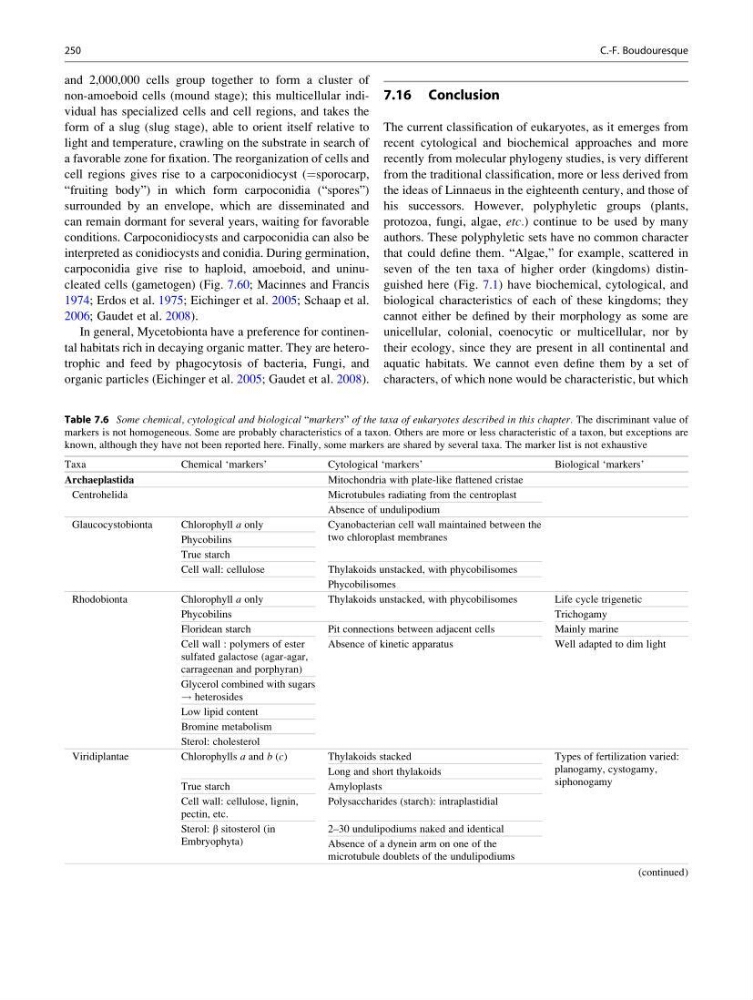
Table 7.6 Some chemical, cytological and biological “markers” of the taxa of eukaryotes described in this chapter. The discriminant value of
markers is not homogeneous. Some are probably characteristics of a taxon. Others are more or less characteristic of a taxon, but exceptions are
known, although they have not been reported here. Finally, some markers are shared by several taxa. The marker list is not exhaustive
Taxa
Chemical ‘markers’
Cytological ‘markers’
Biological ‘markers’
Archaeplastida
Mitochondria with plate-like flattened cristae
Centrohelida
Microtubules radiating from the centroplast
Absence of undulipodium
Glaucocystobionta
Chlorophyll a only
Cyanobacterian cell wall maintained between the
two chloroplast membranes
Phycobilins
True starch
Cell wall: cellulose
Thylakoids unstacked, with phycobilisomes
Phycobilisomes
Rhodobionta
Chlorophyll a only
Thylakoids unstacked, with phycobilisomes
Life cycle trigenetic
Phycobilins
Trichogamy
Floridean starch
Pit connections between adjacent cells
Mainly marine
Cell wall : polymers of ester
sulfated galactose (agar-agar,
carrageenan and porphyran)
Well adapted to dim light
Absence of kinetic apparatus
Glycerol combined with sugars
! heterosides
Low lipid content
Bromine metabolism
Sterol: cholesterol
Viridiplantae
Chlorophylls a and b (c)
Thylakoids stacked
Types of fertilization varied:
planogamy, cystogamy,
siphonogamy
Long and short thylakoids
True starch
Amyloplasts
Cell wall: cellulose, lignin,
pectin, etc.
Polysaccharides (starch): intraplastidial
Sterol: β sitosterol (in
Embryophyta)
2–30 undulipodiums naked and identical
Absence of a dynein arm on one of the
microtubule doublets of the undulipodiums
(continued)
250
C.-F. Boudouresque
non-amoeboid cells (mound stage); this multicellular individual has specialized cells and cell regions, and takes the
form of a slug (slug stage), able to orient itself relative to
light and temperature, crawling on the substrate in search of
a favorable zone for fixation. The reorganization of cells and
cell regions gives rise to a carpoconidiocyst (¼sporocarp,
“fruiting body”) in which form carpoconidia (“spores”)
surrounded by an envelope, which are disseminated and
can remain dormant for several years, waiting for favorable
conditions. Carpoconidiocysts and carpoconidia can also be
interpreted as conidiocysts and conidia. During germination,
carpoconidia give rise to haploid, amoeboid, and uninucleated cells (gametogen) (Fig. 7.60; Macinnes and Francis
1974; Erdos et al. 1975; Eichinger et al. 2005; Schaap et al.
2006; Gaudet et al. 2008).
In general, Mycetobionta have a preference for continental habitats rich in decaying organic matter. They are heterotrophic and feed by phagocytosis of bacteria, Fungi, and
organic particles (Eichinger et al. 2005; Gaudet et al. 2008).
7.16 Conclusion
The current classification of eukaryotes, as it emerges from
recent cytological and biochemical approaches and more
recently from molecular phylogeny studies, is very different
from the traditional classification, more or less derived from
the ideas of Linnaeus in the eighteenth century, and those of
his successors. However, polyphyletic groups (plants,
protozoa, fungi, algae, etc.) continue to be used by many
authors. These polyphyletic sets have no common character
that could define them. “Algae,” for example, scattered in
seven of the ten taxa of higher order (kingdoms) distinguished here (Fig. 7.1) have biochemical, cytological, and
biological characteristics of each of these kingdoms; they
cannot either be defined by their morphology as some are
unicellular, colonial, coenocytic or multicellular, nor by
their ecology, since they are present in all continental and
aquatic habitats. We cannot even define them by a set of
characters, of which none would be characteristic, but which
Table 7.6 Some chemical, cytological and biological “markers” of the taxa of eukaryotes described in this chapter. The discriminant value of
markers is not homogeneous. Some are probably characteristics of a taxon. Others are more or less characteristic of a taxon, but exceptions are
known, although they have not been reported here. Finally, some markers are shared by several taxa. The marker list is not exhaustive
Taxa
Chemical ‘markers’
Cytological ‘markers’
Biological ‘markers’
Archaeplastida
Mitochondria with plate-like flattened cristae
Centrohelida
Microtubules radiating from the centroplast
Absence of undulipodium
Glaucocystobionta
Chlorophyll a only
Cyanobacterian cell wall maintained between the
two chloroplast membranes
Phycobilins
True starch
Cell wall: cellulose
Thylakoids unstacked, with phycobilisomes
Phycobilisomes
Rhodobionta
Chlorophyll a only
Thylakoids unstacked, with phycobilisomes
Life cycle trigenetic
Phycobilins
Trichogamy
Floridean starch
Pit connections between adjacent cells
Mainly marine
Cell wall : polymers of ester
sulfated galactose (agar-agar,
carrageenan and porphyran)
Well adapted to dim light
Absence of kinetic apparatus
Glycerol combined with sugars
! heterosides
Low lipid content
Bromine metabolism
Sterol: cholesterol
Viridiplantae
Chlorophylls a and b (c)
Thylakoids stacked
Types of fertilization varied:
planogamy, cystogamy,
siphonogamy
Long and short thylakoids
True starch
Amyloplasts
Cell wall: cellulose, lignin,
pectin, etc.
Polysaccharides (starch): intraplastidial
Sterol: β sitosterol (in
Embryophyta)
2–30 undulipodiums naked and identical
Absence of a dynein arm on one of the
microtubule doublets of the undulipodiums
(continued)
250
C.-F. Boudouresque