

secreted by a partner to ellicit a sexual response in the other,
is named sirenins. From the chemical point of view, sirenins
are volatile compounds of low molecular mass, partly unsaturated olefin hydrocarbons. Sirenins are sometimes speciesspecific, more commonly specific to a group of taxonomically related species (Mu ¨ller et al. 1985; Pitombo et al.
1989). Fucogamy is similar to oogamy, from which it differs
by the fact that the motionless female gamete does not
remain fixed on the female gametogenous individual and is
disseminated (Fig. 7.6d).
Planogamy is characterized by the fact that both gametes
are scattered and mobile, by means of undulipodiums
(Fig. 7.6e). Gametes of both mating types can be of equal or
unequal size. In the latter case, the larger gamete is considered
as the female one. The female gamete swims and looks for a
suitable substratum, where it fixes, loses its undulipodiums,
and secretes a sirinin which attracts male gametes. According
to Peters and Mu ¨ller (1985), a sweet fragrance emanates
from cultures of the female gametogenous generation
(“gametogen”) of Dictyosiphon foeniculaceus (Phaeophyceae,
kingdom Stramenopiles), due to the secreted sirenin.
Cystogamy (¼conjugation) is characterized by gametes
of both mating types which are morphologically identical
and are neither mobile nor disseminated (Fig. 7.6f). These
are individuals that move close together. Two cells of the
adjacent individuals form a conjugation tube, a kind of
bridge, between them. In some species, once the tube is
formed, both gametes crawl toward one another and fuse in
the middle of the bridge, forming a zygote. In some other
species, only one gamete crawls through the bridge, joins
the other gamete on the other side and fuses with it. In the
latter case, the gamete that crosses the bridge is considered,
by convention, as the male one. Cystogamy occurs in e.g.
diatoms (Bacillariophyceae, kingdom Stramenopiles).
Somatogamy (Fig. 7.7) is the most reduced form of sexual
reproduction and fertilization. Gametes are not individualized.
It involves the fusion of two somatic cells (acting as gametes)
belonging to two cell filaments of different mating types. As a
matter of fact, the fusion is incomplete as it only concerns
cytoplasms (plasmogamy), not nuclei (karyogamy); the karyogamy is postponed to much later in the course of the life
cycle. Somatogamy is very common in Basidiomycota but not
prevalent in Ascomycota (Fungi, kingdom Opisthokonta).
Some other types of fertilization, such as trichogamy, are
also present in Fungi, though relatively uncommon.
7.3.5 What Is the Difference Between
a Generation and a Phase, Within
a Life Cycle?
A generation* is a step within the life cycle of an organism.
It starts with a spore, a zygote, or a carpoconidium and ends,
after pronounced vegetative activity (cell multiplication
resulting, or not, in the edification of a multicellular body),
with the production of spores, gametes, or carpoconidia.
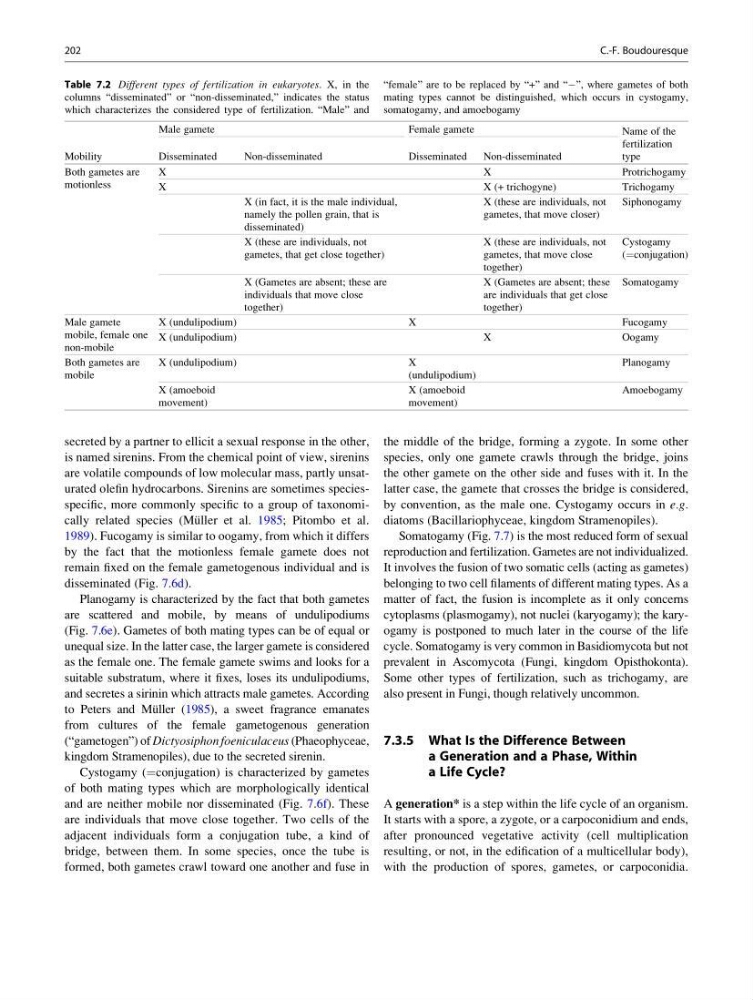
Table 7.2 Different types of fertilization in eukaryotes. X, in the
columns “disseminated” or “non-disseminated,” indicates the status
which characterizes the considered type of fertilization. “Male” and
“female” are to be replaced by “+” and “À”, where gametes of both
mating types cannot be distinguished, which occurs in cystogamy,
somatogamy, and amoebogamy
Mobility
Male gamete
Female gamete
Name of the
fertilization
type
Disseminated
Non-disseminated
Disseminated
Non-disseminated
Both gametes are
motionless
X
X
Protrichogamy
X
X (+ trichogyne)
Trichogamy
X (in fact, it is the male individual,
namely the pollen grain, that is
disseminated)
X (these are individuals, not
gametes, that move closer)
Siphonogamy
X (these are individuals, not
gametes, that get close together)
X (these are individuals, not
gametes, that move close
together)
Cystogamy
(¼conjugation)
X (Gametes are absent; these are
individuals that move close
together)
X (Gametes are absent; these
are individuals that get close
together)
Somatogamy
Male gamete
mobile, female one
non-mobile
X (undulipodium)
X
Fucogamy
X (undulipodium)
X
Oogamy
Both gametes are
mobile
X (undulipodium)
X
(undulipodium)
Planogamy
X (amoeboid
movement)
X (amoeboid
movement)
Amoebogamy
202
C.-F. Boudouresque
is named sirenins. From the chemical point of view, sirenins
are volatile compounds of low molecular mass, partly unsaturated olefin hydrocarbons. Sirenins are sometimes speciesspecific, more commonly specific to a group of taxonomically related species (Mu ¨ller et al. 1985; Pitombo et al.
1989). Fucogamy is similar to oogamy, from which it differs
by the fact that the motionless female gamete does not
remain fixed on the female gametogenous individual and is
disseminated (Fig. 7.6d).
Planogamy is characterized by the fact that both gametes
are scattered and mobile, by means of undulipodiums
(Fig. 7.6e). Gametes of both mating types can be of equal or
unequal size. In the latter case, the larger gamete is considered
as the female one. The female gamete swims and looks for a
suitable substratum, where it fixes, loses its undulipodiums,
and secretes a sirinin which attracts male gametes. According
to Peters and Mu ¨ller (1985), a sweet fragrance emanates
from cultures of the female gametogenous generation
(“gametogen”) of Dictyosiphon foeniculaceus (Phaeophyceae,
kingdom Stramenopiles), due to the secreted sirenin.
Cystogamy (¼conjugation) is characterized by gametes
of both mating types which are morphologically identical
and are neither mobile nor disseminated (Fig. 7.6f). These
are individuals that move close together. Two cells of the
adjacent individuals form a conjugation tube, a kind of
bridge, between them. In some species, once the tube is
formed, both gametes crawl toward one another and fuse in
the middle of the bridge, forming a zygote. In some other
species, only one gamete crawls through the bridge, joins
the other gamete on the other side and fuses with it. In the
latter case, the gamete that crosses the bridge is considered,
by convention, as the male one. Cystogamy occurs in e.g.
diatoms (Bacillariophyceae, kingdom Stramenopiles).
Somatogamy (Fig. 7.7) is the most reduced form of sexual
reproduction and fertilization. Gametes are not individualized.
It involves the fusion of two somatic cells (acting as gametes)
belonging to two cell filaments of different mating types. As a
matter of fact, the fusion is incomplete as it only concerns
cytoplasms (plasmogamy), not nuclei (karyogamy); the karyogamy is postponed to much later in the course of the life
cycle. Somatogamy is very common in Basidiomycota but not
prevalent in Ascomycota (Fungi, kingdom Opisthokonta).
Some other types of fertilization, such as trichogamy, are
also present in Fungi, though relatively uncommon.
7.3.5 What Is the Difference Between
a Generation and a Phase, Within
a Life Cycle?
A generation* is a step within the life cycle of an organism.
It starts with a spore, a zygote, or a carpoconidium and ends,
after pronounced vegetative activity (cell multiplication
resulting, or not, in the edification of a multicellular body),
with the production of spores, gametes, or carpoconidia.
Table 7.2 Different types of fertilization in eukaryotes. X, in the
columns “disseminated” or “non-disseminated,” indicates the status
which characterizes the considered type of fertilization. “Male” and
“female” are to be replaced by “+” and “À”, where gametes of both
mating types cannot be distinguished, which occurs in cystogamy,
somatogamy, and amoebogamy
Mobility
Male gamete
Female gamete
Name of the
fertilization
type
Disseminated
Non-disseminated
Disseminated
Non-disseminated
Both gametes are
motionless
X
X
Protrichogamy
X
X (+ trichogyne)
Trichogamy
X (in fact, it is the male individual,
namely the pollen grain, that is
disseminated)
X (these are individuals, not
gametes, that move closer)
Siphonogamy
X (these are individuals, not
gametes, that get close together)
X (these are individuals, not
gametes, that move close
together)
Cystogamy
(¼conjugation)
X (Gametes are absent; these are
individuals that move close
together)
X (Gametes are absent; these
are individuals that get close
together)
Somatogamy
Male gamete
mobile, female one
non-mobile
X (undulipodium)
X
Fucogamy
X (undulipodium)
X
Oogamy
Both gametes are
mobile
X (undulipodium)
X
(undulipodium)
Planogamy
X (amoeboid
movement)
X (amoeboid
movement)
Amoebogamy
202
C.-F. Boudouresque