

This is particularly surprising in the case of the genus
Cafeteria (Bicosoecids), classified by some authors in the
algal class Bicosoecophyceae, while not only photosynthesis
is absent, but it is perhaps the most abundant predator (number of individuals) of the planet (Baldauf 2008).
5.6
Conclusions and Perspectives
The quest for a universal, coherent, and robust phylogeny is
an endeavor that has concerned man since the dawn of time,
and the many myths of the origin have sought to fill our wish
to answer the famous existential questions: “Where do we
come from? Who are we? Where are we going?” Besides
and in a more prosaic fashion, the constantly renewed success of the successive versions of the Bergey’s Manual
illustrates the general need for a solid, evolving, and consensual taxonomic framework.
Significant advances have been made in recent decades,
mainly with the concept of biological sequences such as fruits
and mirrors of evolution. The progress observed in recent
years in sequencing techniques should continue with, for
example, pyrosequencing, cheap genomes sequencing, and
genomic counseling. The genomes of all major biological
lineages will soon be available with the tools necessary to
identify the evolutionary history of all genes in all lineages
and thus trace the detailed history of the tree of life.
It will eventually be necessary to make the connection
between the evolutionary history of all genes and taxa, on
the one hand, and their forms and functions, on the other
hand. This link will be complex to establish and will depend
on expected progress in other areas, especially reverse
genetics, mass spectrometry, and nuclear magnetic resonance to identify all metabolites of the cells in the functional
exploration of genomes, in understanding the regulation of
gene expression and the link between evolution and
development.
DNA is a remarkably stable molecule, selected as longterm memory by the first forms of life. Nevertheless, it ages
following, for instance, ionizing radiation and chemical
attacks. It has been shown that DNA cannot be duplicated
after a few hundred thousand years or else it accumulates too
Embryophyta
phyceae
Prasinophyceae
Rhodobionta
Glauco
-cystobionta
Lobosa
Mycetobionta
Chytridiomycota
Fungi
Choanoflagellata
Metazoa
(=animals)
basalia
monadida
Euglenoidea
Kinetoplastida
Acrasiobionta
(= Heterolobosa)
Percolobionta
Chromobionta
Oobionta
Labyrinthulobionta
Ciliophora
Dinobionta
Apicomplexa
Radiolaria
Foraminifera
Chlorarachniobionta
EXCAVATES
DISCICRISTATES
STRAMENOPILES
(= HETEROKONTA)
ALVEOLATA
RHIZARIA
AMOEBOBIONTA (=
AMOEBOZOA)
OPISTHOKONTA
helida ?
Actinophryda
HAPTOBIONTA
Chromalveolata Chromalveolata
Chlorobionta
Viridiplantae
Euglenobionta
Archamaeba
Phytomyxea
Haplosporidia
Unikonts
monadida
Oxymonadida
Streptobionta
Euglyphids
Retaria
Cercobionta
ARCHAEPLASTIDA
(= PLANTAE)
Ellobiopsidae
Bicosoecida
Eumetazoa
Placozoa
Porifera
Basidiomycota
Ascomycota
Mesomycetozoa
Picobiliphyta ?
Katablepharida
Cryptophyta
CRYPTOBIONTA
Trentepohliophyceae
Ulvophyceae
tophyceae
LECA
CharoChlorophyceae
Microsporidia
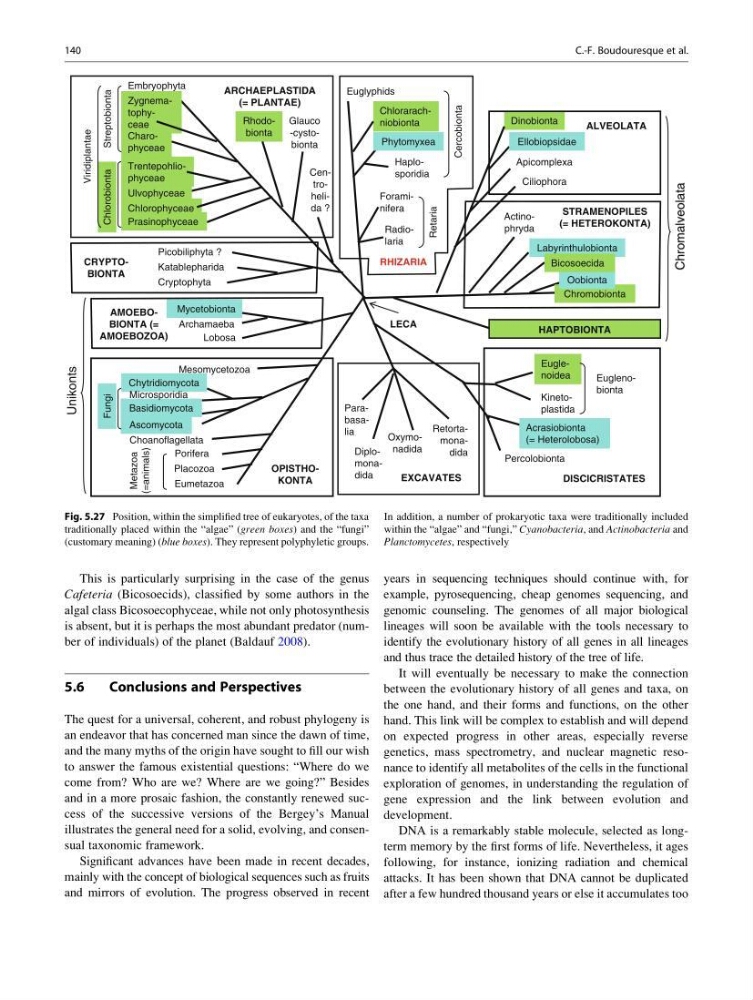
Fig. 5.27 Position, within the simplified tree of eukaryotes, of the taxa
traditionally placed within the “algae” (green boxes) and the “fungi”
(customary meaning) (blue boxes). They represent polyphyletic groups.
In addition, a number of prokaryotic taxa were traditionally included
within the “algae” and “fungi,” Cyanobacteria, and Actinobacteria and
Planctomycetes, respectively
140
C.-F. Boudouresque et al.
Cafeteria (Bicosoecids), classified by some authors in the
algal class Bicosoecophyceae, while not only photosynthesis
is absent, but it is perhaps the most abundant predator (number of individuals) of the planet (Baldauf 2008).
5.6
Conclusions and Perspectives
The quest for a universal, coherent, and robust phylogeny is
an endeavor that has concerned man since the dawn of time,
and the many myths of the origin have sought to fill our wish
to answer the famous existential questions: “Where do we
come from? Who are we? Where are we going?” Besides
and in a more prosaic fashion, the constantly renewed success of the successive versions of the Bergey’s Manual
illustrates the general need for a solid, evolving, and consensual taxonomic framework.
Significant advances have been made in recent decades,
mainly with the concept of biological sequences such as fruits
and mirrors of evolution. The progress observed in recent
years in sequencing techniques should continue with, for
example, pyrosequencing, cheap genomes sequencing, and
genomic counseling. The genomes of all major biological
lineages will soon be available with the tools necessary to
identify the evolutionary history of all genes in all lineages
and thus trace the detailed history of the tree of life.
It will eventually be necessary to make the connection
between the evolutionary history of all genes and taxa, on
the one hand, and their forms and functions, on the other
hand. This link will be complex to establish and will depend
on expected progress in other areas, especially reverse
genetics, mass spectrometry, and nuclear magnetic resonance to identify all metabolites of the cells in the functional
exploration of genomes, in understanding the regulation of
gene expression and the link between evolution and
development.
DNA is a remarkably stable molecule, selected as longterm memory by the first forms of life. Nevertheless, it ages
following, for instance, ionizing radiation and chemical
attacks. It has been shown that DNA cannot be duplicated
after a few hundred thousand years or else it accumulates too
Embryophyta
phyceae
Prasinophyceae
Rhodobionta
Glauco
-cystobionta
Lobosa
Mycetobionta
Chytridiomycota
Fungi
Choanoflagellata
Metazoa
(=animals)
basalia
monadida
Euglenoidea
Kinetoplastida
Acrasiobionta
(= Heterolobosa)
Percolobionta
Chromobionta
Oobionta
Labyrinthulobionta
Ciliophora
Dinobionta
Apicomplexa
Radiolaria
Foraminifera
Chlorarachniobionta
EXCAVATES
DISCICRISTATES
STRAMENOPILES
(= HETEROKONTA)
ALVEOLATA
RHIZARIA
AMOEBOBIONTA (=
AMOEBOZOA)
OPISTHOKONTA
helida ?
Actinophryda
HAPTOBIONTA
Chromalveolata Chromalveolata
Chlorobionta
Viridiplantae
Euglenobionta
Archamaeba
Phytomyxea
Haplosporidia
Unikonts
monadida
Oxymonadida
Streptobionta
Euglyphids
Retaria
Cercobionta
ARCHAEPLASTIDA
(= PLANTAE)
Ellobiopsidae
Bicosoecida
Eumetazoa
Placozoa
Porifera
Basidiomycota
Ascomycota
Mesomycetozoa
Picobiliphyta ?
Katablepharida
Cryptophyta
CRYPTOBIONTA
Trentepohliophyceae
Ulvophyceae
tophyceae
LECA
CharoChlorophyceae
Microsporidia
Fig. 5.27 Position, within the simplified tree of eukaryotes, of the taxa
traditionally placed within the “algae” (green boxes) and the “fungi”
(customary meaning) (blue boxes). They represent polyphyletic groups.
In addition, a number of prokaryotic taxa were traditionally included
within the “algae” and “fungi,” Cyanobacteria, and Actinobacteria and
Planctomycetes, respectively
140
C.-F. Boudouresque et al.