

phylogeny, the great similarity between “brown algae” and
“Oomycetes” had been established. Mereschkowsky (1910)
had fully understood the consequences, in an earlier polyphyletic vision of algae and fungi that Cavalier-Smith (1981)
recognized and reassessed in his kingdom of Chromista,
which brought together Stramenopiles, Haptobionta, and
Cryptobionta in this book. As in the case of the kingdom of
Archaeplastida (cf. Sect. 5.5.2) often named Plantae, the
adoption of the term Fungi in a restricted sense to designate
only part of what was traditionally named “mushrooms” is a
pity because it is a constant source of confusion.
Algae also
represent a polyphyletic assemblage
(Fig. 5.27). In the literature, the term has a somewhat confused sense, insofar as it refers to:
1. Sometimes
photosynthetic
eukaryotes,
except
embryophytes but with cyanobacteria (prokaryotes) photosynthetic or not
2. Sometimes
photosynthetic
eukaryotes,
except
embryophytes
3. Sometimes the unicellular eukaryotic taxa which are at
least partly composed of photosynthetic species, as well
as uni- or multicellular cyanobacteria
4. Sometimes unicellular photosynthetic eukaryotes and
prokaryotes with oxygenic photosynthesis
The list is not exhaustive. In addition, the boundary
between “algae” and “protozoa” is not very clear, a number
of taxa being considered sometimes as algae, sometimes as
protozoa (Fig. 5.28). In general, the reader must approximate the meaning of the terms “algae” depending on the
context.
As plants and algae, protists are also a polyphyletic
assemblage; however, the term is acceptable, as a morphologically defined assemblage, when reserved to the sole
unicellular eukaryotes. But the term protozoa (Fig. 5.28)
which refers to “animal” protists cannot be defined. It
means (1) sometimes non-photosynthetic unicellular
eukaryotes (whatever the taxon to which they belong), (2)
sometimes unicellular eukaryotes belonging to predominantly non-photosynthetic taxa (whether or not they are in
fact photosynthetic); and (3) sometimes all unicellular
eukaryotes belonging to an unspecified, or arbitrary
delineated, set of taxa. A number of these taxa are studied
both by botanists who are specialists of “algae” and by
zoologists who are specialists of “protozoa” (Fig. 5.28).
Embryophyta
phyceae
Prasinophyceae
Rhodobionta
Glauco
-cystobionta
Lobosa
Mycetobionta
Chytridiomycota
Fungi
Choanoflagellata
Metazoa
(=animals)
basalia
monadida
Euglenoidea
Kinetoplastida
Acrasiobionta
(= Heterolobosa)
Percolobionta
Chromobionta
Oobionta
Labyrinthulobionta
Ciliophora
Dinobionta
Apicomplexa
Radiolaria
Foraminifera
Chlorarachniobionta
EXCAVATES
DISCICRISTATES
STRAMENOPILES
(= HETEROKONTA)
ALVEOLATA
RHIZARIA
AMOEBOBIONTA (=
AMOEBOZOA)
OPISTHOKONTA
helida ?
Actinophryda
HAPTOBIONTA
Chromalveolata Chromalveolata
Chlorobionta
Viridiplantae
Euglenobionta
Archamaeba
Phytomyxea
Haplosporidia
Unikonts
monadida
Oxymonadida
Streptobionta
Euglyphids
Retaria
Cercobionta
ARCHAEPLASTIDA
(= PLANTAE)
Ellobiopsidae
Bicosoecida
Eumetazoa
Placozoa
Porifera
Microsporidia
Basidiomycota
Ascomycota
Mesomycetozoa
Picobiliphyta ?
Katablepharida
Cryptophyta
CRYPTOBIONTA
Trentepohliophyceae
Ulvophyceae
tophyceae
LECA
CharoChlorophyceae
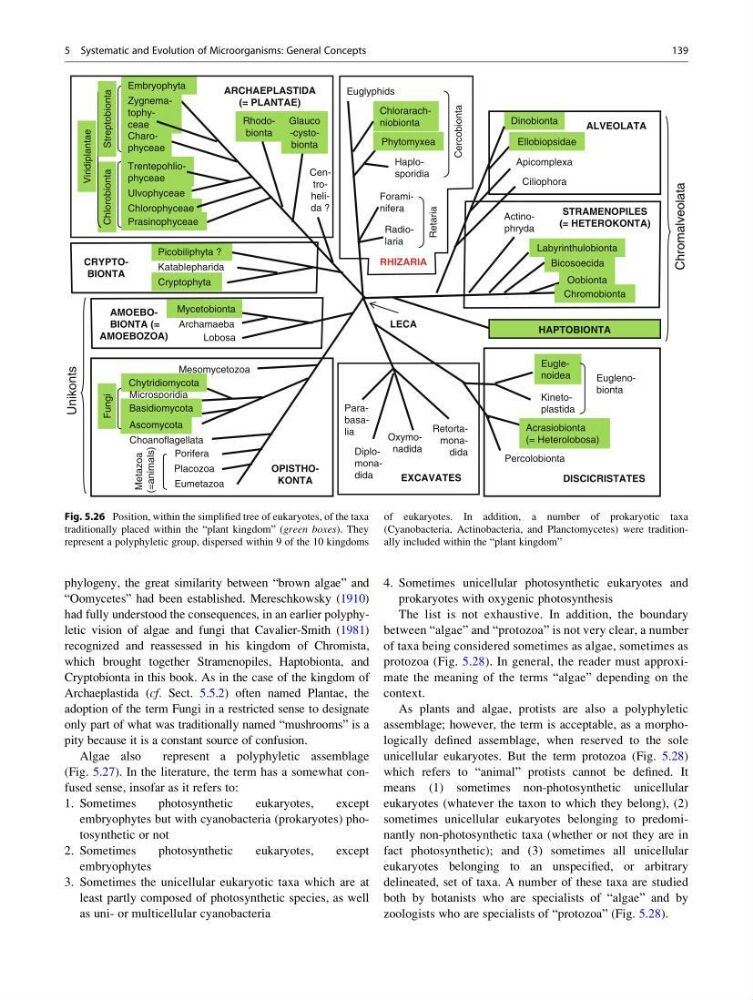
Fig. 5.26 Position, within the simplified tree of eukaryotes, of the taxa
traditionally placed within the “plant kingdom” (green boxes). They
represent a polyphyletic group, dispersed within 9 of the 10 kingdoms
of eukaryotes. In addition, a number of prokaryotic taxa
(Cyanobacteria, Actinobacteria, and Planctomycetes) were traditionally included within the “plant kingdom”
5 Systematic and Evolution of Microorganisms: General Concepts
139
“Oomycetes” had been established. Mereschkowsky (1910)
had fully understood the consequences, in an earlier polyphyletic vision of algae and fungi that Cavalier-Smith (1981)
recognized and reassessed in his kingdom of Chromista,
which brought together Stramenopiles, Haptobionta, and
Cryptobionta in this book. As in the case of the kingdom of
Archaeplastida (cf. Sect. 5.5.2) often named Plantae, the
adoption of the term Fungi in a restricted sense to designate
only part of what was traditionally named “mushrooms” is a
pity because it is a constant source of confusion.
Algae also
represent a polyphyletic assemblage
(Fig. 5.27). In the literature, the term has a somewhat confused sense, insofar as it refers to:
1. Sometimes
photosynthetic
eukaryotes,
except
embryophytes but with cyanobacteria (prokaryotes) photosynthetic or not
2. Sometimes
photosynthetic
eukaryotes,
except
embryophytes
3. Sometimes the unicellular eukaryotic taxa which are at
least partly composed of photosynthetic species, as well
as uni- or multicellular cyanobacteria
4. Sometimes unicellular photosynthetic eukaryotes and
prokaryotes with oxygenic photosynthesis
The list is not exhaustive. In addition, the boundary
between “algae” and “protozoa” is not very clear, a number
of taxa being considered sometimes as algae, sometimes as
protozoa (Fig. 5.28). In general, the reader must approximate the meaning of the terms “algae” depending on the
context.
As plants and algae, protists are also a polyphyletic
assemblage; however, the term is acceptable, as a morphologically defined assemblage, when reserved to the sole
unicellular eukaryotes. But the term protozoa (Fig. 5.28)
which refers to “animal” protists cannot be defined. It
means (1) sometimes non-photosynthetic unicellular
eukaryotes (whatever the taxon to which they belong), (2)
sometimes unicellular eukaryotes belonging to predominantly non-photosynthetic taxa (whether or not they are in
fact photosynthetic); and (3) sometimes all unicellular
eukaryotes belonging to an unspecified, or arbitrary
delineated, set of taxa. A number of these taxa are studied
both by botanists who are specialists of “algae” and by
zoologists who are specialists of “protozoa” (Fig. 5.28).
Embryophyta
phyceae
Prasinophyceae
Rhodobionta
Glauco
-cystobionta
Lobosa
Mycetobionta
Chytridiomycota
Fungi
Choanoflagellata
Metazoa
(=animals)
basalia
monadida
Euglenoidea
Kinetoplastida
Acrasiobionta
(= Heterolobosa)
Percolobionta
Chromobionta
Oobionta
Labyrinthulobionta
Ciliophora
Dinobionta
Apicomplexa
Radiolaria
Foraminifera
Chlorarachniobionta
EXCAVATES
DISCICRISTATES
STRAMENOPILES
(= HETEROKONTA)
ALVEOLATA
RHIZARIA
AMOEBOBIONTA (=
AMOEBOZOA)
OPISTHOKONTA
helida ?
Actinophryda
HAPTOBIONTA
Chromalveolata Chromalveolata
Chlorobionta
Viridiplantae
Euglenobionta
Archamaeba
Phytomyxea
Haplosporidia
Unikonts
monadida
Oxymonadida
Streptobionta
Euglyphids
Retaria
Cercobionta
ARCHAEPLASTIDA
(= PLANTAE)
Ellobiopsidae
Bicosoecida
Eumetazoa
Placozoa
Porifera
Microsporidia
Basidiomycota
Ascomycota
Mesomycetozoa
Picobiliphyta ?
Katablepharida
Cryptophyta
CRYPTOBIONTA
Trentepohliophyceae
Ulvophyceae
tophyceae
LECA
CharoChlorophyceae
Fig. 5.26 Position, within the simplified tree of eukaryotes, of the taxa
traditionally placed within the “plant kingdom” (green boxes). They
represent a polyphyletic group, dispersed within 9 of the 10 kingdoms
of eukaryotes. In addition, a number of prokaryotic taxa
(Cyanobacteria, Actinobacteria, and Planctomycetes) were traditionally included within the “plant kingdom”
5 Systematic and Evolution of Microorganisms: General Concepts
139