

5.5
The Current Tree of Life: From
Phylogeny to Genome Study
5.5.1 The Current Tree of Life
Microorganisms exhibit a considerable diversity of species,
although still very imperfectly known: thousands of new
species or sequences are published annually. However,
they are characterized more by their amazing phylogenetic
diversity than by specific diversity. Even considering only
the microorganisms in the strict sense (i.e., unicellular and
nearly unicellular), they almost represent all prokaryotes and
the vast majority of higher taxon levels of eukaryotes.
Microorganisms are present in all kingdoms of eukaryotes,
and many of these kingdoms are composed only of
microorganisms. Thus, the vast majority of the tree of life
is made up of microorganisms, while the higher-level taxa,
which include multicellular organisms, are comparatively
few in number (Fig. 5.24).
Regarding eukaryotes, the traditional representation,
with animal and plant kingdoms, algae and “higher” plants,
fungi, and protozoa, began to be questioned between the
1940s and 1970s. The consequences of the works of
Feldmann and Feldmann (1946) and He ´bant (1977), to
cite but a few examples, although published in good
journals, went unnoticed. Before the advent of molecular
phylogenies, all elements existed to abandon the old system
and various authors have drawn conclusions. Woese, in the
1980s, was the first to use molecular phylogeny in a systematic way and this was the trigger to decisively change
our vision of the living world. The first books for students
that initiated a revolution of taxonomy based on recent
data, instead of perpetuating patterns partly known from
Linnaeus in the eighteenth century, were those of Margulis
(1970, 1981). More recently, Lecointre and Leguyader
(2001, 2006) revised the taxonomy and phylogeny of the
living world based on current data. In order to help the
reader to identify the correspondence between the current
taxonomy and the old classifications, two sections
Embryophyta
Charophyceae
Chlorophyceae
Prasinophyceae
Rhodobionta
Glauco
-cystobionta
Lobosa
Mycetobionta
Chytridiomycota
Fungi
Choanoflagellata
Metazoa (=
animals)
basalia
monadida
Euglenoidea
Kinetoplastida
Acrasiobionta
(= Heterolobosa)
Percolobionta
Chromobionta
Oobionta
Labyrinthulobionta
Ciliophora
Dinobionta
Apicomplexa
Radiolaria
Foraminifera
Chlorarachniobionta
EXCAVATES
DISCICRISTATES
STRAMENOPILES
(= HETEROKONTA)
ALVEOLATA
RHIZARIA
AMOEBOBIONTA (=
AMOEBOZOA)
OPISTHOKONTA
helida ?
Actinophryda
HAPTOBIONTA
Chromalveolata Chromalveolata
Chlorobionta
Viridiplantae
Euglenobionta
Archamaeba
Phytomyxea
Haplosporidia
Unikonts
monadida
Oxymonadida
Streptobionta
Euglyphids
Retaria
Cercobionta
ARCHAEPLASTIDA
(= PLANTAE)
Ellobiopsidae
Bicosoecida
Eumetazoa
Placozoa
Porifera
Microsporidia
Basidiomycota
Ascomycota
Mesomycetozoa
Picobiliphyta ?
Katablepharida
Cryptophyta
CRYPTOBIONTA
Trentepohliophyceae
Ulvophyceae
tophyceae
LECA
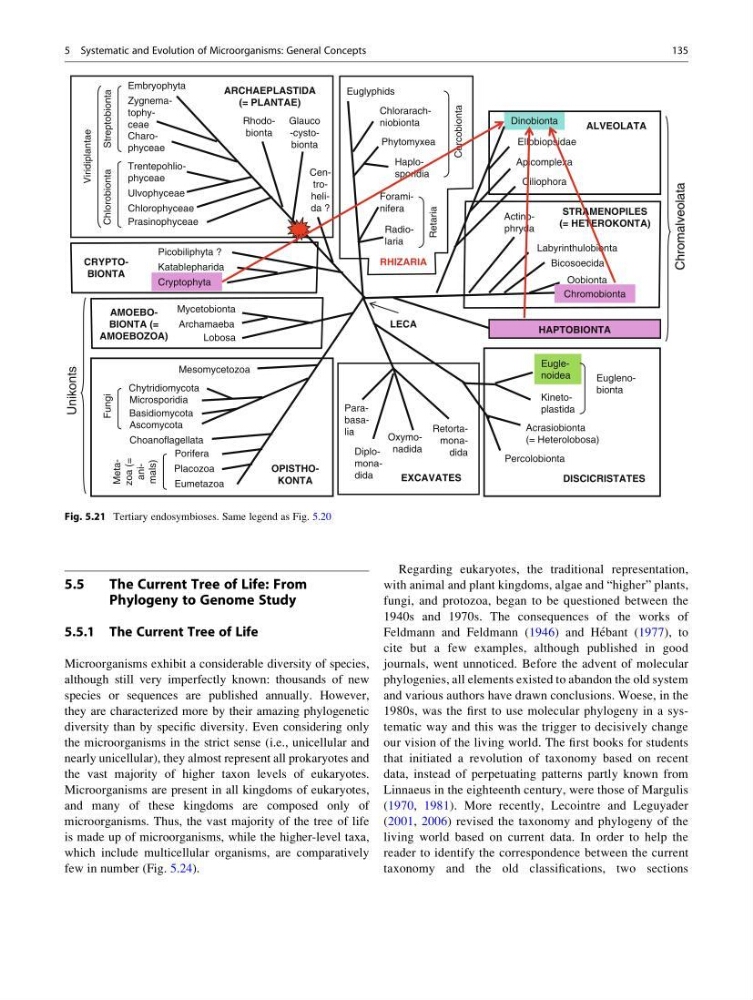
Fig. 5.21 Tertiary endosymbioses. Same legend as Fig. 5.20
5 Systematic and Evolution of Microorganisms: General Concepts
135
The Current Tree of Life: From
Phylogeny to Genome Study
5.5.1 The Current Tree of Life
Microorganisms exhibit a considerable diversity of species,
although still very imperfectly known: thousands of new
species or sequences are published annually. However,
they are characterized more by their amazing phylogenetic
diversity than by specific diversity. Even considering only
the microorganisms in the strict sense (i.e., unicellular and
nearly unicellular), they almost represent all prokaryotes and
the vast majority of higher taxon levels of eukaryotes.
Microorganisms are present in all kingdoms of eukaryotes,
and many of these kingdoms are composed only of
microorganisms. Thus, the vast majority of the tree of life
is made up of microorganisms, while the higher-level taxa,
which include multicellular organisms, are comparatively
few in number (Fig. 5.24).
Regarding eukaryotes, the traditional representation,
with animal and plant kingdoms, algae and “higher” plants,
fungi, and protozoa, began to be questioned between the
1940s and 1970s. The consequences of the works of
Feldmann and Feldmann (1946) and He ´bant (1977), to
cite but a few examples, although published in good
journals, went unnoticed. Before the advent of molecular
phylogenies, all elements existed to abandon the old system
and various authors have drawn conclusions. Woese, in the
1980s, was the first to use molecular phylogeny in a systematic way and this was the trigger to decisively change
our vision of the living world. The first books for students
that initiated a revolution of taxonomy based on recent
data, instead of perpetuating patterns partly known from
Linnaeus in the eighteenth century, were those of Margulis
(1970, 1981). More recently, Lecointre and Leguyader
(2001, 2006) revised the taxonomy and phylogeny of the
living world based on current data. In order to help the
reader to identify the correspondence between the current
taxonomy and the old classifications, two sections
Embryophyta
Charophyceae
Chlorophyceae
Prasinophyceae
Rhodobionta
Glauco
-cystobionta
Lobosa
Mycetobionta
Chytridiomycota
Fungi
Choanoflagellata
Metazoa (=
animals)
basalia
monadida
Euglenoidea
Kinetoplastida
Acrasiobionta
(= Heterolobosa)
Percolobionta
Chromobionta
Oobionta
Labyrinthulobionta
Ciliophora
Dinobionta
Apicomplexa
Radiolaria
Foraminifera
Chlorarachniobionta
EXCAVATES
DISCICRISTATES
STRAMENOPILES
(= HETEROKONTA)
ALVEOLATA
RHIZARIA
AMOEBOBIONTA (=
AMOEBOZOA)
OPISTHOKONTA
helida ?
Actinophryda
HAPTOBIONTA
Chromalveolata Chromalveolata
Chlorobionta
Viridiplantae
Euglenobionta
Archamaeba
Phytomyxea
Haplosporidia
Unikonts
monadida
Oxymonadida
Streptobionta
Euglyphids
Retaria
Cercobionta
ARCHAEPLASTIDA
(= PLANTAE)
Ellobiopsidae
Bicosoecida
Eumetazoa
Placozoa
Porifera
Microsporidia
Basidiomycota
Ascomycota
Mesomycetozoa
Picobiliphyta ?
Katablepharida
Cryptophyta
CRYPTOBIONTA
Trentepohliophyceae
Ulvophyceae
tophyceae
LECA
Fig. 5.21 Tertiary endosymbioses. Same legend as Fig. 5.20
5 Systematic and Evolution of Microorganisms: General Concepts
135