

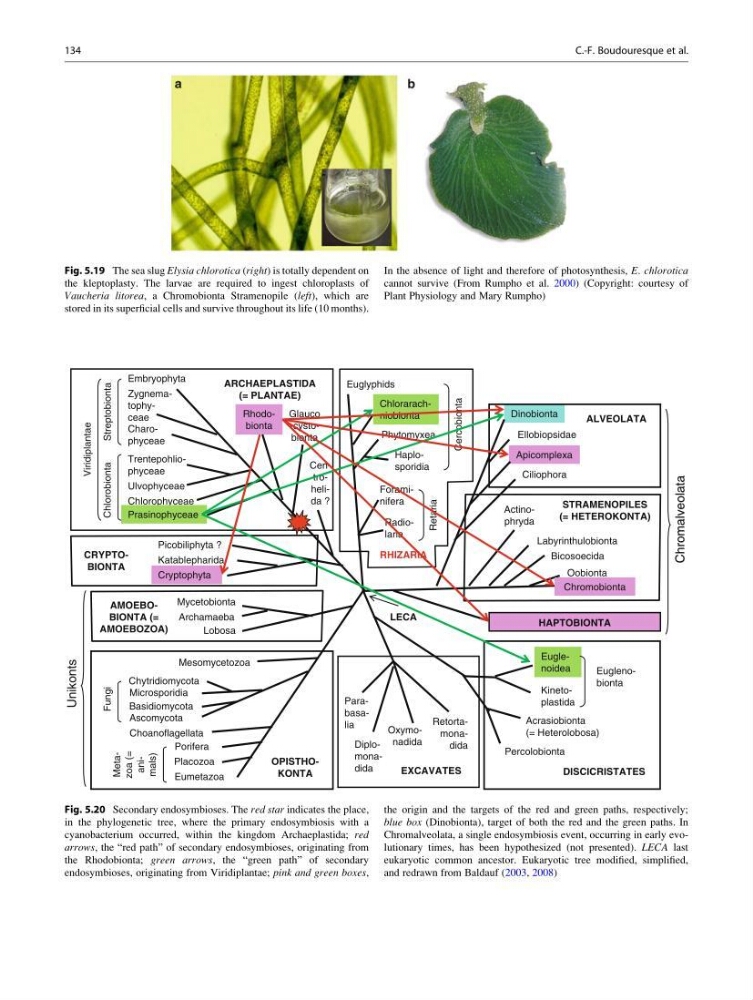
Fig. 5.19 The sea slug Elysia chlorotica (right) is totally dependent on
the kleptoplasty. The larvae are required to ingest chloroplasts of
Vaucheria litorea, a Chromobionta Stramenopile (left), which are
stored in its superficial cells and survive throughout its life (10 months).
In the absence of light and therefore of photosynthesis, E. chlorotica
cannot survive (From Rumpho et al. 2000) (Copyright: courtesy of
Plant Physiology and Mary Rumpho)
Embryophyta
Charophyceae
Chlorophyceae
Prasinophyceae
Rhodobionta
Glauco
-cystobionta
Lobosa
Mycetobionta
Chytridiomycota
Fungi
Choanoflagellata
Metazoa (=
animals)
basalia
monadida
Euglenoidea
Kinetoplastida
Acrasiobionta
(= Heterolobosa)
Percolobionta
Chromobionta
Oobionta
Labyrinthulobionta
Ciliophora
Dinobionta
Apicomplexa
Radiolaria
Foraminifera
Chlorarachniobionta
EXCAVATES
DISCICRISTATES
STRAMENOPILES
(= HETEROKONTA)
ALVEOLATA
RHIZARIA
AMOEBOBIONTA (=
AMOEBOZOA)
OPISTHOKONTA
helida ?
Actinophryda
HAPTOBIONTA
Chromalveolata Chromalveolata
Chlorobionta
Viridiplantae
Euglenobionta
Archamaeba
Phytomyxea
Haplosporidia
Unikonts
monadida
Oxymonadida
Streptobionta
Euglyphids
Retaria
Cercobionta
ARCHAEPLASTIDA
(= PLANTAE)
Ellobiopsidae
Bicosoecida
Eumetazoa
Placozoa
Porifera
Microsporidia
Basidiomycota
Ascomycota
Mesomycetozoa
Picobiliphyta ?
Katablepharida
Cryptophyta
CRYPTOBIONTA
Trentepohliophyceae
Ulvophyceae
tophyceae
LECA
Fig. 5.20 Secondary endosymbioses. The red star indicates the place,
in the phylogenetic tree, where the primary endosymbiosis with a
cyanobacterium occurred, within the kingdom Archaeplastida; red
arrows, the “red path” of secondary endosymbioses, originating from
the Rhodobionta; green arrows, the “green path” of secondary
endosymbioses, originating from Viridiplantae; pink and green boxes,
the origin and the targets of the red and green paths, respectively;
blue box (Dinobionta), target of both the red and the green paths. In
Chromalveolata, a single endosymbiosis event, occurring in early evolutionary times, has been hypothesized (not presented). LECA last
eukaryotic common ancestor. Eukaryotic tree modified, simplified,
and redrawn from Baldauf (2003, 2008)
134
C.-F. Boudouresque et al.
the kleptoplasty. The larvae are required to ingest chloroplasts of
Vaucheria litorea, a Chromobionta Stramenopile (left), which are
stored in its superficial cells and survive throughout its life (10 months).
In the absence of light and therefore of photosynthesis, E. chlorotica
cannot survive (From Rumpho et al. 2000) (Copyright: courtesy of
Plant Physiology and Mary Rumpho)
Embryophyta
Charophyceae
Chlorophyceae
Prasinophyceae
Rhodobionta
Glauco
-cystobionta
Lobosa
Mycetobionta
Chytridiomycota
Fungi
Choanoflagellata
Metazoa (=
animals)
basalia
monadida
Euglenoidea
Kinetoplastida
Acrasiobionta
(= Heterolobosa)
Percolobionta
Chromobionta
Oobionta
Labyrinthulobionta
Ciliophora
Dinobionta
Apicomplexa
Radiolaria
Foraminifera
Chlorarachniobionta
EXCAVATES
DISCICRISTATES
STRAMENOPILES
(= HETEROKONTA)
ALVEOLATA
RHIZARIA
AMOEBOBIONTA (=
AMOEBOZOA)
OPISTHOKONTA
helida ?
Actinophryda
HAPTOBIONTA
Chromalveolata Chromalveolata
Chlorobionta
Viridiplantae
Euglenobionta
Archamaeba
Phytomyxea
Haplosporidia
Unikonts
monadida
Oxymonadida
Streptobionta
Euglyphids
Retaria
Cercobionta
ARCHAEPLASTIDA
(= PLANTAE)
Ellobiopsidae
Bicosoecida
Eumetazoa
Placozoa
Porifera
Microsporidia
Basidiomycota
Ascomycota
Mesomycetozoa
Picobiliphyta ?
Katablepharida
Cryptophyta
CRYPTOBIONTA
Trentepohliophyceae
Ulvophyceae
tophyceae
LECA
Fig. 5.20 Secondary endosymbioses. The red star indicates the place,
in the phylogenetic tree, where the primary endosymbiosis with a
cyanobacterium occurred, within the kingdom Archaeplastida; red
arrows, the “red path” of secondary endosymbioses, originating from
the Rhodobionta; green arrows, the “green path” of secondary
endosymbioses, originating from Viridiplantae; pink and green boxes,
the origin and the targets of the red and green paths, respectively;
blue box (Dinobionta), target of both the red and the green paths. In
Chromalveolata, a single endosymbiosis event, occurring in early evolutionary times, has been hypothesized (not presented). LECA last
eukaryotic common ancestor. Eukaryotic tree modified, simplified,
and redrawn from Baldauf (2003, 2008)
134
C.-F. Boudouresque et al.