

Phaeophyceae (brown algae)
The most frequent color within Phaeophyceae is some
shade of brown, from pale beige to yellow-brown to
almost black. This color is the result of large quantities
of the brown pigment fucoxanthin. Fucoxanthin is alcohol
soluble and the liquid will turn brown after immersion of
a specimen, with the thallus eventually becoming green.
They have cellulose walls, with alginic acid and fucoidin
also important components. Brown algae are unique
among macroalgae in developing into multicellular forms
with differentiated tissues, and they reproduce by means
of motile flagellated spores. Most brown algae have a life
history that consists of an alternation between morphologically similar haploid and diploid plants. Scytosiphon
lomentaria alternates between four distinct morphological
generations, which is considered to be a “bet-hedging”
survival strategy (Littler and Littler, 1983).
The Phaeophyceae comprise about 2,000 species
and are almost exclusively marine algae and, as kelps
(Laminariales), attain their greatest abundance, size, and
diversity in cold temperate to polar waters. They occur from
the high intertidal (Fucales) to 115 m deep (Sargassum
hystrix, Littler and Littler, 1994). Tropical brown algae
include microscopic filaments, sheets, coarsely branched,
and crust forms. Nearly all brown algae have fine (microscopic) hairs emanating from their surfaces that may serve
to increase surface area for nutrient uptake.
Brown algae are also well represented and very important on coral-reef ecosystems, with certain species of
rockweeds able to dominate the fleshy algal biomass in
back-reef areas. for example, Sargassum and Turbinaria,
growing just behind the reef crest, can form small-scale
forests up to several meters high that provide biomass,
habitat, and shelter for numerous fishes and invertebrates.
Interestingly, we have observed vast drifting rafts of floating Sargassum in Fiji that were reminiscent of the Atlantic
Ocean’s Sargasso Sea accumulations.
Chlorophyta (green algae)
The most representative color of the Chlorophyta is some
shade of green, the result of having large quantities of predominantly green chlorophyll pigments. Chlorophyll is
also present in all of the other algal divisions; however,
members of those groups have additional pigments that
often overshadow and mask the green chlorophyll color.
The green algae, in additional to chlorophylls a and b, also
contain various subordinate carotenoid and xanthophyll
pigments. The green algae, with upwards of 7,000 species,
are the ancestral relatives of vascular plants (grasses, trees,
seagrasses, etc.), which also contain these same basic pigments. Green seaweeds range from microscopic threadlike filaments to thin sheets, while others are spongy,
gelatinous papery, leathery, or brittle in texture, ranging
to 1.5 m in length (Figure 6). The green algae store their
energy reserves as starch; therefore, a drop of potassium
iodide (tincture of iodine) on a branch or blade will stain
blue-black (iodine is taken up by starch granules). All produce flagellated spores and gametes giving them the
advantage of motility.
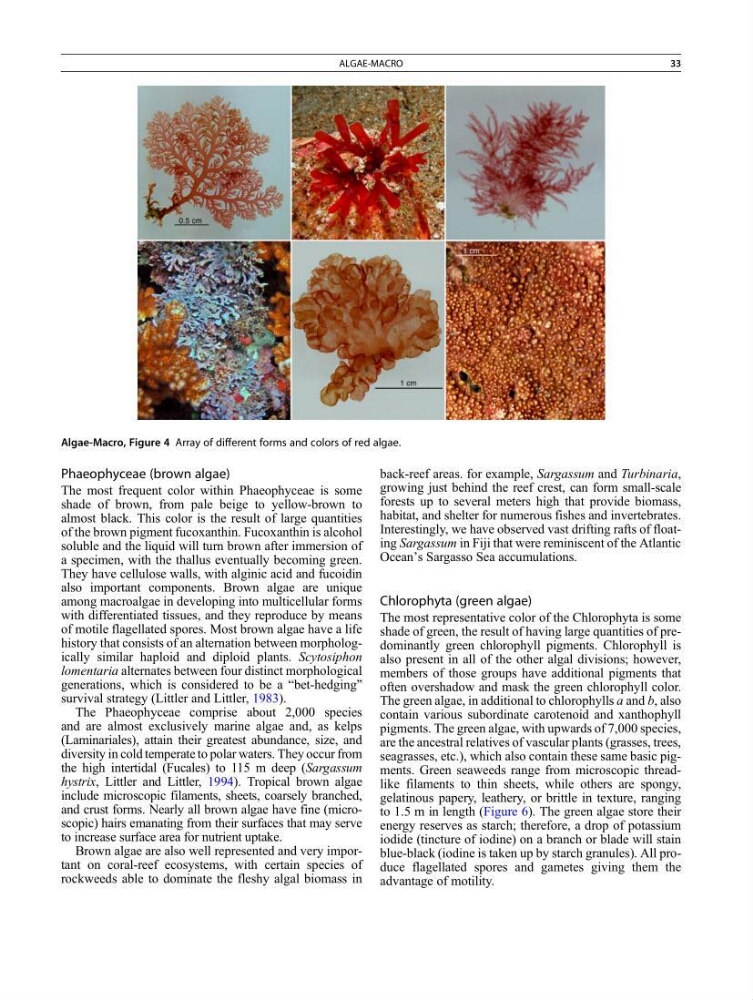
Algae-Macro, Figure 4 Array of different forms and colors of red algae.
ALGAE-MACRO
33
The most frequent color within Phaeophyceae is some
shade of brown, from pale beige to yellow-brown to
almost black. This color is the result of large quantities
of the brown pigment fucoxanthin. Fucoxanthin is alcohol
soluble and the liquid will turn brown after immersion of
a specimen, with the thallus eventually becoming green.
They have cellulose walls, with alginic acid and fucoidin
also important components. Brown algae are unique
among macroalgae in developing into multicellular forms
with differentiated tissues, and they reproduce by means
of motile flagellated spores. Most brown algae have a life
history that consists of an alternation between morphologically similar haploid and diploid plants. Scytosiphon
lomentaria alternates between four distinct morphological
generations, which is considered to be a “bet-hedging”
survival strategy (Littler and Littler, 1983).
The Phaeophyceae comprise about 2,000 species
and are almost exclusively marine algae and, as kelps
(Laminariales), attain their greatest abundance, size, and
diversity in cold temperate to polar waters. They occur from
the high intertidal (Fucales) to 115 m deep (Sargassum
hystrix, Littler and Littler, 1994). Tropical brown algae
include microscopic filaments, sheets, coarsely branched,
and crust forms. Nearly all brown algae have fine (microscopic) hairs emanating from their surfaces that may serve
to increase surface area for nutrient uptake.
Brown algae are also well represented and very important on coral-reef ecosystems, with certain species of
rockweeds able to dominate the fleshy algal biomass in
back-reef areas. for example, Sargassum and Turbinaria,
growing just behind the reef crest, can form small-scale
forests up to several meters high that provide biomass,
habitat, and shelter for numerous fishes and invertebrates.
Interestingly, we have observed vast drifting rafts of floating Sargassum in Fiji that were reminiscent of the Atlantic
Ocean’s Sargasso Sea accumulations.
Chlorophyta (green algae)
The most representative color of the Chlorophyta is some
shade of green, the result of having large quantities of predominantly green chlorophyll pigments. Chlorophyll is
also present in all of the other algal divisions; however,
members of those groups have additional pigments that
often overshadow and mask the green chlorophyll color.
The green algae, in additional to chlorophylls a and b, also
contain various subordinate carotenoid and xanthophyll
pigments. The green algae, with upwards of 7,000 species,
are the ancestral relatives of vascular plants (grasses, trees,
seagrasses, etc.), which also contain these same basic pigments. Green seaweeds range from microscopic threadlike filaments to thin sheets, while others are spongy,
gelatinous papery, leathery, or brittle in texture, ranging
to 1.5 m in length (Figure 6). The green algae store their
energy reserves as starch; therefore, a drop of potassium
iodide (tincture of iodine) on a branch or blade will stain
blue-black (iodine is taken up by starch granules). All produce flagellated spores and gametes giving them the
advantage of motility.
Algae-Macro, Figure 4 Array of different forms and colors of red algae.
ALGAE-MACRO
33