

Pillay, D., Branch, G., and Forbes, A., 2007. Experimental evidence
for the effects of the thalassinidean sandprawn Callianassa kraussi
on macrobenthic communities. Marine Biology, 152(3), 611–618.
Pischedda, L., Poggiale, J., Cuny, P., and Gilbert, F., 2008. Imaging
oxygen distribution in marine sediments. The importance of bioturbation and sediment heterogeneity. Acta Biotheoretica, 56(1),
123–135.
Rhoads, D. C., 1974. Organism-sediment relations on the muddy
sea floor. Oceanography and Marine Biology, 12, 263–300.
Riddle, M. J., 1988. Cyclone and bioturbation effects on sediments
from coral reeflagoons. Estuarine, Coastal and Shelf Science,
27(6), 687–695.
Robbins, J. A., 1986. A model for particle-selective transport of
tracers in sediments with conveyor belt deposit feeders. Journal
of Geophysical Research, 91, 8542–8558.
Scoffin, T. P., 1992. Taphonomy of coral reefs: a review. Coral
Reefs, 11(2), 57–77.
Shinn, E. A., 1968. Burrowing in recent lime sediments of Florida
and the Bahamas. Journal of Paleontology, 42(4), 879–894.
Soetaert, K., Herman, P. M. J., and Middelburg, J. J., 1996. A model
of early diagenetic processes from the shelf to abyssal depths.
Geochimica et Cosmochimica Acta, 60(6), 1019–1040.
Staff, G. M., Stanton, R. J., Powell, E. N., and Cummins, H., 1986.
Time-averaging, taphonomy, and their impact on paleocommunity
reconstruction: death assemblages in Texas bays. Geological
Society of America Bulletin, 97(4), 428–443.
Suchanek, T. H., 1983. Control of seagrass communities and sediment distribution by Callianassa (Crustacea, Thalassinidea) bioturbation. Journal of Marine Research, 41(2), 281–298.
Tomasovych, A., and Zuschin, M., 2009. Variation in brachiopod
preservation along a carbonate shelf-basin transect (Red Sea
and Gulf of Aden): Environmental sensitivity of taphofacies.
Palaios, 24(10), 697–716.
Tudhope, A. W., and Risk, M. J., 1985. Rate of dissolution of
carbonate sediments by microboring organisms, Davies Reef,
Australia. Journal of Sedimentary Research, 55(3), 440–447.
Tudhope, A. W., and Scoffin, T. P., 1984. The effects of Callianassa
bioturbation on the preservation of carbonate grains in Davies
Reef Lagoon, Great Barrier Reef, Australia. Journal of Sedimentary Research, 54(4), 1091–1096.
Walbran, P. D., 1996. 210 Pb and 14 C as indicators of callianassid
bioturbation in coral reef sediment. Journal of Sedimentary
Research, 66(1), 259–264.
Walbran, P. D. et al., 1989a. Crown-of-thorns starfish outbreaks on
the Great Barrier Reef: a geological perspective based upon sediment record. Coral Reefs, 8, 67–78.
Walbran, P. D., Henderson, R. A., Jull, A. J. T., and Head, M. J.,
1989b. Evidence from sediments of long-term Acanthaster
planci predation on corals of the Great Barrier Reef. Science,
245(4920), 847–850.
Ziebis, W., Forster, S., Huettel, M., and Jørgensen, B. B., 1996. Complex burrows of the mud shrimp Callianassa truncata and their
geochemical impact in the sea bed. Nature, 382(6592), 619–622.
Cross-references
Algae, Coralline
Bioerosion
Calcite
Carbon Fluxes of Coral Reefs
Carbonate Budgets and Reef Framework Accumulation
Classification of Carbonates
Coral Reef, Definition
Density and Porosity: Influence on Reef Accretion Rates
Diagenesis
Eco-Morphodynamics
Forereef/Reef Front
Fringing Reefs
Geomorphic Zonation
Halimeda
Holocene Reefs
Intrinsic and Extrinsic Drivers on Coral Reefs
Lagoons
Micrite
Porosity Variability in Limestone Sequences
Reef Flat
Reefal Sediments
Reef Structure
Sediment Durability
Sediment Dynamics
Sediments, Properties
BLOWHOLES
Colin D. Woodroffe
University of Wollongong, Wollongong, NSW, Australia
Definition
A blowhole is a crack or fissure in coastal rock through
which air and spray is expelled when waves break on the
shore.
Blowholes are a feature where large swell impacts
coasts, on which the rock contains fractures. Weaknesses,
such as joints or fault lines, are preferentially widened, primarily through wave action but also through other processes such as solution of reef limestone. In many cases
this can result in a sea cave. Coasts that experience strong
swell are impacted by trains of regular period waves generated by remote storms and which have travelled across
the ocean. Successive waves trap air into the fissure or
sea cave and compress it as the crest of the wave fills the
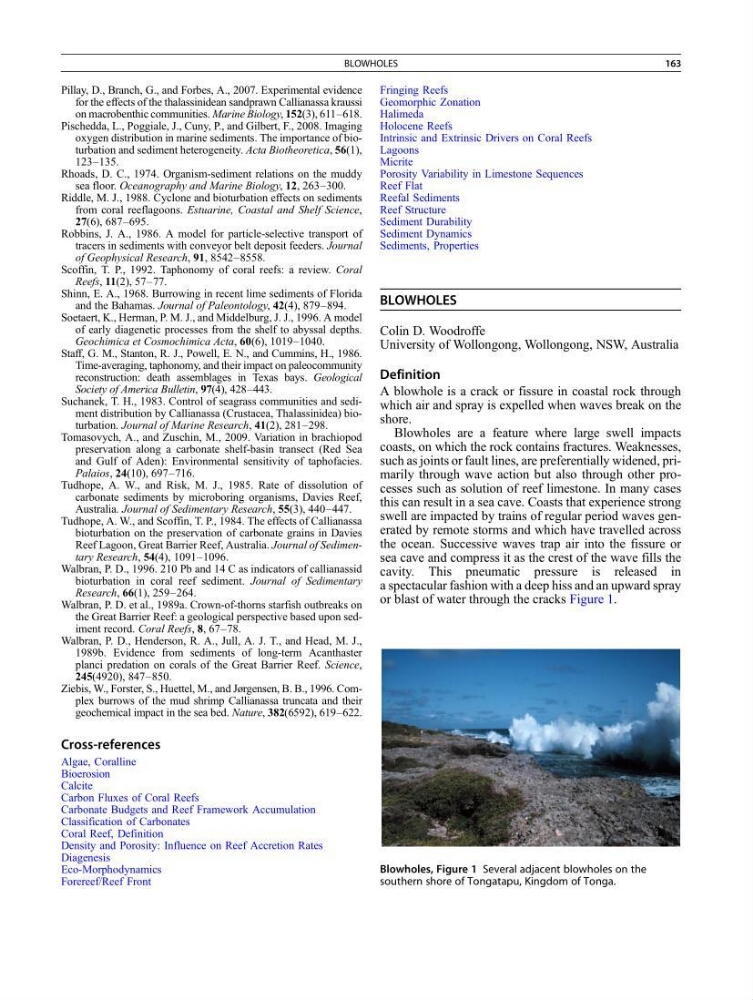
cavity. This pneumatic pressure is released in
a spectacular fashion with a deep hiss and an upward spray
or blast of water through the cracks Figure 1.
Blowholes, Figure 1 Several adjacent blowholes on the
southern shore of Tongatapu, Kingdom of Tonga.
BLOWHOLES
163
for the effects of the thalassinidean sandprawn Callianassa kraussi
on macrobenthic communities. Marine Biology, 152(3), 611–618.
Pischedda, L., Poggiale, J., Cuny, P., and Gilbert, F., 2008. Imaging
oxygen distribution in marine sediments. The importance of bioturbation and sediment heterogeneity. Acta Biotheoretica, 56(1),
123–135.
Rhoads, D. C., 1974. Organism-sediment relations on the muddy
sea floor. Oceanography and Marine Biology, 12, 263–300.
Riddle, M. J., 1988. Cyclone and bioturbation effects on sediments
from coral reeflagoons. Estuarine, Coastal and Shelf Science,
27(6), 687–695.
Robbins, J. A., 1986. A model for particle-selective transport of
tracers in sediments with conveyor belt deposit feeders. Journal
of Geophysical Research, 91, 8542–8558.
Scoffin, T. P., 1992. Taphonomy of coral reefs: a review. Coral
Reefs, 11(2), 57–77.
Shinn, E. A., 1968. Burrowing in recent lime sediments of Florida
and the Bahamas. Journal of Paleontology, 42(4), 879–894.
Soetaert, K., Herman, P. M. J., and Middelburg, J. J., 1996. A model
of early diagenetic processes from the shelf to abyssal depths.
Geochimica et Cosmochimica Acta, 60(6), 1019–1040.
Staff, G. M., Stanton, R. J., Powell, E. N., and Cummins, H., 1986.
Time-averaging, taphonomy, and their impact on paleocommunity
reconstruction: death assemblages in Texas bays. Geological
Society of America Bulletin, 97(4), 428–443.
Suchanek, T. H., 1983. Control of seagrass communities and sediment distribution by Callianassa (Crustacea, Thalassinidea) bioturbation. Journal of Marine Research, 41(2), 281–298.
Tomasovych, A., and Zuschin, M., 2009. Variation in brachiopod
preservation along a carbonate shelf-basin transect (Red Sea
and Gulf of Aden): Environmental sensitivity of taphofacies.
Palaios, 24(10), 697–716.
Tudhope, A. W., and Risk, M. J., 1985. Rate of dissolution of
carbonate sediments by microboring organisms, Davies Reef,
Australia. Journal of Sedimentary Research, 55(3), 440–447.
Tudhope, A. W., and Scoffin, T. P., 1984. The effects of Callianassa
bioturbation on the preservation of carbonate grains in Davies
Reef Lagoon, Great Barrier Reef, Australia. Journal of Sedimentary Research, 54(4), 1091–1096.
Walbran, P. D., 1996. 210 Pb and 14 C as indicators of callianassid
bioturbation in coral reef sediment. Journal of Sedimentary
Research, 66(1), 259–264.
Walbran, P. D. et al., 1989a. Crown-of-thorns starfish outbreaks on
the Great Barrier Reef: a geological perspective based upon sediment record. Coral Reefs, 8, 67–78.
Walbran, P. D., Henderson, R. A., Jull, A. J. T., and Head, M. J.,
1989b. Evidence from sediments of long-term Acanthaster
planci predation on corals of the Great Barrier Reef. Science,
245(4920), 847–850.
Ziebis, W., Forster, S., Huettel, M., and Jørgensen, B. B., 1996. Complex burrows of the mud shrimp Callianassa truncata and their
geochemical impact in the sea bed. Nature, 382(6592), 619–622.
Cross-references
Algae, Coralline
Bioerosion
Calcite
Carbon Fluxes of Coral Reefs
Carbonate Budgets and Reef Framework Accumulation
Classification of Carbonates
Coral Reef, Definition
Density and Porosity: Influence on Reef Accretion Rates
Diagenesis
Eco-Morphodynamics
Forereef/Reef Front
Fringing Reefs
Geomorphic Zonation
Halimeda
Holocene Reefs
Intrinsic and Extrinsic Drivers on Coral Reefs
Lagoons
Micrite
Porosity Variability in Limestone Sequences
Reef Flat
Reefal Sediments
Reef Structure
Sediment Durability
Sediment Dynamics
Sediments, Properties
BLOWHOLES
Colin D. Woodroffe
University of Wollongong, Wollongong, NSW, Australia
Definition
A blowhole is a crack or fissure in coastal rock through
which air and spray is expelled when waves break on the
shore.
Blowholes are a feature where large swell impacts
coasts, on which the rock contains fractures. Weaknesses,
such as joints or fault lines, are preferentially widened, primarily through wave action but also through other processes such as solution of reef limestone. In many cases
this can result in a sea cave. Coasts that experience strong
swell are impacted by trains of regular period waves generated by remote storms and which have travelled across
the ocean. Successive waves trap air into the fissure or
sea cave and compress it as the crest of the wave fills the
cavity. This pneumatic pressure is released in
a spectacular fashion with a deep hiss and an upward spray
or blast of water through the cracks Figure 1.
Blowholes, Figure 1 Several adjacent blowholes on the
southern shore of Tongatapu, Kingdom of Tonga.
BLOWHOLES
163