

Seasonal Studies of a Pelagic Ecosystem (Meridian 110° E)
497
IV. Seasonal Amplitudes
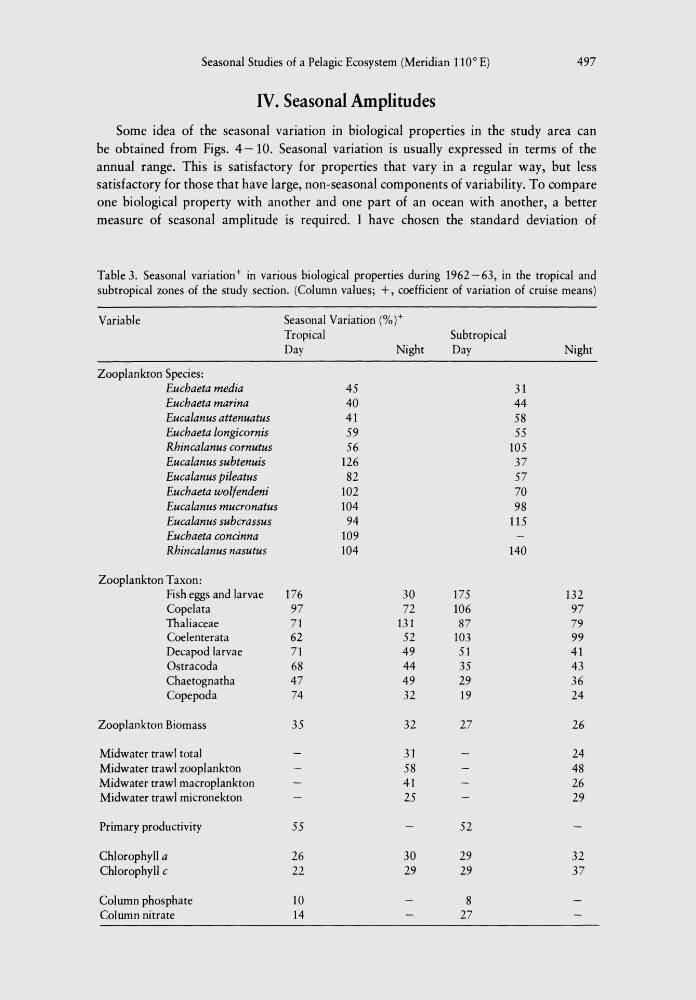
Some idea of the seasonal variation in biological properties in the study area can
be obtained from Figs. 4-10. Seasonal variation is usually expressed in terms of the
annual range. This is satisfactory for properties that vary in a regular way, but less
satisfactory for those that have large, non-seasonal components of variability. To compare
one biological property with another and one part of an ocean with another, a better
measure of seasonal amplitude is required. I have chosen the standard deviation of
Table 3. Seasonal variation+ in various biological properties during 1962-63, in the tropical and
subtropical zones of the study section. (Column values; +, coefficient of variation of cruise means)
Variable
Seasonal Variation (%)+
Tropical
Subtropical
Day
Night
Day
Night
Zooplankton Species:
Euchaeta media
45
31
Euchaeta marina
40
44
Eucalanus attenuatus
41
58
Euchaeta longicornis
59
55
Rhincalanus cornutus
56
105
Eucalanus subtenuis
126
37
Eucalanus pileatus
82
57
Euchaeta wolfendeni
102
70
Eucalanus mucronatus
104
98
Eucalanus subcrassus
94
115
Euchaeta concinna
109
Rhincalanus nasutus
104
140
Zooplankton Taxon:
Fish eggs and larvae
176
30
175
132
Copelata
97
72
106
97
Thaliaceae
71
131
87
79
Coelenterata
62
52
103
99
Decapod larvae
71
49
51
41
Ostracoda
68
44
35
43
Chaetognatha
47
49
29
36
Copepoda
74
32
19
24
Zooplankton Biomass
35
32
27
26
Midwater trawl total
31
24
Midwater trawl zooplankton
58
48
Midwater trawl macroplankton
41
26
Midwater trawl micronekton
25
29
Primary productivity
55
52
Chlorophyll a
26
30
29
32
Chlorophyll c
22
29
29
37
Column phosphate
10
8
Column nitrate
14
27
497
IV. Seasonal Amplitudes
Some idea of the seasonal variation in biological properties in the study area can
be obtained from Figs. 4-10. Seasonal variation is usually expressed in terms of the
annual range. This is satisfactory for properties that vary in a regular way, but less
satisfactory for those that have large, non-seasonal components of variability. To compare
one biological property with another and one part of an ocean with another, a better
measure of seasonal amplitude is required. I have chosen the standard deviation of
Table 3. Seasonal variation+ in various biological properties during 1962-63, in the tropical and
subtropical zones of the study section. (Column values; +, coefficient of variation of cruise means)
Variable
Seasonal Variation (%)+
Tropical
Subtropical
Day
Night
Day
Night
Zooplankton Species:
Euchaeta media
45
31
Euchaeta marina
40
44
Eucalanus attenuatus
41
58
Euchaeta longicornis
59
55
Rhincalanus cornutus
56
105
Eucalanus subtenuis
126
37
Eucalanus pileatus
82
57
Euchaeta wolfendeni
102
70
Eucalanus mucronatus
104
98
Eucalanus subcrassus
94
115
Euchaeta concinna
109
Rhincalanus nasutus
104
140
Zooplankton Taxon:
Fish eggs and larvae
176
30
175
132
Copelata
97
72
106
97
Thaliaceae
71
131
87
79
Coelenterata
62
52
103
99
Decapod larvae
71
49
51
41
Ostracoda
68
44
35
43
Chaetognatha
47
49
29
36
Copepoda
74
32
19
24
Zooplankton Biomass
35
32
27
26
Midwater trawl total
31
24
Midwater trawl zooplankton
58
48
Midwater trawl macroplankton
41
26
Midwater trawl micronekton
25
29
Primary productivity
55
52
Chlorophyll a
26
30
29
32
Chlorophyll c
22
29
29
37
Column phosphate
10
8
Column nitrate
14
27