

The Distribution of Indian Ocean Euphausiids
373
Variety armata of E. similis was found only in the subantarctic zone (Fig. 11),
together, however, with the typical E. similis.
14 additional euphausiid species occurred in the HOE collections:
Euphausia tenera ranges from 15°N to 25°S in midocean, and southward to near
30° S off Africa. This is a regularly occurring, abundant species.
,
'\
'0" \
,
'\
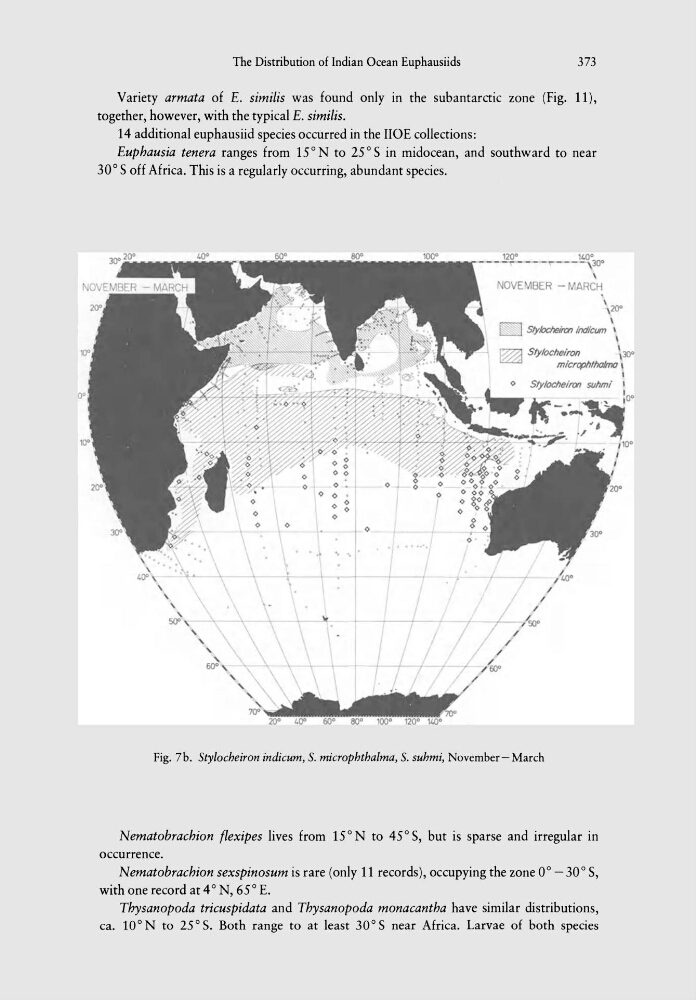
Fig. 7b. Stylocheiron indicum, S. microphthalma, S. suhmi, November- March
Nematobrachion flexipes lives from 15° N to 45° S, but is sparse and irregular in
occurrence.
Nematobrachion sexspinosum is rare (only 11 records), occupying the zone 0° - 30° S,
with one record at 4° N, 65° E.
Thysanopoda tricuspidata and Thysanopoda monacantha have similar distributions,
ca. 100 N to 25 0 S. Both range to at least 30° S near Africa. Larvae of both species
\ \ 20"
373
Variety armata of E. similis was found only in the subantarctic zone (Fig. 11),
together, however, with the typical E. similis.
14 additional euphausiid species occurred in the HOE collections:
Euphausia tenera ranges from 15°N to 25°S in midocean, and southward to near
30° S off Africa. This is a regularly occurring, abundant species.
,
'\
'0" \
,
'\
Fig. 7b. Stylocheiron indicum, S. microphthalma, S. suhmi, November- March
Nematobrachion flexipes lives from 15° N to 45° S, but is sparse and irregular in
occurrence.
Nematobrachion sexspinosum is rare (only 11 records), occupying the zone 0° - 30° S,
with one record at 4° N, 65° E.
Thysanopoda tricuspidata and Thysanopoda monacantha have similar distributions,
ca. 100 N to 25 0 S. Both range to at least 30° S near Africa. Larvae of both species
\ \ 20"