

370
E. BRINTON and K. GOPALAKRISHNAN:
A second species of the E. gibboides group, Euphausia fallax, is known from the
western Pacific: the Philippines, the South China Sea and waters east of Australia
(HANSEN, 1916; BRINTON, 1962). This distribution is included in Fig. 10 b.
What may prove to be another species of the E. gibboides group occurs in the
Andaman Sea. Records from cruise 14 of "Kistna" (September, 1963) and Cruise 1 of
"Anton Bruun" (March, 1963) place consistent limits on its distribution, excepting a
May - September
Juveniles
8. Adults
\
\
o
•
Nemofosce/is microp5
"
• N fenello
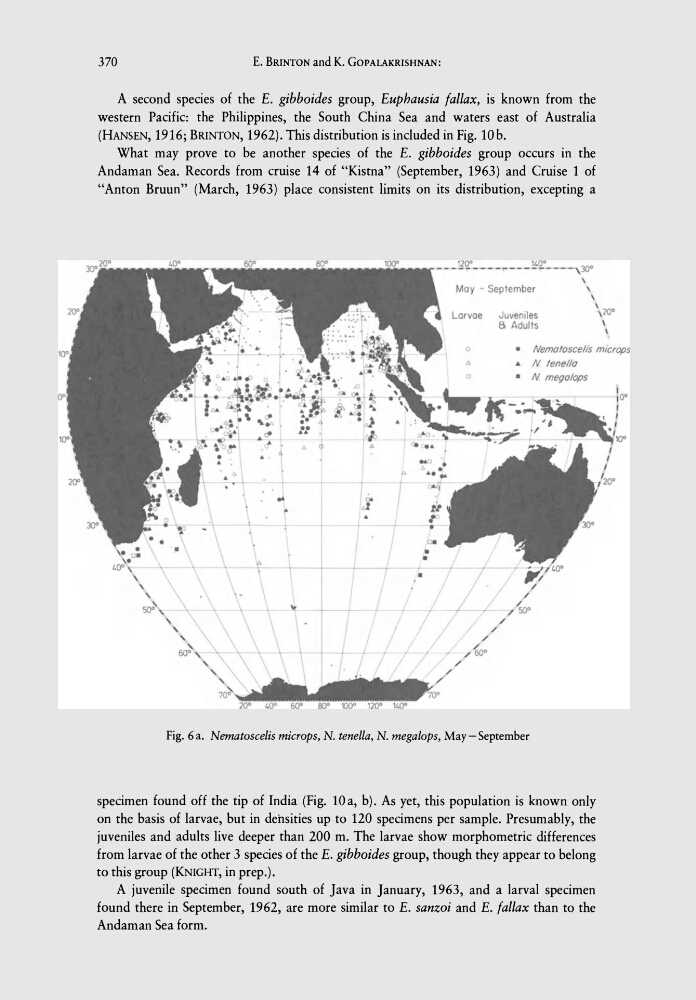
Fig. 6 a. Nematoscelis microps, N. tenella, N. megalops, May - September
specimen found off the tip of India (Fig. lOa, b). As yet, this population is known only
on the basis of larvae, but in densities up to 120 specimens per sample. Presumably, the
juveniles and adults live deeper than 200 m. The larvae show morphometric differences
from larvae of the other 3 species of the E. gibboides group, though they appear to belong
to this group (KNIGHT, in prep.).
A juvenile specimen found south of Java in January, 1963, and a larval specimen
found there in September, 1962, are more similar to E. sanzoi and E. fallax than to the
Andaman Sea form.
E. BRINTON and K. GOPALAKRISHNAN:
A second species of the E. gibboides group, Euphausia fallax, is known from the
western Pacific: the Philippines, the South China Sea and waters east of Australia
(HANSEN, 1916; BRINTON, 1962). This distribution is included in Fig. 10 b.
What may prove to be another species of the E. gibboides group occurs in the
Andaman Sea. Records from cruise 14 of "Kistna" (September, 1963) and Cruise 1 of
"Anton Bruun" (March, 1963) place consistent limits on its distribution, excepting a
May - September
Juveniles
8. Adults
\
\
o
•
Nemofosce/is microp5
"
• N fenello
Fig. 6 a. Nematoscelis microps, N. tenella, N. megalops, May - September
specimen found off the tip of India (Fig. lOa, b). As yet, this population is known only
on the basis of larvae, but in densities up to 120 specimens per sample. Presumably, the
juveniles and adults live deeper than 200 m. The larvae show morphometric differences
from larvae of the other 3 species of the E. gibboides group, though they appear to belong
to this group (KNIGHT, in prep.).
A juvenile specimen found south of Java in January, 1963, and a larval specimen
found there in September, 1962, are more similar to E. sanzoi and E. fallax than to the
Andaman Sea form.