

368
E. BRINTON and K. GOPALAKRISHNAN:
In the equatorial belt Euphausia paragibba is the predominant species of this group.
During May-September the axis of its distribution lay along the Equator, and there were
records northward to Arabia and southward to Natal. During November- March E.
paragibba was found north of the Equator only to the west of 60 a E.
E. pseudogibba occurs in the zone OO-1O o N, ranging somewhat farther to the north
in the Andaman Sea. This species is rare in the western half of the ocean. November\
Moy - Septembe r
\
\
Juveniles
8 Adults
\20"
\
\
o
• Nemofoscelis qrocl'lis
/
l>
•
N. al/onfica
/
/
/ fIJ'
/
/
/
/
7 50"
/
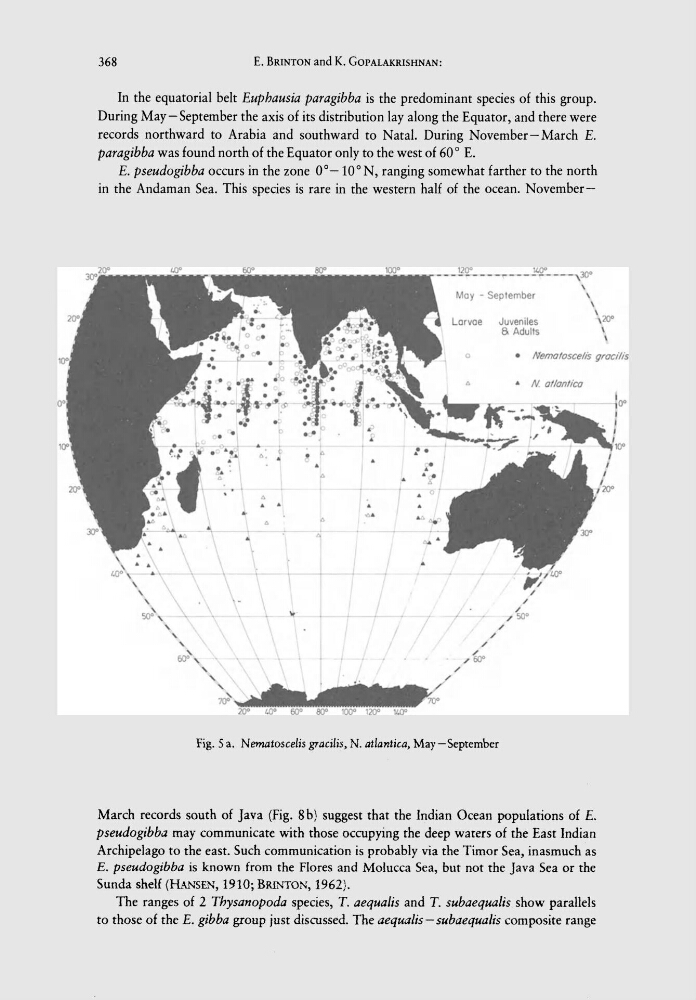
Fig. 5 a. Nematoscelis gracilis, N. atlantica, May -September
March records south of Java (Fig. 8b) suggest that the Indian Ocean populations of E.
pseudogibba may communicate with those occupying the deep waters of the East Indian
Archipelago to the east. Such communication is probably via the Timor Sea, inasmuch as
E. pseudogibba is known from the Flores and Molucca Sea, but not the Java Sea or the
Sunda shelf (HANSEN, 1910; BRINTON, 1962).
The ranges of 2 Thysanopoda species, T. aequalis and T. subaequalis show parallels
to those of the E. gibba group just discussed. The aequalis-subaequalis composite range
E. BRINTON and K. GOPALAKRISHNAN:
In the equatorial belt Euphausia paragibba is the predominant species of this group.
During May-September the axis of its distribution lay along the Equator, and there were
records northward to Arabia and southward to Natal. During November- March E.
paragibba was found north of the Equator only to the west of 60 a E.
E. pseudogibba occurs in the zone OO-1O o N, ranging somewhat farther to the north
in the Andaman Sea. This species is rare in the western half of the ocean. November\
Moy - Septembe r
\
\
Juveniles
8 Adults
\20"
\
\
o
• Nemofoscelis qrocl'lis
/
l>
•
N. al/onfica
/
/
/ fIJ'
/
/
/
/
7 50"
/
Fig. 5 a. Nematoscelis gracilis, N. atlantica, May -September
March records south of Java (Fig. 8b) suggest that the Indian Ocean populations of E.
pseudogibba may communicate with those occupying the deep waters of the East Indian
Archipelago to the east. Such communication is probably via the Timor Sea, inasmuch as
E. pseudogibba is known from the Flores and Molucca Sea, but not the Java Sea or the
Sunda shelf (HANSEN, 1910; BRINTON, 1962).
The ranges of 2 Thysanopoda species, T. aequalis and T. subaequalis show parallels
to those of the E. gibba group just discussed. The aequalis-subaequalis composite range