

The Distribution of Indian Ocean Euphausiids
367
Of the 7 Stylocheiron species not mapped in this paper, 6 have broad ranges, extending
across the tropical and subtropical zones of all oceans (MAUCHLINE and FISHER, 1969).
These include S. longicorne (bounded on the north by closely-related S. indicum in the
Indian Ocean), S. affine, and S. carinatum (both occur from 35° S to the northern limit of
the Indian Ocean), S. abbreviatum (lacking only in the Arabian Sea and Bay of Bengal),
___ L~- - - -r-- - ~- ____ ~~
\ ..
\.
~
• • • •
•
• - ---t-.
. .
. .
. ..
I
•
\. ' . "
\
J •
, .
. , . C
I
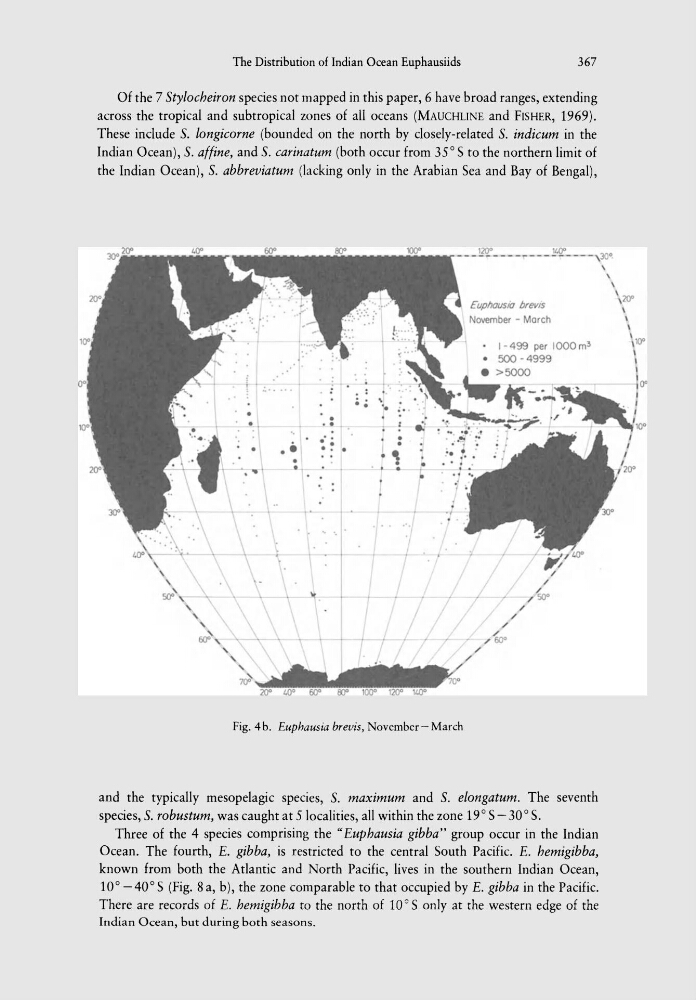
Fig. 4 b. Euphausia brevis, November - March
£ upflousio breviS
November - March
• I - 499 per 1000 m~
• 500 -4999
and the typically mesopelagic species, S. maximum and S. elongatum. The seventh
species, S. robustum, was caught at 5 localities, all within the zone 19° S - 30
0
S.
Three of the 4 species comprising the "Euphausia gibba" group occur in the Indian
Ocean. The fourth, E. gibba, is restricted to the central South Pacific. E. hemigibba,
known from both the Atlantic and North Pacific, lives in the southern Indian Ocean,
100 - 40 0 S (Fig. 8 a, b), the zone comparable to that occupied by E. gibba in the Pacific.
There are records of E. hemigibba to the north of 10 ° S only at the western edge of the
Indian Ocean, but during both seasons.
\
\
\ \ 20"
367
Of the 7 Stylocheiron species not mapped in this paper, 6 have broad ranges, extending
across the tropical and subtropical zones of all oceans (MAUCHLINE and FISHER, 1969).
These include S. longicorne (bounded on the north by closely-related S. indicum in the
Indian Ocean), S. affine, and S. carinatum (both occur from 35° S to the northern limit of
the Indian Ocean), S. abbreviatum (lacking only in the Arabian Sea and Bay of Bengal),
___ L~- - - -r-- - ~- ____ ~~
\ ..
\.
~
• • • •
•
• - ---t-.
. .
. .
. ..
I
•
\. ' . "
\
J •
, .
. , . C
I
Fig. 4 b. Euphausia brevis, November - March
£ upflousio breviS
November - March
• I - 499 per 1000 m~
• 500 -4999
and the typically mesopelagic species, S. maximum and S. elongatum. The seventh
species, S. robustum, was caught at 5 localities, all within the zone 19° S - 30
0
S.
Three of the 4 species comprising the "Euphausia gibba" group occur in the Indian
Ocean. The fourth, E. gibba, is restricted to the central South Pacific. E. hemigibba,
known from both the Atlantic and North Pacific, lives in the southern Indian Ocean,
100 - 40 0 S (Fig. 8 a, b), the zone comparable to that occupied by E. gibba in the Pacific.
There are records of E. hemigibba to the north of 10 ° S only at the western edge of the
Indian Ocean, but during both seasons.
\
\
\ \ 20"