

Relationship of Indian Ocean Epiplanktonic Calanoids to the World Ocean
343
mutually exclusive distributions that tend to replace plumata in lower latitudes. One
species is restricted to the eastern tropical Pacific. Its sibling occupies the lower latitudes
throughout the remainder of the Pacific and Indian Oceans. The most dissimilar of the
3 is restricted to the lower latitudes of the Atlantic Ocean and shows stronger morphological affinity to the true plumata.
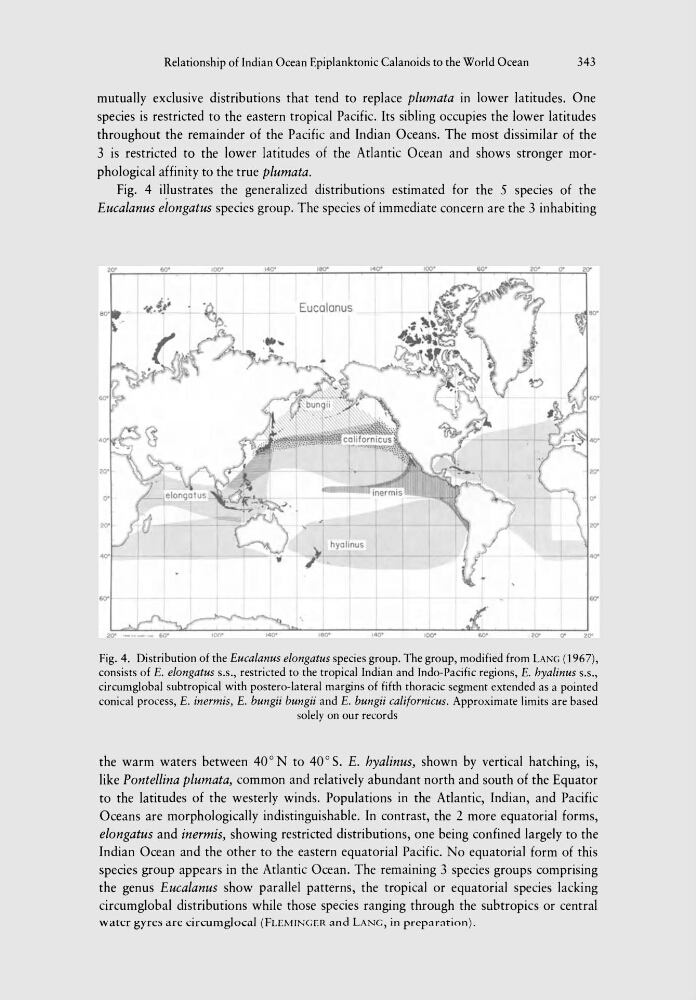
Fig. 4 illustrates the generalized distributions estimated for the 5 species of the
Eucalanus elongatus species group. The species of immediate concern are the 3 inhabiting
Eucalanus
j. hyolinus
/ .
''''''
,...,.
'00'
Fig. 4. Distribution of the Eucalanus elongatus species group. The group, modified from LANG (1967),
consists of E. elongatus s.s., restricted to the tropical Indian and Indo-Pacific regions, E. hyalinus s.s.,
circumglobal subtropical with postero-lateral margins of fifth thoracic segment extended as a pointed
conical process, E. inermis, E. bungii bungii and E. bungii californicus. Approximate limits are based
solely on our records
the warm waters between 40° N to 40° S. E. hyalin us, shown by vertical hatching, is,
like Pontellina plumata, common and relatively abundant north and south of the Equator
to the latitudes of the westerly winds. Populations in the Atlantic, Indian, and Pacific
Oceans are morphologically indistinguishable. In contrast, the 2 more equatorial forms,
elongatus and inermis, showing restricted distributions, one being confined largely to the
Indian Ocean and the other to the eastern equatorial Pacific. No equatorial form of this
species group appears in the Atlantic Ocean. The remaining 3 species groups comprising
the genus Eucalanus show parallel patterns, the tropical or equatorial species lacking
circumglobal distributions while those species ranging through the subtropics or central
water gyrcs are circumglocal (FLEMINCER and LANG, in prepar"tion).
343
mutually exclusive distributions that tend to replace plumata in lower latitudes. One
species is restricted to the eastern tropical Pacific. Its sibling occupies the lower latitudes
throughout the remainder of the Pacific and Indian Oceans. The most dissimilar of the
3 is restricted to the lower latitudes of the Atlantic Ocean and shows stronger morphological affinity to the true plumata.
Fig. 4 illustrates the generalized distributions estimated for the 5 species of the
Eucalanus elongatus species group. The species of immediate concern are the 3 inhabiting
Eucalanus
j. hyolinus
/ .
''''''
,...,.
'00'
Fig. 4. Distribution of the Eucalanus elongatus species group. The group, modified from LANG (1967),
consists of E. elongatus s.s., restricted to the tropical Indian and Indo-Pacific regions, E. hyalinus s.s.,
circumglobal subtropical with postero-lateral margins of fifth thoracic segment extended as a pointed
conical process, E. inermis, E. bungii bungii and E. bungii californicus. Approximate limits are based
solely on our records
the warm waters between 40° N to 40° S. E. hyalin us, shown by vertical hatching, is,
like Pontellina plumata, common and relatively abundant north and south of the Equator
to the latitudes of the westerly winds. Populations in the Atlantic, Indian, and Pacific
Oceans are morphologically indistinguishable. In contrast, the 2 more equatorial forms,
elongatus and inermis, showing restricted distributions, one being confined largely to the
Indian Ocean and the other to the eastern equatorial Pacific. No equatorial form of this
species group appears in the Atlantic Ocean. The remaining 3 species groups comprising
the genus Eucalanus show parallel patterns, the tropical or equatorial species lacking
circumglobal distributions while those species ranging through the subtropics or central
water gyrcs are circumglocal (FLEMINCER and LANG, in prepar"tion).