

342
A. FLEMINGER and K. HULSEMANN:
and varying from fine grain filterers to rapacious predators. We have utilized plankton
collections from a variety of institutions including Scripps Institution of Oceanography,
Woods Hole Oceanographic Institution, and the Indian Ocean Biological Centre. Grouped
together and omitting seasonal and other replication, the geographical array of samples
examined by us is shown in Fig. 2. Most of these samples were obtained with nets 1 m
in diameter at the mouth which were towed obliquely from 150 or 200 m to the surface.
A typical sample represents the straining of about 400 to 500 m 3 of water. Routine
examination of these samples consists of sorting and identifying specimens of the genera
from randomized subsamples ranging from 2% to 10% of the total catch.
.40"'
Pontellina
."""
Tropical Indian· Pacific sp.
~ Eas! Tropical Pacific sp.
!ill Tropical Allanli c sp.
20r1'
20"
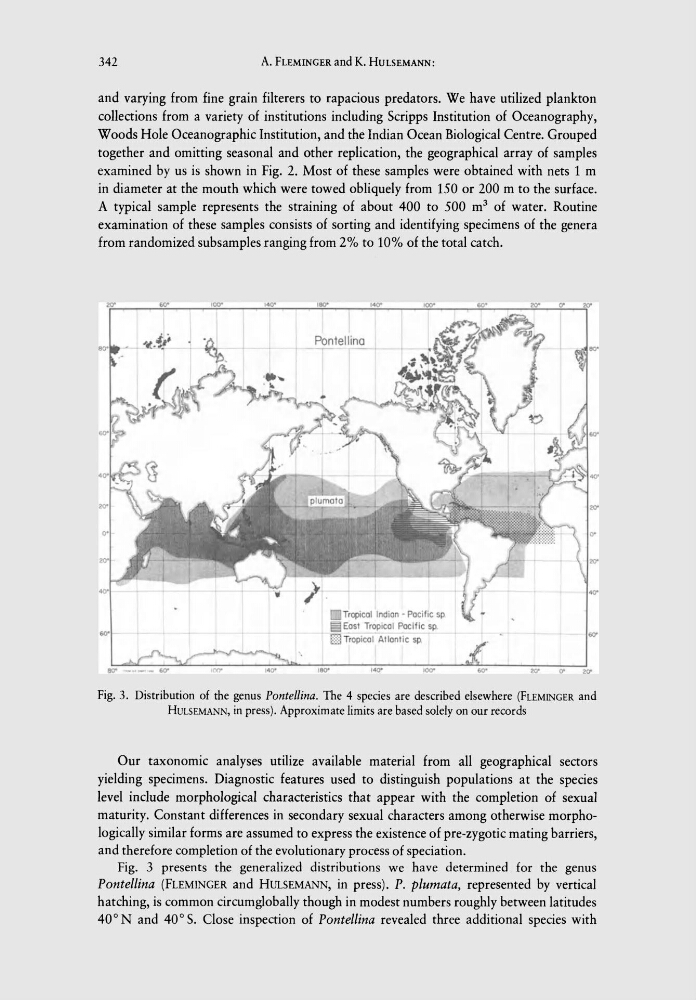
Fig. 3. Distribution of the genus Pantel/ina. The 4 species are described elsewhere (FLEMINGER and
HULSEMANN, in press). Approximate limits are based solely on our records
Our taxonomic analyses utilize available material from all geographical sectors
yielding specimens. Diagnostic features used to distinguish populations at the species
level include morphological characteristics that appear with the completion of sexual
maturity. Constant differences in secondary sexual characters among otherwise morphologically similar forms are assumed to express the existence of pre-zygotic mating barriers,
and therefore completion of the evolutionary process of speciation.
Fig. 3 presents the generalized distributions we have determined for the genus
Pontellina (FLEMINGER and HULSEMANN, in press). P. plumata, represented by vertical
hatching, is common circumglobally though in modest numbers roughly between latitudes
40° Nand 40° S. Close inspection of Pantel/ina revealed three additional species with
A. FLEMINGER and K. HULSEMANN:
and varying from fine grain filterers to rapacious predators. We have utilized plankton
collections from a variety of institutions including Scripps Institution of Oceanography,
Woods Hole Oceanographic Institution, and the Indian Ocean Biological Centre. Grouped
together and omitting seasonal and other replication, the geographical array of samples
examined by us is shown in Fig. 2. Most of these samples were obtained with nets 1 m
in diameter at the mouth which were towed obliquely from 150 or 200 m to the surface.
A typical sample represents the straining of about 400 to 500 m 3 of water. Routine
examination of these samples consists of sorting and identifying specimens of the genera
from randomized subsamples ranging from 2% to 10% of the total catch.
.40"'
Pontellina
."""
Tropical Indian· Pacific sp.
~ Eas! Tropical Pacific sp.
!ill Tropical Allanli c sp.
20r1'
20"
Fig. 3. Distribution of the genus Pantel/ina. The 4 species are described elsewhere (FLEMINGER and
HULSEMANN, in press). Approximate limits are based solely on our records
Our taxonomic analyses utilize available material from all geographical sectors
yielding specimens. Diagnostic features used to distinguish populations at the species
level include morphological characteristics that appear with the completion of sexual
maturity. Constant differences in secondary sexual characters among otherwise morphologically similar forms are assumed to express the existence of pre-zygotic mating barriers,
and therefore completion of the evolutionary process of speciation.
Fig. 3 presents the generalized distributions we have determined for the genus
Pontellina (FLEMINGER and HULSEMANN, in press). P. plumata, represented by vertical
hatching, is common circumglobally though in modest numbers roughly between latitudes
40° Nand 40° S. Close inspection of Pantel/ina revealed three additional species with