

Relationship of Indian Ocean Epiplanktonic Calanoids to the World Ocean
341
I. Distribution of Epiplanktonic Calanoids
Fig. 1 shows the distribution of the 5 species of the Clausocalanus arcuicornis species
group, the only group in the genus with species restricted to equatorial latitudes. The
two species represented in Fig. 1 (top) (arcuicornis and paululus) are both circumglobal
and occur roughly between 45
0
Nand 45
0
S. C. arcuicornis is absent from the equatorial
region in the Pacific. Fig. 1 (bottom) shows the distribution of 2 equatorial species, minor
04'"
100'
'00'
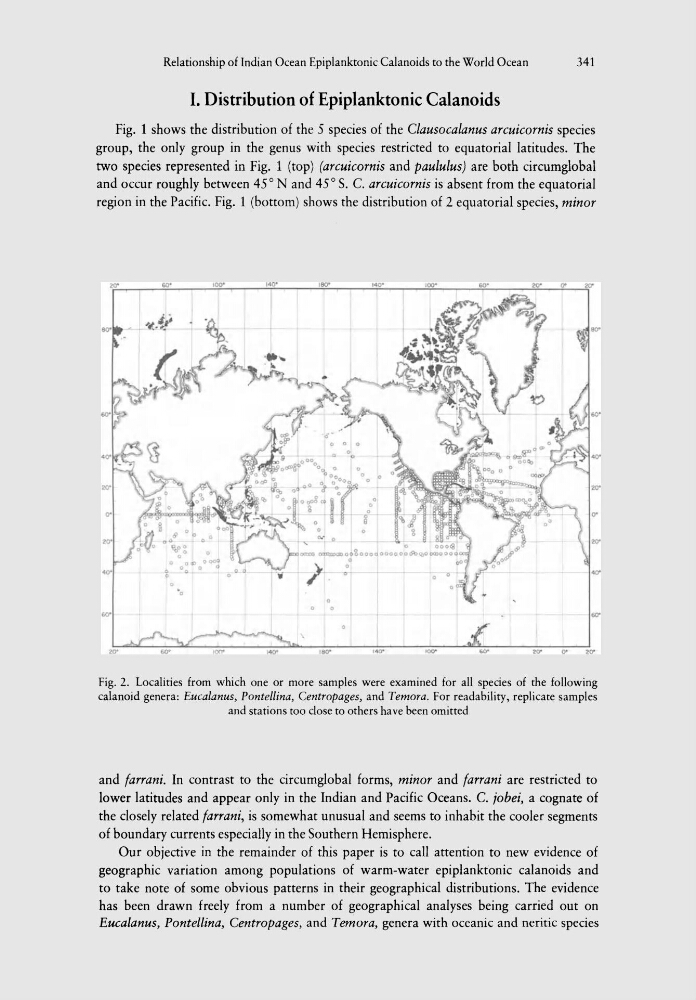
Fig. 2. Localities from which one or more samples were examined for all species of the following
calanoid genera: Euca/anus, Ponte/lina, Centropages, and Temora. For readability, replicate samples
and stations too close to others have been omitted
and farrani. In contrast to the circumglobal forms, minor and farrani are restricted to
lower latitudes and appear only in the Indian and Pacific Oceans. C. ;obei, a cognate of
the closely related farrani, is somewhat unusual and seems to inhabit the cooler segments
of boundary currents especially in the Southern Hemisphere.
Our objective in the remainder of this paper is to call attention to new evidence of
geographic variation among populations of warm-water epiplanktonic calanoids and
to take note of some obvious patterns in their geographical distributions. The evidence
has been drawn freely from a number of geographical analyses being carried out on
Eucalanus, Pontellina, Centropages, and Temora, genera with oceanic and neritic species
341
I. Distribution of Epiplanktonic Calanoids
Fig. 1 shows the distribution of the 5 species of the Clausocalanus arcuicornis species
group, the only group in the genus with species restricted to equatorial latitudes. The
two species represented in Fig. 1 (top) (arcuicornis and paululus) are both circumglobal
and occur roughly between 45
0
Nand 45
0
S. C. arcuicornis is absent from the equatorial
region in the Pacific. Fig. 1 (bottom) shows the distribution of 2 equatorial species, minor
04'"
100'
'00'
Fig. 2. Localities from which one or more samples were examined for all species of the following
calanoid genera: Euca/anus, Ponte/lina, Centropages, and Temora. For readability, replicate samples
and stations too close to others have been omitted
and farrani. In contrast to the circumglobal forms, minor and farrani are restricted to
lower latitudes and appear only in the Indian and Pacific Oceans. C. ;obei, a cognate of
the closely related farrani, is somewhat unusual and seems to inhabit the cooler segments
of boundary currents especially in the Southern Hemisphere.
Our objective in the remainder of this paper is to call attention to new evidence of
geographic variation among populations of warm-water epiplanktonic calanoids and
to take note of some obvious patterns in their geographical distributions. The evidence
has been drawn freely from a number of geographical analyses being carried out on
Eucalanus, Pontellina, Centropages, and Temora, genera with oceanic and neritic species