

344
A. FLEMINGER and K. HULSEMANN:
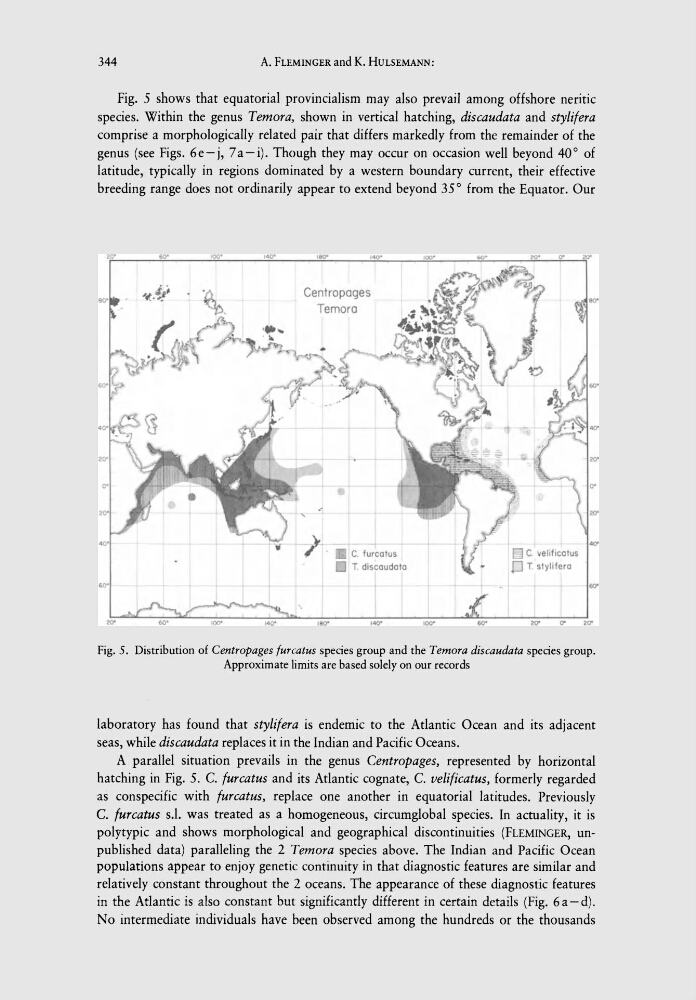
Fig. 5 shows that equatorial provincialism may also prevail among offshore neritic
species. Within the genus Temora, shown in vertical hatching, discaudata and stylifera
comprise a morphologically related pair that differs markedly from the remainder of the
genus (see Figs. 6e-j, 7a-i). Though they may occur on occasion well beyond 40° of
latitude, typically in regions dominated by a western boundary current, their effective
breeding range does not ordinarily appear to extend beyond 35° from the Equator. Our
Centropoges
Temoro
}
. ~rcotus
H T. dlscoudolo
1110'
Fig. 5. Distribution of Centropages furcatus species group and the Temora discaudata species group.
Approximate limits are based solely on our records
laboratory has found that stylifera is endemic to the Atlantic Ocean and its adjacent
seas, while discaudata replaces it in the Indian and Pacific Oceans.
A parallel situation prevails in the genus Centropages, represented by horizontal
hatching in Fig. 5. C. furcatus and its Atlantic cognate, C. velificatus, formerly regarded
as conspecific with furcatus, replace one another in equatorial latitudes. Previously
C. furcatus s.1. was treated as a homogeneous, circumglobal species. In actuality, it is
polytypic and shows morphological and geographical discontinuities (FLEMINGER, unpublished data) paralleling the 2 Temora species above. The Indian and Pacific Ocean
populations appear to enjoy genetic continuity in that diagnostic features are similar and
relatively constant throughout the 2 oceans. The appearance of these diagnostic features
in the Atlantic is also constant but significantly different in certain details (Fig. 6 a - d).
No intermediate individuals have been observed among the hundreds or the thousands
A. FLEMINGER and K. HULSEMANN:
Fig. 5 shows that equatorial provincialism may also prevail among offshore neritic
species. Within the genus Temora, shown in vertical hatching, discaudata and stylifera
comprise a morphologically related pair that differs markedly from the remainder of the
genus (see Figs. 6e-j, 7a-i). Though they may occur on occasion well beyond 40° of
latitude, typically in regions dominated by a western boundary current, their effective
breeding range does not ordinarily appear to extend beyond 35° from the Equator. Our
Centropoges
Temoro
}
. ~rcotus
H T. dlscoudolo
1110'
Fig. 5. Distribution of Centropages furcatus species group and the Temora discaudata species group.
Approximate limits are based solely on our records
laboratory has found that stylifera is endemic to the Atlantic Ocean and its adjacent
seas, while discaudata replaces it in the Indian and Pacific Oceans.
A parallel situation prevails in the genus Centropages, represented by horizontal
hatching in Fig. 5. C. furcatus and its Atlantic cognate, C. velificatus, formerly regarded
as conspecific with furcatus, replace one another in equatorial latitudes. Previously
C. furcatus s.1. was treated as a homogeneous, circumglobal species. In actuality, it is
polytypic and shows morphological and geographical discontinuities (FLEMINGER, unpublished data) paralleling the 2 Temora species above. The Indian and Pacific Ocean
populations appear to enjoy genetic continuity in that diagnostic features are similar and
relatively constant throughout the 2 oceans. The appearance of these diagnostic features
in the Atlantic is also constant but significantly different in certain details (Fig. 6 a - d).
No intermediate individuals have been observed among the hundreds or the thousands