

310
30. ;0·
N
20·
10·
o·
S
10·
V. R. NAIR and T. S. S. RAo:
60"
so·
70·
70·
E 800 30 •
N
20"
.' • s
• ~ 80" 10"
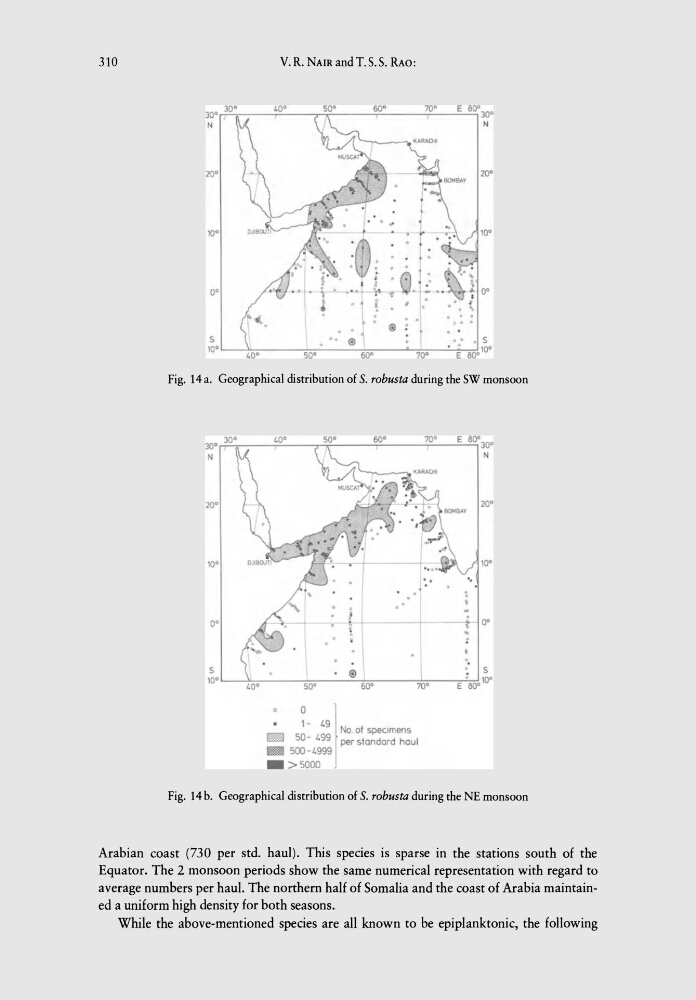
Fig. 14 a. Geographical distribution of S. robusta during the SW monsoon
~.~~--~~--~~~----~----~~--~~
N
N
10·
o·
S
10·
- - - - t - - -t-JO"
®
60"
70·
o
1 - '9 No. of specimens
~ 50- '99 per standard haul
mmIl 500 - '999
>5000
Fig. 14 b. Geographical distribution of S. robusta during the NE monsoon
Arabian coast (730 per std. haul). This species is sparse in the stations south of the
Equator. The 2 monsoon periods show the same numerical representation with regard to
average numbers per haul. The northern half of Somalia and the coast of Arabia maintained a uniform high density for both seasons.
While the above-mentioned species are all known to be epiplanktonic, the following
30. ;0·
N
20·
10·
o·
S
10·
V. R. NAIR and T. S. S. RAo:
60"
so·
70·
70·
E 800 30 •
N
20"
.' • s
• ~ 80" 10"
Fig. 14 a. Geographical distribution of S. robusta during the SW monsoon
~.~~--~~--~~~----~----~~--~~
N
N
10·
o·
S
10·
- - - - t - - -t-JO"
®
60"
70·
o
1 - '9 No. of specimens
~ 50- '99 per standard haul
mmIl 500 - '999
>5000
Fig. 14 b. Geographical distribution of S. robusta during the NE monsoon
Arabian coast (730 per std. haul). This species is sparse in the stations south of the
Equator. The 2 monsoon periods show the same numerical representation with regard to
average numbers per haul. The northern half of Somalia and the coast of Arabia maintained a uniform high density for both seasons.
While the above-mentioned species are all known to be epiplanktonic, the following