

The Distribution and Abundance of Zooplankton during Postmonsoon and Premonsoon Periods 265
Acrocalanus spp. predominated in the latter. In the most productive area near Astola
Island the oceanic species formed the bulk of the copepods and were largely represented
by Pleuromamma indica, Clausocalanus farrani, and Euchaeta wolfendeni. The epiplanktonic species in this sector were of the same order of magnitude noted in other
sectors during the period. They were largely dominated by Acrocalanus longicornis,
and Eucalanus crassus.
To summarize, the epiplanktonic species dominated the bulk of the copepod stock
in the shelf and adjacent area during October and November, while the oceanic species,
largely represented by mesopelagic forms, formed the bulk of the slope water population
in October and at places where a reduced surface isothermal layer was the predominant
feature. On the shelf they were substantially represented during November but were
absent in March.
II. Distribution of Oceanic Species in Relation to Hydrographic
Conditions
Evidence has been obtained that hydrographic factors affect the distribution of
oceanic species principally inhabiting the subsurface region of the oceanic zone and the
surface waters of the slope area and the shallow region of the shelf, in this case the
N
,
E
M
S2
)(
~ Pleuromamma indica
o Euchaeta wolfendeni
_
Eucalanus mucronatus
II1II Clausocolanus far rani
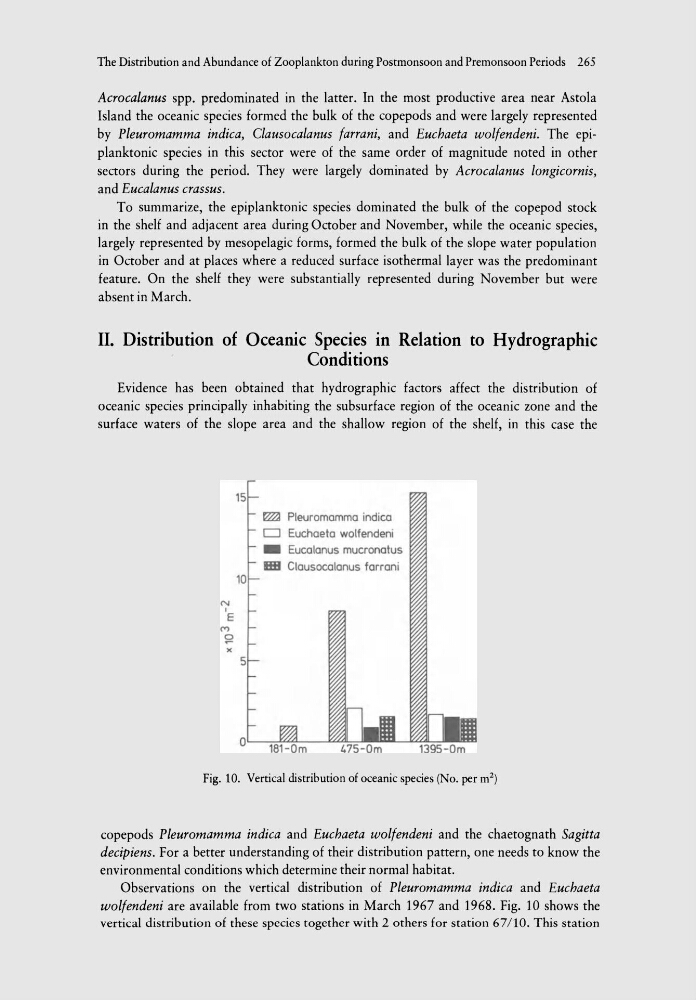
Fig. 10. Vertical distribution of oceanic species (No. per m 2 )
copepods Pleuromamma indica and Euchaeta wolfendeni and the chaetognath Sagitta
decipiens. For a better understanding of their distribution pattern, one needs to know the
environmental conditions which determine their normal habitat.
Observations on the vertical distribution of Pleuromamma indica and Euchaeta
wolfendeni are available from two stations in March 1967 and 1968. Fig. 10 shows the
vertical distribution of these species together with 2 others for station 67/10. This station
Acrocalanus spp. predominated in the latter. In the most productive area near Astola
Island the oceanic species formed the bulk of the copepods and were largely represented
by Pleuromamma indica, Clausocalanus farrani, and Euchaeta wolfendeni. The epiplanktonic species in this sector were of the same order of magnitude noted in other
sectors during the period. They were largely dominated by Acrocalanus longicornis,
and Eucalanus crassus.
To summarize, the epiplanktonic species dominated the bulk of the copepod stock
in the shelf and adjacent area during October and November, while the oceanic species,
largely represented by mesopelagic forms, formed the bulk of the slope water population
in October and at places where a reduced surface isothermal layer was the predominant
feature. On the shelf they were substantially represented during November but were
absent in March.
II. Distribution of Oceanic Species in Relation to Hydrographic
Conditions
Evidence has been obtained that hydrographic factors affect the distribution of
oceanic species principally inhabiting the subsurface region of the oceanic zone and the
surface waters of the slope area and the shallow region of the shelf, in this case the
N
,
E
M
S2
)(
~ Pleuromamma indica
o Euchaeta wolfendeni
_
Eucalanus mucronatus
II1II Clausocolanus far rani
Fig. 10. Vertical distribution of oceanic species (No. per m 2 )
copepods Pleuromamma indica and Euchaeta wolfendeni and the chaetognath Sagitta
decipiens. For a better understanding of their distribution pattern, one needs to know the
environmental conditions which determine their normal habitat.
Observations on the vertical distribution of Pleuromamma indica and Euchaeta
wolfendeni are available from two stations in March 1967 and 1968. Fig. 10 shows the
vertical distribution of these species together with 2 others for station 67/10. This station