

222
B. KIMOR:
Gulf of Aden (Fig. 1). A shallow sill not exceeding 100 m separates the Red Sea from the
Gulf of Aden and brings about the partial isolation of its deeper parts from the point of
view of its floristic and faunistic characteristics (HALIM, 1969; MaRcos, 1970).
! •
• lNDWl 0cuN ~:. -J.
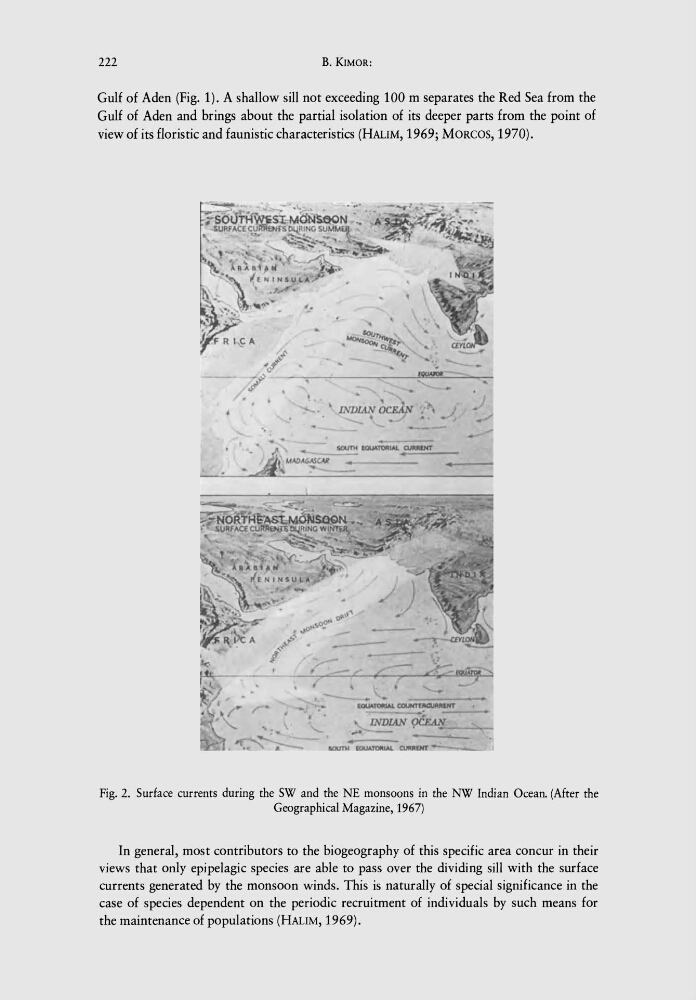
Fig. 2. Surface currents during the SW and the NE monsoons in the NW Indian Ocean. (After the
Geographical Magazine, 1967)
In general, most contributors to the biogeography of this specific area concur in their
views that only epipelagic species are able to pass over the dividing sill with the surface
currents generated by the monsoon winds. This is naturally of special significance in the
case of species dependent on the periodic recruitment of individuals by such means for
the maintenance of populations (HALIM, 1969).
B. KIMOR:
Gulf of Aden (Fig. 1). A shallow sill not exceeding 100 m separates the Red Sea from the
Gulf of Aden and brings about the partial isolation of its deeper parts from the point of
view of its floristic and faunistic characteristics (HALIM, 1969; MaRcos, 1970).
! •
• lNDWl 0cuN ~:. -J.
Fig. 2. Surface currents during the SW and the NE monsoons in the NW Indian Ocean. (After the
Geographical Magazine, 1967)
In general, most contributors to the biogeography of this specific area concur in their
views that only epipelagic species are able to pass over the dividing sill with the surface
currents generated by the monsoon winds. This is naturally of special significance in the
case of species dependent on the periodic recruitment of individuals by such means for
the maintenance of populations (HALIM, 1969).