

Agulhas Bank Plankton
197
South of the Cape of Good Hope, in some typical instances the widespread blanket of
thaliaceans suddenly narrowed into a ribbon-like strand turning to the North and penetrating the Atlantic along a path parallel to the west coast but well away from the shore,
some 40 or 60 miles out to sea. Further north it fanned out again and dispersed, or petered
out without dispersing.
Such a pattern is indicative of the presence of 2 water masses between which the
water carrying the salp swarms is hemmed in. The inshore water mass is obviously the
cold belt of upwelling water, considered as the starting point of the Benguela Current.
The offshore water mass appears to be subject to regular seasonal shifts with a pronounced
N -S component. This shift is documented by a similar rhythm in the appearance and
Pyrosoma
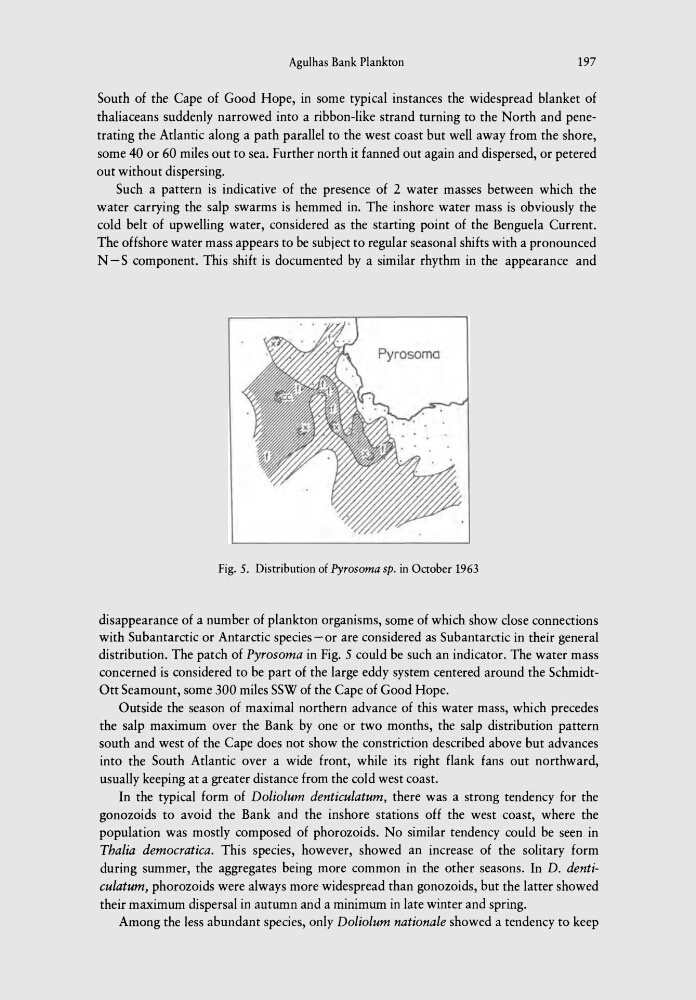
Fig. 5. Distribution of Pyrosoma sp. in October 1963
disappearance of a number of plankton organisms, some of which show close connections
with Subantarctic or Antarctic species - or are considered as Subantarctic in their general
distribution. The patch of Pyrasarna in Fig. 5 could be such an indicator. The water mass
concerned is considered to be part of the large eddy system centered around the SchmidtOtt Seamount, some 300 miles SSW of the Cape of Good Hope.
Outside the season of maximal northern advance of this water mass, which precedes
the salp maximum over the Bank by one or two months, the salp distribution pattern
south and west of the Cape does not show the constriction described above but advances
into the South Atlantic over a wide front, while its right flank fans out northward,
usually keeping at a greater distance from the cold west coast.
In the typical form of Dalialurn denticulaturn, there was a strong tendency for the
gonozoids to avoid the Bank and the inshore stations off the west coast, where the
population was mostly composed of phorozoids. No similar tendency could be seen in
Thalia dernacratica. This species, however, showed an increase of the solitary form
during summer, the aggregates being more common in the other seasons. In D. denticulaturn, phorozoids were always more widespread than gonozoids, but the latter showed
their maximum dispersal in autumn and a minimum in late winter and spring.
Among the less abundant species, only Dalialurn natianale showed a tendency to keep
197
South of the Cape of Good Hope, in some typical instances the widespread blanket of
thaliaceans suddenly narrowed into a ribbon-like strand turning to the North and penetrating the Atlantic along a path parallel to the west coast but well away from the shore,
some 40 or 60 miles out to sea. Further north it fanned out again and dispersed, or petered
out without dispersing.
Such a pattern is indicative of the presence of 2 water masses between which the
water carrying the salp swarms is hemmed in. The inshore water mass is obviously the
cold belt of upwelling water, considered as the starting point of the Benguela Current.
The offshore water mass appears to be subject to regular seasonal shifts with a pronounced
N -S component. This shift is documented by a similar rhythm in the appearance and
Pyrosoma
Fig. 5. Distribution of Pyrosoma sp. in October 1963
disappearance of a number of plankton organisms, some of which show close connections
with Subantarctic or Antarctic species - or are considered as Subantarctic in their general
distribution. The patch of Pyrasarna in Fig. 5 could be such an indicator. The water mass
concerned is considered to be part of the large eddy system centered around the SchmidtOtt Seamount, some 300 miles SSW of the Cape of Good Hope.
Outside the season of maximal northern advance of this water mass, which precedes
the salp maximum over the Bank by one or two months, the salp distribution pattern
south and west of the Cape does not show the constriction described above but advances
into the South Atlantic over a wide front, while its right flank fans out northward,
usually keeping at a greater distance from the cold west coast.
In the typical form of Dalialurn denticulaturn, there was a strong tendency for the
gonozoids to avoid the Bank and the inshore stations off the west coast, where the
population was mostly composed of phorozoids. No similar tendency could be seen in
Thalia dernacratica. This species, however, showed an increase of the solitary form
during summer, the aggregates being more common in the other seasons. In D. denticulaturn, phorozoids were always more widespread than gonozoids, but the latter showed
their maximum dispersal in autumn and a minimum in late winter and spring.
Among the less abundant species, only Dalialurn natianale showed a tendency to keep