

118
J. KREY:
northern Indian Ocean region is a very good example and can be divided into 4 biologically distinct seasons:
1. SW monsoon season: June - August.
2. NE monsoon season: December- February.
3. Intermonsoon period: October- November.
4. Intermonsoon period: March - May.
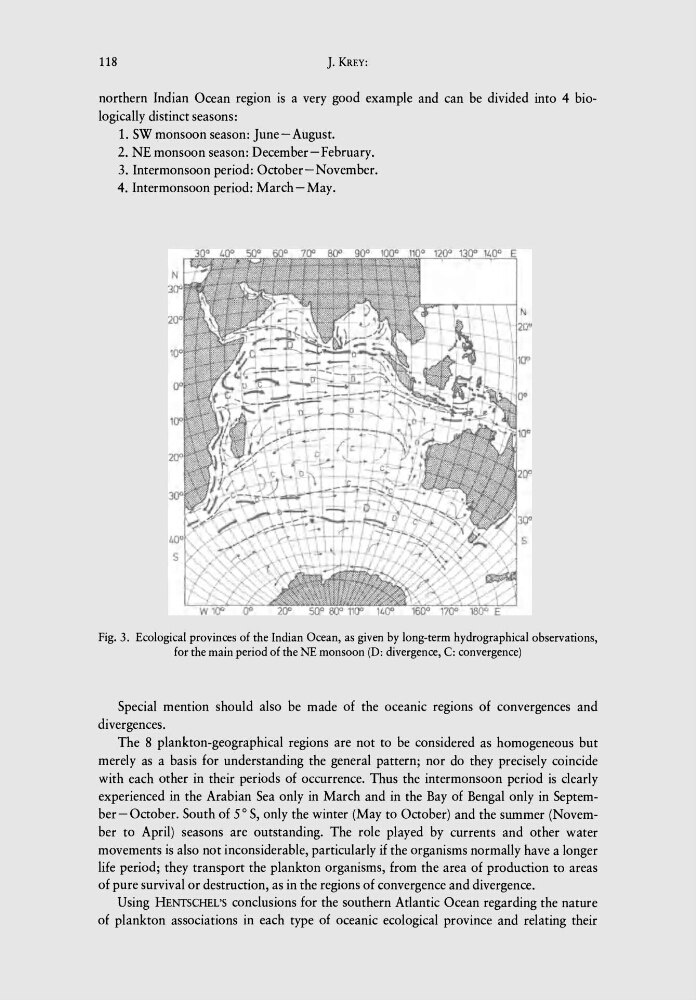
Fig. 3. Ecological provinces of the Indian Ocean, as given by long-term hydrographical observations,
for the main period of the NE monsoon (D: divergence, C: convergence)
Special mention should also be made of the oceanic regions of convergences and
divergences.
The 8 plankton-geographical regions are not to be considered as homogeneous but
merely as a basis for understanding the general pattern; nor do they precisely coincide
with each other in their periods of occurrence. Thus the intermonsoon period is clearly
experienced in the Arabian Sea only in March and in the Bay of Bengal only in September-October. South of 5° S, only the winter (May to October) and the summer (November to April) seasons are outstanding. The role played by currents and other water
movements is also not inconsiderable, particularly if the organisms normally have a longer
life period; they transport the plankton organisms, from the area of production to areas
of pure survival or destruction, as in the regions of convergence and divergence.
Using HENTSCHEL'S conclusions for the southern Atlantic Ocean regarding the nature
of plankton associations in each type of oceanic ecological province and relating their
J. KREY:
northern Indian Ocean region is a very good example and can be divided into 4 biologically distinct seasons:
1. SW monsoon season: June - August.
2. NE monsoon season: December- February.
3. Intermonsoon period: October- November.
4. Intermonsoon period: March - May.
Fig. 3. Ecological provinces of the Indian Ocean, as given by long-term hydrographical observations,
for the main period of the NE monsoon (D: divergence, C: convergence)
Special mention should also be made of the oceanic regions of convergences and
divergences.
The 8 plankton-geographical regions are not to be considered as homogeneous but
merely as a basis for understanding the general pattern; nor do they precisely coincide
with each other in their periods of occurrence. Thus the intermonsoon period is clearly
experienced in the Arabian Sea only in March and in the Bay of Bengal only in September-October. South of 5° S, only the winter (May to October) and the summer (November to April) seasons are outstanding. The role played by currents and other water
movements is also not inconsiderable, particularly if the organisms normally have a longer
life period; they transport the plankton organisms, from the area of production to areas
of pure survival or destruction, as in the regions of convergence and divergence.
Using HENTSCHEL'S conclusions for the southern Atlantic Ocean regarding the nature
of plankton associations in each type of oceanic ecological province and relating their