

Primary Production in the Indian Ocean I
117
various phytoplankton groups in the Indian Ocean, once the various ecological provinces
in the area have been identified and properly characterized.
Plankton-geographical Regions of the Indian Ocean
Meteorological and hydrographical parameters playa very important part in determining the growth conditions of plankton organisms in any water mass and hence in
characterizing the various ecological provinces. On the basis of these characteristics, the
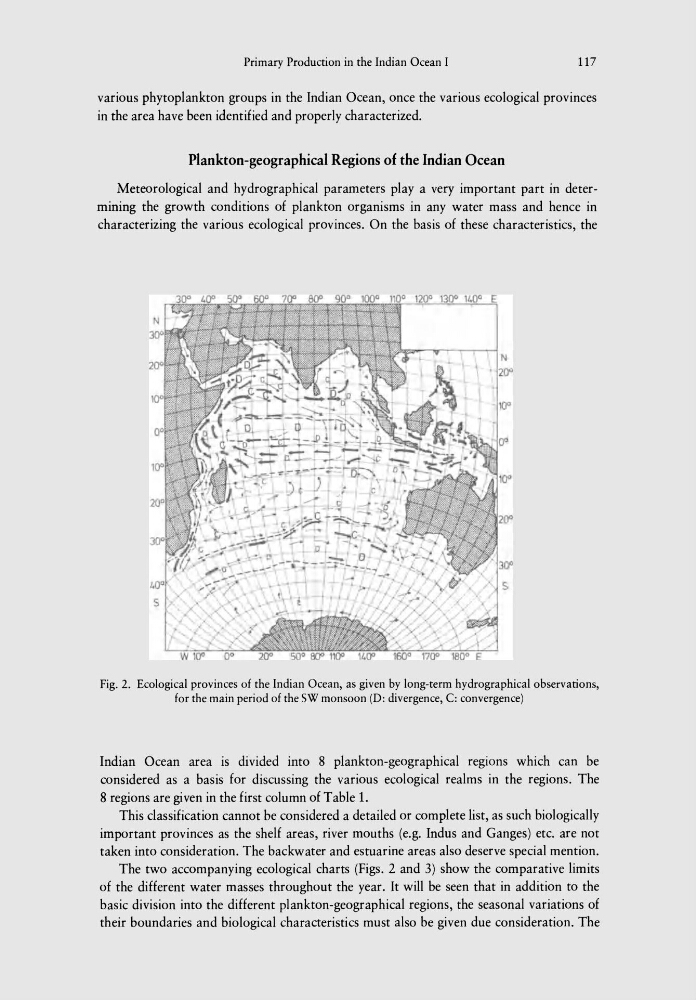
Fig. 2. Ecological provinces of the Indian Ocean, as given by long-term hydrographical observations,
for the main period of the SW monsoon (D: divergence, C: convergence)
Indian Ocean area is divided into 8 plankton-geographical regions which can be
considered as a basis for discussing the various ecological realms in the regions. The
8 regions are given in the first column of Table 1.
This classification cannot be considered a detailed or complete list, as such biologically
important provinces as the shelf areas, river mouths (e.g. Indus and Ganges) etc. are not
taken into consideration. The backwater and estuarine areas also deserve special mention.
The two accompanying ecological charts (Figs. 2 and 3) show the comparative limits
of the different water masses throughout the year. It will be seen that in addition to the
basic division into the different plankton-geographical regions, the seasonal variations of
their boundaries and biological characteristics must also be given due consideration. The
117
various phytoplankton groups in the Indian Ocean, once the various ecological provinces
in the area have been identified and properly characterized.
Plankton-geographical Regions of the Indian Ocean
Meteorological and hydrographical parameters playa very important part in determining the growth conditions of plankton organisms in any water mass and hence in
characterizing the various ecological provinces. On the basis of these characteristics, the
Fig. 2. Ecological provinces of the Indian Ocean, as given by long-term hydrographical observations,
for the main period of the SW monsoon (D: divergence, C: convergence)
Indian Ocean area is divided into 8 plankton-geographical regions which can be
considered as a basis for discussing the various ecological realms in the regions. The
8 regions are given in the first column of Table 1.
This classification cannot be considered a detailed or complete list, as such biologically
important provinces as the shelf areas, river mouths (e.g. Indus and Ganges) etc. are not
taken into consideration. The backwater and estuarine areas also deserve special mention.
The two accompanying ecological charts (Figs. 2 and 3) show the comparative limits
of the different water masses throughout the year. It will be seen that in addition to the
basic division into the different plankton-geographical regions, the seasonal variations of
their boundaries and biological characteristics must also be given due consideration. The