

254
viscosity—the attraction between molecules—have higher apparent friction
between fl uid layers, which increases the thickness of the fl uid layer distorted by an
object in a fl uid fl ow. For this reason, more viscous fl uids have relatively higher drag
than less viscous fl uids. A similar increase in drag occurs as fl uid velocity increases.
The drag on an object is, in fact, a measure of the energy required to transfer
momentum between the fl uid and the object to create a velocity gradient in the fl uid
layer between the object and undisturbed fl uid away from the object’s surface,”
(Dean and Bhushan 2010 ).
The skin of sharks is covered by specifi c (0.2–0.5 mm) bony placoid scales,
which can vary in size and shape and represent an example of riblet-containing
surfaces which are regularly spaced (30–100 μm) (see for review Lang et al. 2008 ;
Dean and Bhushan 2010 ). Their base is located in the deeper collagenous layer
termed the stratum compactum , with the crown exposed to the water. The angle
between collagenous fi bers, to which the base of each scale is attached, to the longitudinal axis of the shark body is of approximately 50–60°. The role of this type of
scales also with respect to bending fl exibility, and elastic energy storage during
swimming of sharks was studied previously (Motta 1977 ; Wainwright et al. 1978 ;
Hebrank 1980 ).
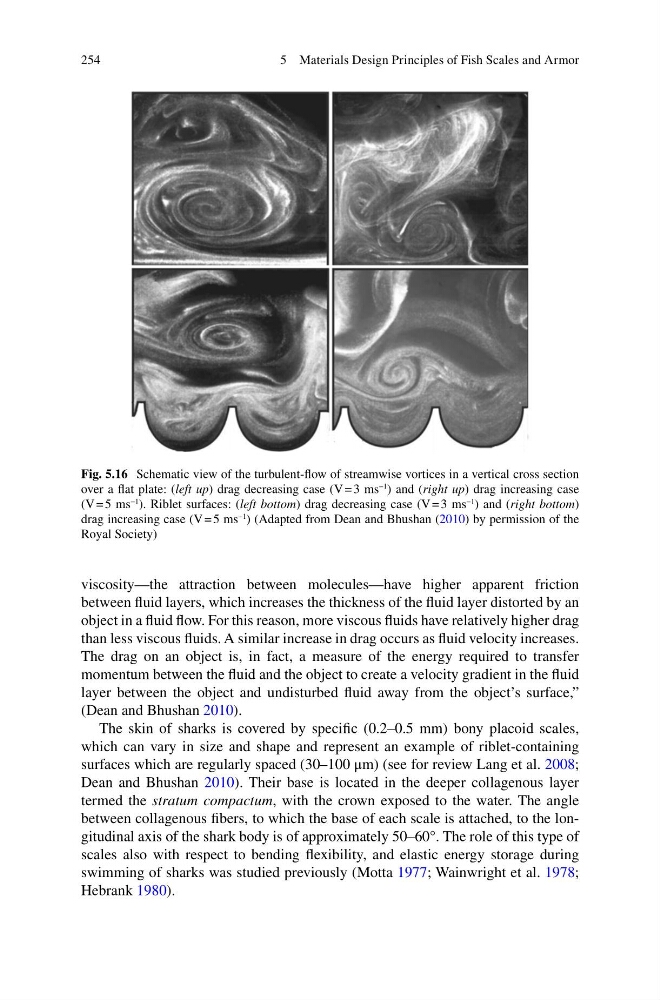
Fig. 5.16 Schematic view of the turbulent-fl ow of streamwise vortices in a vertical cross section
over a fl at plate: ( left up ) drag decreasing case (V = 3 ms
−1 ) and ( right up ) drag increasing case
(V = 5 ms
−1
). Riblet surfaces: ( left bottom ) drag decreasing case (V = 3 ms
−1
) and ( right bottom )
drag increasing case (V = 5 ms
−1
) (Adapted from Dean and Bhushan ( 2010 ) by permission of the
Royal Society)
5 Materials Design Principles of Fish Scales and Armor
viscosity—the attraction between molecules—have higher apparent friction
between fl uid layers, which increases the thickness of the fl uid layer distorted by an
object in a fl uid fl ow. For this reason, more viscous fl uids have relatively higher drag
than less viscous fl uids. A similar increase in drag occurs as fl uid velocity increases.
The drag on an object is, in fact, a measure of the energy required to transfer
momentum between the fl uid and the object to create a velocity gradient in the fl uid
layer between the object and undisturbed fl uid away from the object’s surface,”
(Dean and Bhushan 2010 ).
The skin of sharks is covered by specifi c (0.2–0.5 mm) bony placoid scales,
which can vary in size and shape and represent an example of riblet-containing
surfaces which are regularly spaced (30–100 μm) (see for review Lang et al. 2008 ;
Dean and Bhushan 2010 ). Their base is located in the deeper collagenous layer
termed the stratum compactum , with the crown exposed to the water. The angle
between collagenous fi bers, to which the base of each scale is attached, to the longitudinal axis of the shark body is of approximately 50–60°. The role of this type of
scales also with respect to bending fl exibility, and elastic energy storage during
swimming of sharks was studied previously (Motta 1977 ; Wainwright et al. 1978 ;
Hebrank 1980 ).
Fig. 5.16 Schematic view of the turbulent-fl ow of streamwise vortices in a vertical cross section
over a fl at plate: ( left up ) drag decreasing case (V = 3 ms
−1 ) and ( right up ) drag increasing case
(V = 5 ms
−1
). Riblet surfaces: ( left bottom ) drag decreasing case (V = 3 ms
−1
) and ( right bottom )
drag increasing case (V = 5 ms
−1
) (Adapted from Dean and Bhushan ( 2010 ) by permission of the
Royal Society)
5 Materials Design Principles of Fish Scales and Armor