

4.4.5 Seeds: Bacterial S-Layer
Initially, it had been discussed that the oxidation of Mn is metabolically driven by
bacteria (see: Ehrlich 2002), either by direct oxidation of Mn(II) on the surface of
the nodules or by an indirect action via a coupled consumption of protons during the
ATPase reaction in the respiratory chain. However, with the discovery of imprints
of bacteria in the polymetallic nodules that are decorated with S-layer structures
(Wang et al. 2009c), a new avenue for the understanding of the biogenic component
in nodule formation was opened (Fig. 4.7a–c). S-layers, paracrystalline surface
layers that cover both Archea and Bacteria, are 5–25 nm thick and contain
ordered repeats of protein(s) or glycoprotein(s) (Sleytr and Messner 1983).
The characteristic features of such morphological units of 10–20 nm are; (1) a
massive shedding from the bacterial surface (Mengele and Sumper 1992), (2) high
capacity of self-assembly to highly organized complex platforms and structures
(Sleytr et al. 1999), (3) strong adherence activity (Sleytr and Messner 1983), and (4)
surface charge (Schultze-Lam et al. 1993). Due to their regular patterns, with a
two-,three-, four-, or sixfold rotational symmetry, the outermost layer of the S-layer
is an ideal organic matrix not only to protect the microorganisms against external
chemical challenges (Schultze-Lam and Beveridge 1994), but also an anchorage
platform for mineral deposits (Fortin et al. 1997). The endolithic microorganisms
discovered in the nodules are covered by pillar-shaped protrusions, similar to
S-layer units. They measure 75 nm in their longitudinal and 45 nm in
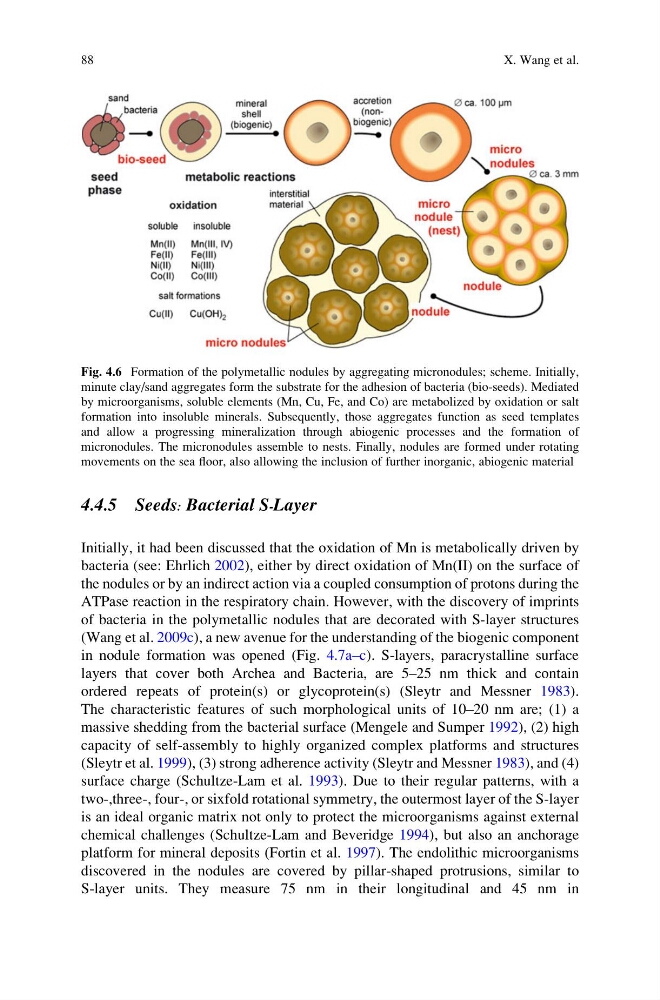
Fig. 4.6 Formation of the polymetallic nodules by aggregating micronodules; scheme. Initially,
minute clay/sand aggregates form the substrate for the adhesion of bacteria (bio-seeds). Mediated
by microorganisms, soluble elements (Mn, Cu, Fe, and Co) are metabolized by oxidation or salt
formation into insoluble minerals. Subsequently, those aggregates function as seed templates
and allow a progressing mineralization through abiogenic processes and the formation of
micronodules. The micronodules assemble to nests. Finally, nodules are formed under rotating
movements on the sea floor, also allowing the inclusion of further inorganic, abiogenic material
88
X. Wang et al.
Initially, it had been discussed that the oxidation of Mn is metabolically driven by
bacteria (see: Ehrlich 2002), either by direct oxidation of Mn(II) on the surface of
the nodules or by an indirect action via a coupled consumption of protons during the
ATPase reaction in the respiratory chain. However, with the discovery of imprints
of bacteria in the polymetallic nodules that are decorated with S-layer structures
(Wang et al. 2009c), a new avenue for the understanding of the biogenic component
in nodule formation was opened (Fig. 4.7a–c). S-layers, paracrystalline surface
layers that cover both Archea and Bacteria, are 5–25 nm thick and contain
ordered repeats of protein(s) or glycoprotein(s) (Sleytr and Messner 1983).
The characteristic features of such morphological units of 10–20 nm are; (1) a
massive shedding from the bacterial surface (Mengele and Sumper 1992), (2) high
capacity of self-assembly to highly organized complex platforms and structures
(Sleytr et al. 1999), (3) strong adherence activity (Sleytr and Messner 1983), and (4)
surface charge (Schultze-Lam et al. 1993). Due to their regular patterns, with a
two-,three-, four-, or sixfold rotational symmetry, the outermost layer of the S-layer
is an ideal organic matrix not only to protect the microorganisms against external
chemical challenges (Schultze-Lam and Beveridge 1994), but also an anchorage
platform for mineral deposits (Fortin et al. 1997). The endolithic microorganisms
discovered in the nodules are covered by pillar-shaped protrusions, similar to
S-layer units. They measure 75 nm in their longitudinal and 45 nm in
Fig. 4.6 Formation of the polymetallic nodules by aggregating micronodules; scheme. Initially,
minute clay/sand aggregates form the substrate for the adhesion of bacteria (bio-seeds). Mediated
by microorganisms, soluble elements (Mn, Cu, Fe, and Co) are metabolized by oxidation or salt
formation into insoluble minerals. Subsequently, those aggregates function as seed templates
and allow a progressing mineralization through abiogenic processes and the formation of
micronodules. The micronodules assemble to nests. Finally, nodules are formed under rotating
movements on the sea floor, also allowing the inclusion of further inorganic, abiogenic material
88
X. Wang et al.