

Heterotrophic Feeding of Corals
353
Pocil!opora (1l,.7)
3
z
,
8
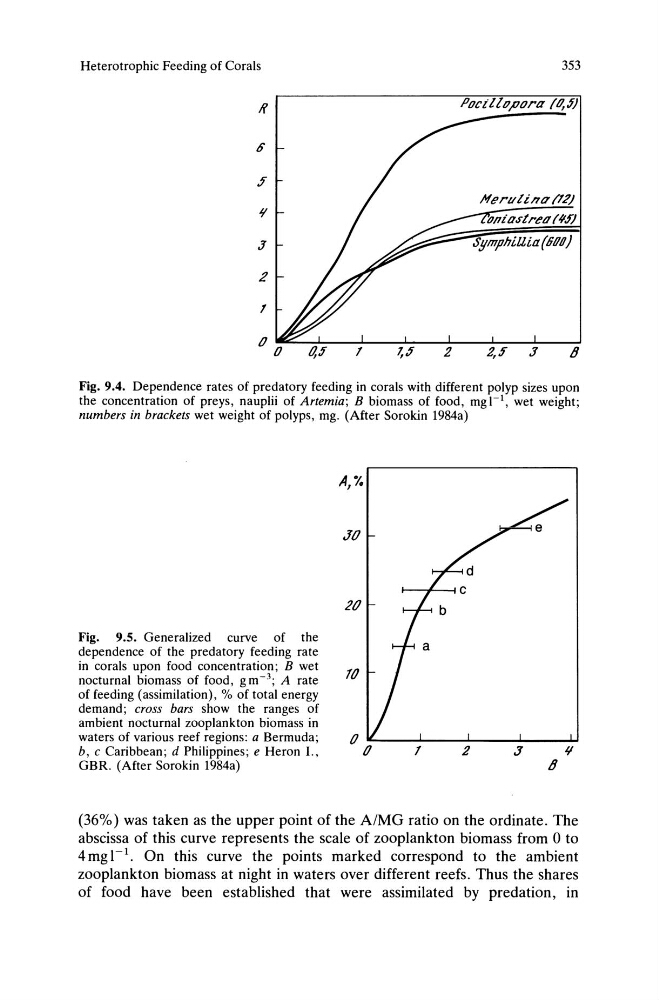
Fig. 9.4. Dependence rates of predatory feeding in corals with different polyp sizes upon
the concentration of preys, nauplii of Artemia; B biomass of food, mg 1-1, wet weight;
numbers in brackets wet weight of polyps, mg. (After Sorokin 1984a)
Fig. 9.5. Generalized curve of the
dependence of the predatory feeding rate
in corals upon food concentration; B wet
nocturnal biomass of food, g m- 3 ; A rate
of feeding (assimilation), % of total energy
demand; cross bars show the ranges of
ambient nocturnal zooplankton biomass in
waters of various reef regions: a Bermuda;
b, c Caribbean; d Philippines; e Heron I.,
GBR. (After Sorokin 1984a)
A,%
JO
20
t(}
, 2 3 'I
8
(36%) was taken as the upper point of the A/MG ratio on the ordinate. The
abscissa of this curve represents the scale of zooplankton biomass from 0 to
4 mg 1-1. On this curve the points marked correspond to the ambient
zooplankton biomass at night in waters over different reefs. Thus the shares
of food have been established that were assimilated by predation, in
353
Pocil!opora (1l,.7)
3
z
,
8
Fig. 9.4. Dependence rates of predatory feeding in corals with different polyp sizes upon
the concentration of preys, nauplii of Artemia; B biomass of food, mg 1-1, wet weight;
numbers in brackets wet weight of polyps, mg. (After Sorokin 1984a)
Fig. 9.5. Generalized curve of the
dependence of the predatory feeding rate
in corals upon food concentration; B wet
nocturnal biomass of food, g m- 3 ; A rate
of feeding (assimilation), % of total energy
demand; cross bars show the ranges of
ambient nocturnal zooplankton biomass in
waters of various reef regions: a Bermuda;
b, c Caribbean; d Philippines; e Heron I.,
GBR. (After Sorokin 1984a)
A,%
JO
20
t(}
, 2 3 'I
8
(36%) was taken as the upper point of the A/MG ratio on the ordinate. The
abscissa of this curve represents the scale of zooplankton biomass from 0 to
4 mg 1-1. On this curve the points marked correspond to the ambient
zooplankton biomass at night in waters over different reefs. Thus the shares
of food have been established that were assimilated by predation, in