

318
Morphology and Ecological Physiology of Corals
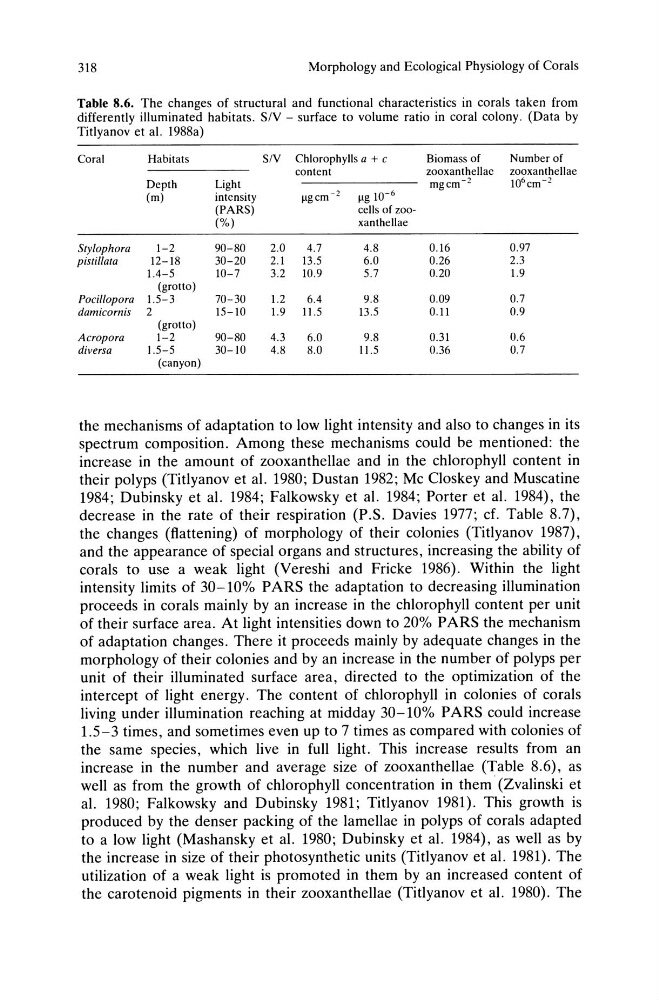
Table 8.6. The changes of structural and functional characteristics in corals taken from
differently illuminated habitats. SlY - surface to volume ratio in coral colony. (Data by
Titlyanov et al. 1988a)
Coral
Habitats
SlY Chlorophylls a + c
Biomass of
Number of
content
zooxanthellae zooxanthellae
Depth
Light
mgcm- 2
10 6 cm- 2
(m)
intensity
-?
~g 10- 6
~gcm -
(PARS)
cells of zoo(%)
xanthellae
Stylophora
1-2
90-80
2.0
4.7
4.8
0.16
0.97
pistillata
12-18
30-20
2.1
13.5
6.0
0.26
2.3
1.4-5
10-7
3.2
10.9
5.7
0.20
1.9
(grotto)
Pocillopora 1.5-3
70-30
1.2
6.4
9.8
0.09
0.7
damicornis 2
15-10
1.9
11.5
13.5
0.11
0.9
(grotto)
Acropora
1-2
90-80
4.3
6.0
9.8
0.31
0.6
diversa
1.5-5
30-10
4.8
8.0
11.5
0.36
0.7
(canyon)
the mechanisms of adaptation to low light intensity and also to changes in its
spectrum composition. Among these mechanisms could be mentioned: the
increase in the amount of zooxanthellae and in the chlorophyll content in
their polyps (Titlyanov et al. 1980; Dustan 1982; Mc Closkey and Muscatine
1984; Dubinsky et al. 1984; Falkowsky et al. 1984; Porter et al. 1984), the
decrease in the rate of their respiration (P.S. Davies 1977; cf. Table 8.7),
the changes (flattening) of morphology of their colonies (Titlyanov 1987),
and the appearance of special organs and structures, increasing the ability of
corals to use a weak light (Vereshi and Fricke 1986). Within the light
intensity limits of 30-10% PARS the adaptation to decreasing illumination
proceeds in corals mainly by an increase in the chlorophyll content per unit
of their surface area. At light intensities down to 20% PARS the mechanism
of adaptation changes. There it proceeds mainly by adequate changes in the
morphology of their colonies and by an increase in the number of polyps per
unit of their illuminated surface area, directed to the optimization of the
intercept of light energy. The content of chlorophyll in colonies of corals
living under illumination reaching at midday 30-10% PARS could increase
1.5-3 times, and sometimes even up to 7 times as compared with colonies of
the same species, which live in full light. This increase results from an
increase in the number and average size of zooxanthellae (Table 8.6), as
well as from the growth of chlorophyll concentration in them· (Zvalinski et
al. 1980; Falkowsky and Dubinsky 1981; Titlyanov 1981). This growth is
produced by the denser packing of the lamellae in polyps of corals adapted
to a low light (Mashansky et al. 1980; Dubinsky et al. 1984), as well as by
the increase in size of their photosynthetic units (Titlyanov et al. 1981). The
utilization of a weak light is promoted in them by an increased content of
the carotenoid pigments in their zooxanthellae (Titlyanov et al. 1980). The
Morphology and Ecological Physiology of Corals
Table 8.6. The changes of structural and functional characteristics in corals taken from
differently illuminated habitats. SlY - surface to volume ratio in coral colony. (Data by
Titlyanov et al. 1988a)
Coral
Habitats
SlY Chlorophylls a + c
Biomass of
Number of
content
zooxanthellae zooxanthellae
Depth
Light
mgcm- 2
10 6 cm- 2
(m)
intensity
-?
~g 10- 6
~gcm -
(PARS)
cells of zoo(%)
xanthellae
Stylophora
1-2
90-80
2.0
4.7
4.8
0.16
0.97
pistillata
12-18
30-20
2.1
13.5
6.0
0.26
2.3
1.4-5
10-7
3.2
10.9
5.7
0.20
1.9
(grotto)
Pocillopora 1.5-3
70-30
1.2
6.4
9.8
0.09
0.7
damicornis 2
15-10
1.9
11.5
13.5
0.11
0.9
(grotto)
Acropora
1-2
90-80
4.3
6.0
9.8
0.31
0.6
diversa
1.5-5
30-10
4.8
8.0
11.5
0.36
0.7
(canyon)
the mechanisms of adaptation to low light intensity and also to changes in its
spectrum composition. Among these mechanisms could be mentioned: the
increase in the amount of zooxanthellae and in the chlorophyll content in
their polyps (Titlyanov et al. 1980; Dustan 1982; Mc Closkey and Muscatine
1984; Dubinsky et al. 1984; Falkowsky et al. 1984; Porter et al. 1984), the
decrease in the rate of their respiration (P.S. Davies 1977; cf. Table 8.7),
the changes (flattening) of morphology of their colonies (Titlyanov 1987),
and the appearance of special organs and structures, increasing the ability of
corals to use a weak light (Vereshi and Fricke 1986). Within the light
intensity limits of 30-10% PARS the adaptation to decreasing illumination
proceeds in corals mainly by an increase in the chlorophyll content per unit
of their surface area. At light intensities down to 20% PARS the mechanism
of adaptation changes. There it proceeds mainly by adequate changes in the
morphology of their colonies and by an increase in the number of polyps per
unit of their illuminated surface area, directed to the optimization of the
intercept of light energy. The content of chlorophyll in colonies of corals
living under illumination reaching at midday 30-10% PARS could increase
1.5-3 times, and sometimes even up to 7 times as compared with colonies of
the same species, which live in full light. This increase results from an
increase in the number and average size of zooxanthellae (Table 8.6), as
well as from the growth of chlorophyll concentration in them· (Zvalinski et
al. 1980; Falkowsky and Dubinsky 1981; Titlyanov 1981). This growth is
produced by the denser packing of the lamellae in polyps of corals adapted
to a low light (Mashansky et al. 1980; Dubinsky et al. 1984), as well as by
the increase in size of their photosynthetic units (Titlyanov et al. 1981). The
utilization of a weak light is promoted in them by an increased content of
the carotenoid pigments in their zooxanthellae (Titlyanov et al. 1980). The