

230
Coral Reef Fish
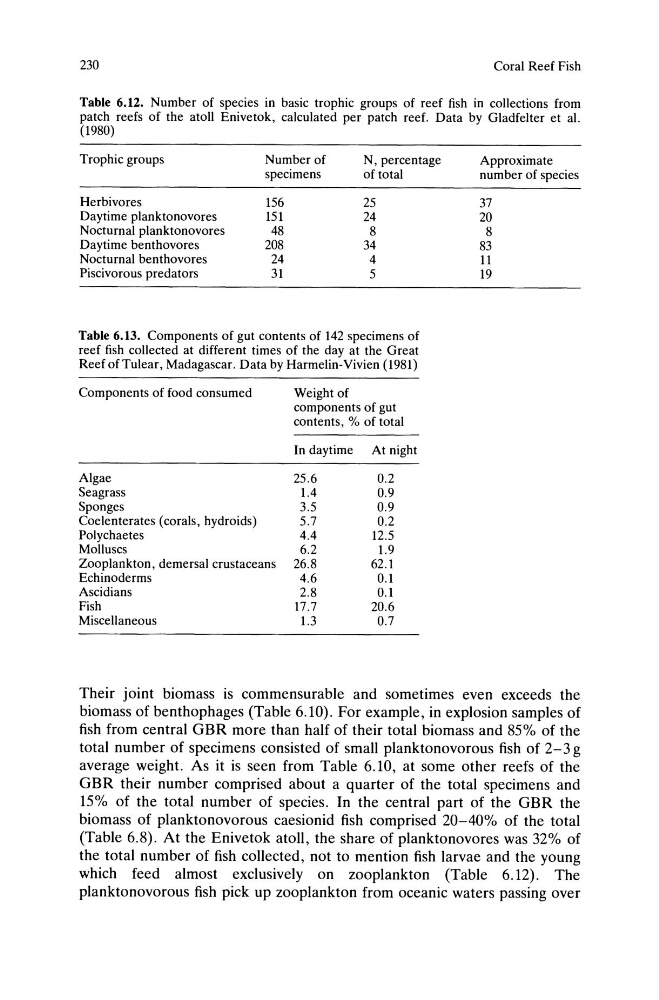
Table 6.12. Number of species in basic trophic groups of reef fish in collections from
patch reefs of the atoll Enivetok, calculated per patch reef. Data by Gladfelter et al.
(1980)
Trophic groups
Number of
N, percentage
specimens
of total
Herbivores
156
25
Daytime planktonovores
151
24
Nocturnal planktonovores
48
8
Daytime benthovores
208
34
Nocturnal benthovores
24
4
Piscivorous predators
31
5
Table 6.13. Components of gut contents of 142 specimens of
reef fish collected at different times of the day at the Great
Reef of Tulear, Madagascar. Data by Harmelin-Vivien (1981)
Components of food consumed
Weight of
components of gut
contents, % of total
In daytime At night
Algae
25.6
0.2
Seagrass
1. 4
0.9
Sponges
3.5
0.9
Coelenterates (corals, hydroids)
5.7
0.2
Polychaetes
4.4
12.5
Molluscs
6.2
1.9
Zooplankton, demersal crustaceans 26.8
62.1
Echinoderms
4.6
0.1
Ascidians
2.8
0.1
Fish
17.7
20.6
Miscellaneous
1.3
0.7
Approximate
number of species
37
20
8
83
11
19
Their joint biomass is commensurable and sometimes even exceeds the
biomass of benthophages (Table 6.10). For example, in explosion samples of
fish from central GBR more than half of their total biomass and 85% of the
total number of specimens consisted of small planktonovorous fish of 2-3 g
average weight. As it is seen from Table 6.10, at some other reefs of the
GBR their number comprised about a quarter of the total specimens and
15% of the total number of species. In the central part of the GBR the
biomass of planktonovorous caesionid fish comprised 20-40% of the total
(Table 6.8). At the Enivetok atoll, the share of planktonovores was 32% of
the total number of fish collected, not to mention fish larvae and the young
which feed almost exclusively on zooplankton (Table 6.12). The
planktonovorous fish pick up zooplankton from oceanic waters passing over
Coral Reef Fish
Table 6.12. Number of species in basic trophic groups of reef fish in collections from
patch reefs of the atoll Enivetok, calculated per patch reef. Data by Gladfelter et al.
(1980)
Trophic groups
Number of
N, percentage
specimens
of total
Herbivores
156
25
Daytime planktonovores
151
24
Nocturnal planktonovores
48
8
Daytime benthovores
208
34
Nocturnal benthovores
24
4
Piscivorous predators
31
5
Table 6.13. Components of gut contents of 142 specimens of
reef fish collected at different times of the day at the Great
Reef of Tulear, Madagascar. Data by Harmelin-Vivien (1981)
Components of food consumed
Weight of
components of gut
contents, % of total
In daytime At night
Algae
25.6
0.2
Seagrass
1. 4
0.9
Sponges
3.5
0.9
Coelenterates (corals, hydroids)
5.7
0.2
Polychaetes
4.4
12.5
Molluscs
6.2
1.9
Zooplankton, demersal crustaceans 26.8
62.1
Echinoderms
4.6
0.1
Ascidians
2.8
0.1
Fish
17.7
20.6
Miscellaneous
1.3
0.7
Approximate
number of species
37
20
8
83
11
19
Their joint biomass is commensurable and sometimes even exceeds the
biomass of benthophages (Table 6.10). For example, in explosion samples of
fish from central GBR more than half of their total biomass and 85% of the
total number of specimens consisted of small planktonovorous fish of 2-3 g
average weight. As it is seen from Table 6.10, at some other reefs of the
GBR their number comprised about a quarter of the total specimens and
15% of the total number of species. In the central part of the GBR the
biomass of planktonovorous caesionid fish comprised 20-40% of the total
(Table 6.8). At the Enivetok atoll, the share of planktonovores was 32% of
the total number of fish collected, not to mention fish larvae and the young
which feed almost exclusively on zooplankton (Table 6.12). The
planktonovorous fish pick up zooplankton from oceanic waters passing over