

212
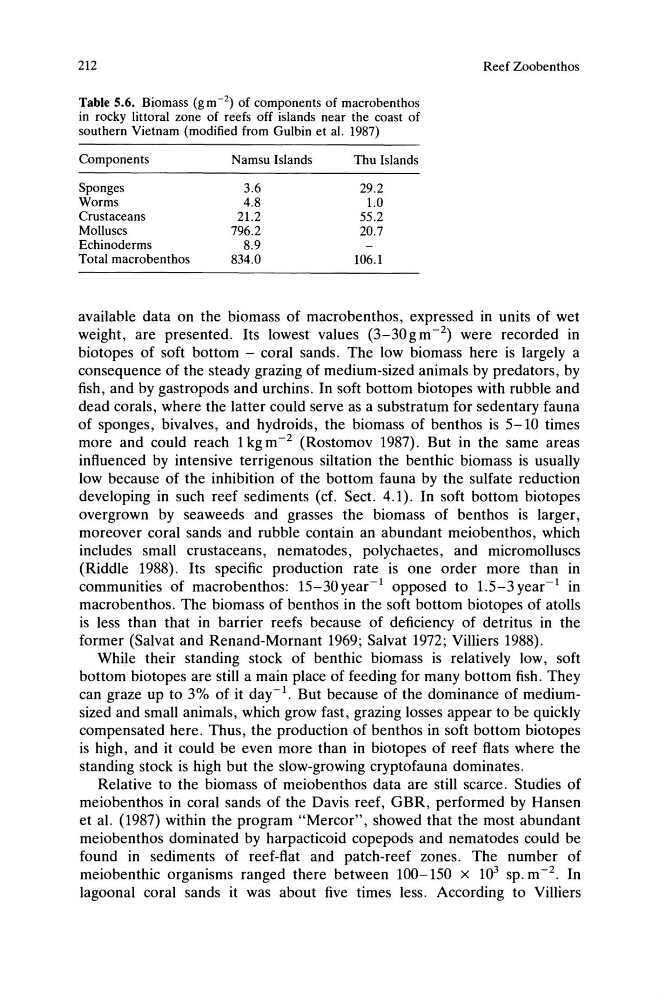
Table 5.6. Biomass (gm-2) of components of macrobenthos
in rocky littoral zone of reefs off islands near the coast of
southern Vietnam (modified from Gulbin et al. 1987)
Components
N amsu Islands
Thu Islands
Sponges
3.6
29.2
Worms
4.8
1.0
Crustaceans
21.2
55.2
Molluscs
796.2
20.7
Echinoderms
8.9
Total macrobenthos
834.0
106.1
Reef Zoobenthos
available data on the biomass of macrobenthos, expressed in units of wet
weight, are presented. Its lowest values (3-30gm-2) were recorded in
biotopes of soft bottom - coral sands. The low biomass here is largely a
consequence of the steady grazing of medium-sized animals by predators, by
fish, and by gastropods and urchins. In soft bottom biotopes with rubble and
dead corals, where the latter could serve as a substratum for sedentary fauna
of sponges, bivalves, and hydroids, the biomass of benthos is 5-10 times
more and could reach 1 kgm- 2 (Rostomov 1987). But in the same areas
influenced by intensive terrigenous siltation the benthic biomass is usually
low because of the inhibition of the bottom fauna by the sulfate reduction
developing in such reef sediments (cf. Sect. 4.1). In soft bottom biotopes
overgrown by seaweeds and grasses the biomass of benthos is larger,
moreover coral sands and rubble contain an abundant meiobenthos, which
includes small crustaceans, nematodes, polychaetes, and micromolluscs
(Riddle 1988). Its specific production rate is one order more than in
communities of macrobenthos: 15-30year- I opposed to 1.5-3year- I in
macrobenthos. The biomass of benthos in the soft bottom biotopes of atolls
is less than that in barrier reefs because of deficiency of detritus in the
former (Salvat and Renand-Mornant 1969; Salvat 1972; Villiers 1988).
While their standing stock of benthic biomass is relatively low, soft
bottom biotopes are still a main place of feeding for many bottom fish. They
can graze up to 3% of it day-I. But because of the dominance of mediumsized and small animals, which grow fast, grazing losses appear to be quickly
compensated here. Thus, the production of benthos in soft bottom biotopes
is high, and it could be even more than in biotopes of reef flats where the
standing stock is high but the slow-growing cryptofauna dominates.
Relative to the biomass of meiobenthos data are still scarce. Studies of
meiobenthos in coral sands of the Davis reef, GBR, performed by Hansen
et al. (1987) within the program "Mercor", showed that the most abundant
meiobenthos dominated by harpacticoid copepods and nematodes could be
found in sediments of reef-flat and patch-reef zones. The number of
meiobenthic organisms ranged there between 100-150 x 10 3 sp. m -2. In
lagoonal coral sands it was about five times less. According to Villiers
Table 5.6. Biomass (gm-2) of components of macrobenthos
in rocky littoral zone of reefs off islands near the coast of
southern Vietnam (modified from Gulbin et al. 1987)
Components
N amsu Islands
Thu Islands
Sponges
3.6
29.2
Worms
4.8
1.0
Crustaceans
21.2
55.2
Molluscs
796.2
20.7
Echinoderms
8.9
Total macrobenthos
834.0
106.1
Reef Zoobenthos
available data on the biomass of macrobenthos, expressed in units of wet
weight, are presented. Its lowest values (3-30gm-2) were recorded in
biotopes of soft bottom - coral sands. The low biomass here is largely a
consequence of the steady grazing of medium-sized animals by predators, by
fish, and by gastropods and urchins. In soft bottom biotopes with rubble and
dead corals, where the latter could serve as a substratum for sedentary fauna
of sponges, bivalves, and hydroids, the biomass of benthos is 5-10 times
more and could reach 1 kgm- 2 (Rostomov 1987). But in the same areas
influenced by intensive terrigenous siltation the benthic biomass is usually
low because of the inhibition of the bottom fauna by the sulfate reduction
developing in such reef sediments (cf. Sect. 4.1). In soft bottom biotopes
overgrown by seaweeds and grasses the biomass of benthos is larger,
moreover coral sands and rubble contain an abundant meiobenthos, which
includes small crustaceans, nematodes, polychaetes, and micromolluscs
(Riddle 1988). Its specific production rate is one order more than in
communities of macrobenthos: 15-30year- I opposed to 1.5-3year- I in
macrobenthos. The biomass of benthos in the soft bottom biotopes of atolls
is less than that in barrier reefs because of deficiency of detritus in the
former (Salvat and Renand-Mornant 1969; Salvat 1972; Villiers 1988).
While their standing stock of benthic biomass is relatively low, soft
bottom biotopes are still a main place of feeding for many bottom fish. They
can graze up to 3% of it day-I. But because of the dominance of mediumsized and small animals, which grow fast, grazing losses appear to be quickly
compensated here. Thus, the production of benthos in soft bottom biotopes
is high, and it could be even more than in biotopes of reef flats where the
standing stock is high but the slow-growing cryptofauna dominates.
Relative to the biomass of meiobenthos data are still scarce. Studies of
meiobenthos in coral sands of the Davis reef, GBR, performed by Hansen
et al. (1987) within the program "Mercor", showed that the most abundant
meiobenthos dominated by harpacticoid copepods and nematodes could be
found in sediments of reef-flat and patch-reef zones. The number of
meiobenthic organisms ranged there between 100-150 x 10 3 sp. m -2. In
lagoonal coral sands it was about five times less. According to Villiers