

protected areas, and determining the patterns of habitat use
by fish assemblages (Blaber et al., 2000; Gillanders, 2002;
Barletta et al., 2010).
Many fish species use different habitats within estuaries, tidal marshes (Mathieson et al., 2000; Akin et al.,
2003), seagrass beds (Dorenbosch et al., 2006), mangrove
forests (Barletta et al., 2000; Hindell and Jenkins, 2004),
mangrove tidal creeks (Barletta et al., 2003; Krumme
et al., 2005), and the main channel of the estuary
(Blaber, 2000; Barletta et al., 2005, 2008), only during
a specific ontogenetic stage. These habitats are considered
areas of feeding, mating, spawning, and nursery use for
many fish species during a specific life stage, and the connectivity between these areas is very important to these
species can complete their life cycles (McLusky and
Elliott, 2004). The connectivity between habitats of an
estuarine ecosystem is dictated not only by geomorphological factors but also by the environmental fluctuation
of abiotic parameters, such as salinity, temperature, turbidity, and dissolved oxygen, which also influence the connection between the habitats and movement patterns of
estuarine fish assemblages. Throughout the world, estuaries and adjacent coastal waters support numerous ecological and socioeconomic activities, but estuaries in
particular are among the most modified and threatened
of aquatic environments (Blaber et al., 2000). Human
activities can drastically change the hydrological patterns
of estuarine systems and can directly affect the connection
between estuarine habitats, potentially impacting many
ecological functions of these habitats for fish assemblages
(Barletta et al., 2010).
Fisheries and estuarine habitats conservation
Coastal systems, including coastal lagoons (Mar Chiquita,
Central Argentina; Rocha, Uruguay), estuaries (Caeté,
northern Brazil; Paranaguá, south Brazil; Embley, Northern Australia; La Plata, Uruguay–Argentina), and bays
(Samborombón Bay at La Plata Estuary, Anegada Bay in
southern of Buenos Aires Province, Argentina), provide
critical habitats for many commercial and recreational fish
species (feeding, mating, spawning, and nursery grounds)
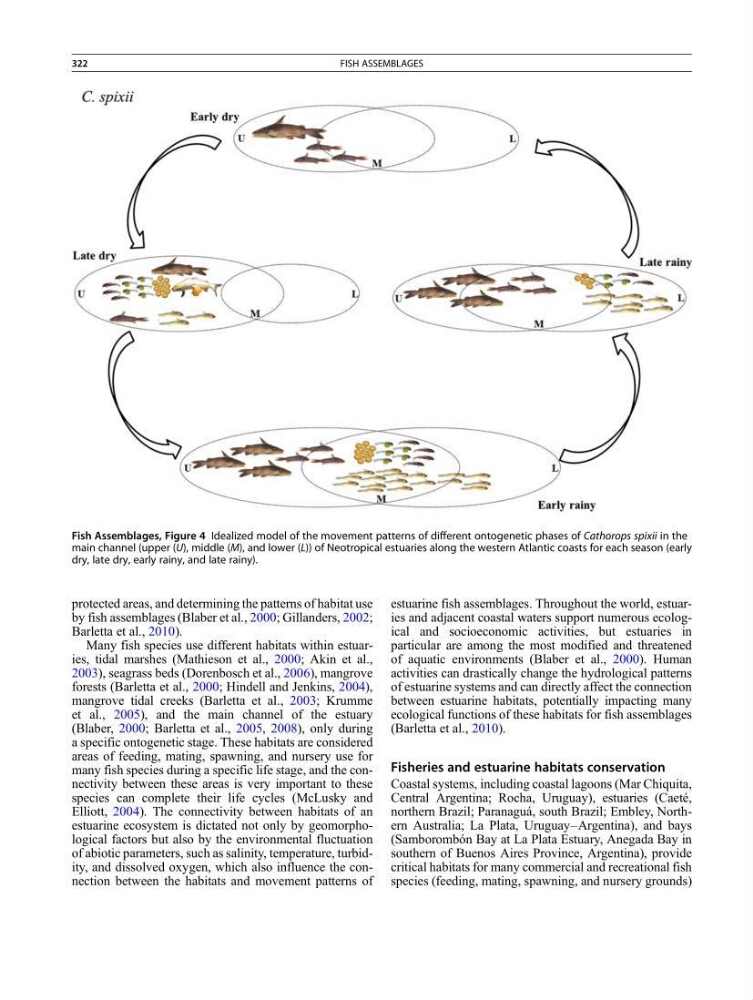
Fish Assemblages, Figure 4 Idealized model of the movement patterns of different ontogenetic phases of Cathorops spixii in the
main channel (upper (U), middle (M), and lower (L)) of Neotropical estuaries along the western Atlantic coasts for each season (early
dry, late dry, early rainy, and late rainy).
322
FISH ASSEMBLAGES
by fish assemblages (Blaber et al., 2000; Gillanders, 2002;
Barletta et al., 2010).
Many fish species use different habitats within estuaries, tidal marshes (Mathieson et al., 2000; Akin et al.,
2003), seagrass beds (Dorenbosch et al., 2006), mangrove
forests (Barletta et al., 2000; Hindell and Jenkins, 2004),
mangrove tidal creeks (Barletta et al., 2003; Krumme
et al., 2005), and the main channel of the estuary
(Blaber, 2000; Barletta et al., 2005, 2008), only during
a specific ontogenetic stage. These habitats are considered
areas of feeding, mating, spawning, and nursery use for
many fish species during a specific life stage, and the connectivity between these areas is very important to these
species can complete their life cycles (McLusky and
Elliott, 2004). The connectivity between habitats of an
estuarine ecosystem is dictated not only by geomorphological factors but also by the environmental fluctuation
of abiotic parameters, such as salinity, temperature, turbidity, and dissolved oxygen, which also influence the connection between the habitats and movement patterns of
estuarine fish assemblages. Throughout the world, estuaries and adjacent coastal waters support numerous ecological and socioeconomic activities, but estuaries in
particular are among the most modified and threatened
of aquatic environments (Blaber et al., 2000). Human
activities can drastically change the hydrological patterns
of estuarine systems and can directly affect the connection
between estuarine habitats, potentially impacting many
ecological functions of these habitats for fish assemblages
(Barletta et al., 2010).
Fisheries and estuarine habitats conservation
Coastal systems, including coastal lagoons (Mar Chiquita,
Central Argentina; Rocha, Uruguay), estuaries (Caeté,
northern Brazil; Paranaguá, south Brazil; Embley, Northern Australia; La Plata, Uruguay–Argentina), and bays
(Samborombón Bay at La Plata Estuary, Anegada Bay in
southern of Buenos Aires Province, Argentina), provide
critical habitats for many commercial and recreational fish
species (feeding, mating, spawning, and nursery grounds)
Fish Assemblages, Figure 4 Idealized model of the movement patterns of different ontogenetic phases of Cathorops spixii in the
main channel (upper (U), middle (M), and lower (L)) of Neotropical estuaries along the western Atlantic coasts for each season (early
dry, late dry, early rainy, and late rainy).
322
FISH ASSEMBLAGES