

strength and size range of the eddies in the turbulent
motion, and it is not constant in all the fluid body
(Lewis, 1997).
In general, the coefficient of eddy diffusion or turbulent
diffusion (K) is a thousand times higher than the molecular
diffusion coefficient (D) (Lewis, 1997). The diffusion
coefficient affects the movement of particles or molecules
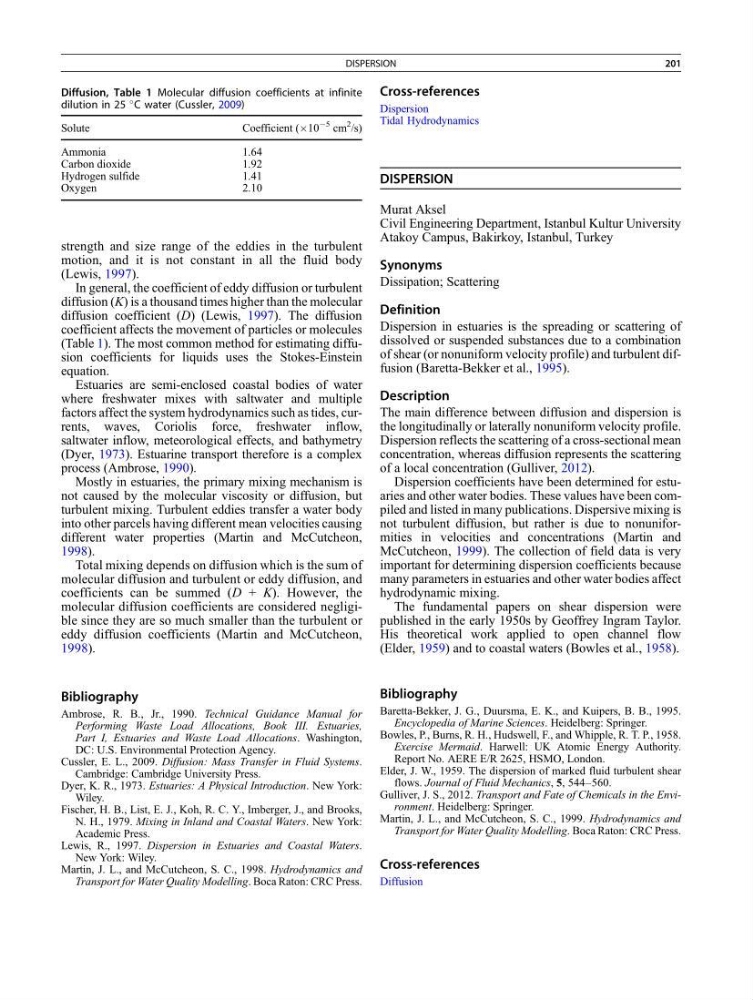
(Table 1). The most common method for estimating diffusion coefficients for liquids uses the Stokes-Einstein
equation.
Estuaries are semi-enclosed coastal bodies of water
where freshwater mixes with saltwater and multiple
factors affect the system hydrodynamics such as tides, currents, waves, Coriolis force, freshwater inflow,
saltwater inflow, meteorological effects, and bathymetry
(Dyer, 1973). Estuarine transport therefore is a complex
process (Ambrose, 1990).
Mostly in estuaries, the primary mixing mechanism is
not caused by the molecular viscosity or diffusion, but
turbulent mixing. Turbulent eddies transfer a water body
into other parcels having different mean velocities causing
different water properties (Martin and McCutcheon,
1998).
Total mixing depends on diffusion which is the sum of
molecular diffusion and turbulent or eddy diffusion, and
coefficients can be summed (D + K). However, the
molecular diffusion coefficients are considered negligible since they are so much smaller than the turbulent or
eddy diffusion coefficients (Martin and McCutcheon,
1998).
Bibliography
Ambrose, R. B., Jr., 1990. Technical Guidance Manual for
Performing Waste Load Allocations, Book III. Estuaries,
Part I, Estuaries and Waste Load Allocations. Washington,
DC: U.S. Environmental Protection Agency.
Cussler, E. L., 2009. Diffusion: Mass Transfer in Fluid Systems.
Cambridge: Cambridge University Press.
Dyer, K. R., 1973. Estuaries: A Physical Introduction. New York:
Wiley.
Fischer, H. B., List, E. J., Koh, R. C. Y., Imberger, J., and Brooks,
N. H., 1979. Mixing in Inland and Coastal Waters. New York:
Academic Press.
Lewis, R., 1997. Dispersion in Estuaries and Coastal Waters.
New York: Wiley.
Martin, J. L., and McCutcheon, S. C., 1998. Hydrodynamics and
Transport for Water Quality Modelling. Boca Raton: CRC Press.
Cross-references
Dispersion
Tidal Hydrodynamics
DISPERSION
Murat Aksel
Civil Engineering Department, Istanbul Kultur University
Atakoy Campus, Bakirkoy, Istanbul, Turkey
Synonyms
Dissipation; Scattering
Definition
Dispersion in estuaries is the spreading or scattering of
dissolved or suspended substances due to a combination
of shear (or nonuniform velocity profile) and turbulent diffusion (Baretta-Bekker et al., 1995).
Description
The main difference between diffusion and dispersion is
the longitudinally or laterally nonuniform velocity profile.
Dispersion reflects the scattering of a cross-sectional mean
concentration, whereas diffusion represents the scattering
of a local concentration (Gulliver, 2012).
Dispersion coefficients have been determined for estuaries and other water bodies. These values have been compiled and listed in many publications. Dispersive mixing is
not turbulent diffusion, but rather is due to nonuniformities in velocities and concentrations (Martin and
McCutcheon, 1999). The collection of field data is very
important for determining dispersion coefficients because
many parameters in estuaries and other water bodies affect
hydrodynamic mixing.
The fundamental papers on shear dispersion were
published in the early 1950s by Geoffrey Ingram Taylor.
His theoretical work applied to open channel flow
(Elder, 1959) and to coastal waters (Bowles et al., 1958).
Bibliography
Baretta-Bekker, J. G., Duursma, E. K., and Kuipers, B. B., 1995.
Encyclopedia of Marine Sciences. Heidelberg: Springer.
Bowles, P., Burns, R. H., Hudswell, F., and Whipple, R. T. P., 1958.
Exercise Mermaid. Harwell: UK Atomic Energy Authority.
Report No. AERE E/R 2625, HSMO, London.
Elder, J. W., 1959. The dispersion of marked fluid turbulent shear
flows. Journal of Fluid Mechanics, 5, 544–560.
Gulliver, J. S., 2012. Transport and Fate of Chemicals in the Environment. Heidelberg: Springer.
Martin, J. L., and McCutcheon, S. C., 1999. Hydrodynamics and
Transport for Water Quality Modelling. Boca Raton: CRC Press.
Cross-references
Diffusion
Diffusion, Table 1 Molecular diffusion coefficients at infinite
dilution in 25
C water (Cussler, 2009)
Solute
Coefficient (Â10
À5 cm
2
/s)
Ammonia
1.64
Carbon dioxide
1.92
Hydrogen sulfide
1.41
Oxygen
2.10
DISPERSION
201
motion, and it is not constant in all the fluid body
(Lewis, 1997).
In general, the coefficient of eddy diffusion or turbulent
diffusion (K) is a thousand times higher than the molecular
diffusion coefficient (D) (Lewis, 1997). The diffusion
coefficient affects the movement of particles or molecules
(Table 1). The most common method for estimating diffusion coefficients for liquids uses the Stokes-Einstein
equation.
Estuaries are semi-enclosed coastal bodies of water
where freshwater mixes with saltwater and multiple
factors affect the system hydrodynamics such as tides, currents, waves, Coriolis force, freshwater inflow,
saltwater inflow, meteorological effects, and bathymetry
(Dyer, 1973). Estuarine transport therefore is a complex
process (Ambrose, 1990).
Mostly in estuaries, the primary mixing mechanism is
not caused by the molecular viscosity or diffusion, but
turbulent mixing. Turbulent eddies transfer a water body
into other parcels having different mean velocities causing
different water properties (Martin and McCutcheon,
1998).
Total mixing depends on diffusion which is the sum of
molecular diffusion and turbulent or eddy diffusion, and
coefficients can be summed (D + K). However, the
molecular diffusion coefficients are considered negligible since they are so much smaller than the turbulent or
eddy diffusion coefficients (Martin and McCutcheon,
1998).
Bibliography
Ambrose, R. B., Jr., 1990. Technical Guidance Manual for
Performing Waste Load Allocations, Book III. Estuaries,
Part I, Estuaries and Waste Load Allocations. Washington,
DC: U.S. Environmental Protection Agency.
Cussler, E. L., 2009. Diffusion: Mass Transfer in Fluid Systems.
Cambridge: Cambridge University Press.
Dyer, K. R., 1973. Estuaries: A Physical Introduction. New York:
Wiley.
Fischer, H. B., List, E. J., Koh, R. C. Y., Imberger, J., and Brooks,
N. H., 1979. Mixing in Inland and Coastal Waters. New York:
Academic Press.
Lewis, R., 1997. Dispersion in Estuaries and Coastal Waters.
New York: Wiley.
Martin, J. L., and McCutcheon, S. C., 1998. Hydrodynamics and
Transport for Water Quality Modelling. Boca Raton: CRC Press.
Cross-references
Dispersion
Tidal Hydrodynamics
DISPERSION
Murat Aksel
Civil Engineering Department, Istanbul Kultur University
Atakoy Campus, Bakirkoy, Istanbul, Turkey
Synonyms
Dissipation; Scattering
Definition
Dispersion in estuaries is the spreading or scattering of
dissolved or suspended substances due to a combination
of shear (or nonuniform velocity profile) and turbulent diffusion (Baretta-Bekker et al., 1995).
Description
The main difference between diffusion and dispersion is
the longitudinally or laterally nonuniform velocity profile.
Dispersion reflects the scattering of a cross-sectional mean
concentration, whereas diffusion represents the scattering
of a local concentration (Gulliver, 2012).
Dispersion coefficients have been determined for estuaries and other water bodies. These values have been compiled and listed in many publications. Dispersive mixing is
not turbulent diffusion, but rather is due to nonuniformities in velocities and concentrations (Martin and
McCutcheon, 1999). The collection of field data is very
important for determining dispersion coefficients because
many parameters in estuaries and other water bodies affect
hydrodynamic mixing.
The fundamental papers on shear dispersion were
published in the early 1950s by Geoffrey Ingram Taylor.
His theoretical work applied to open channel flow
(Elder, 1959) and to coastal waters (Bowles et al., 1958).
Bibliography
Baretta-Bekker, J. G., Duursma, E. K., and Kuipers, B. B., 1995.
Encyclopedia of Marine Sciences. Heidelberg: Springer.
Bowles, P., Burns, R. H., Hudswell, F., and Whipple, R. T. P., 1958.
Exercise Mermaid. Harwell: UK Atomic Energy Authority.
Report No. AERE E/R 2625, HSMO, London.
Elder, J. W., 1959. The dispersion of marked fluid turbulent shear
flows. Journal of Fluid Mechanics, 5, 544–560.
Gulliver, J. S., 2012. Transport and Fate of Chemicals in the Environment. Heidelberg: Springer.
Martin, J. L., and McCutcheon, S. C., 1999. Hydrodynamics and
Transport for Water Quality Modelling. Boca Raton: CRC Press.
Cross-references
Diffusion
Diffusion, Table 1 Molecular diffusion coefficients at infinite
dilution in 25
C water (Cussler, 2009)
Solute
Coefficient (Â10
À5 cm
2
/s)
Ammonia
1.64
Carbon dioxide
1.92
Hydrogen sulfide
1.41
Oxygen
2.10
DISPERSION
201