

shellfish worldwide (French McCay et al., 2003;
DeAlteris et al., 2004; Beck et al., 2009, 2011; Coen
et al., 2007; Coen et al., 2011a; Grabowski and Peterson,
2007; Brumbaugh and Coen, 2009; NRC, 2010; Allison
et al., 2011; Powers and Boyer, 2014). Additionally, there
are many parallels in the services rendered by farmed and
natural reef restoration approaches (e.g., Dumbauld et al.,
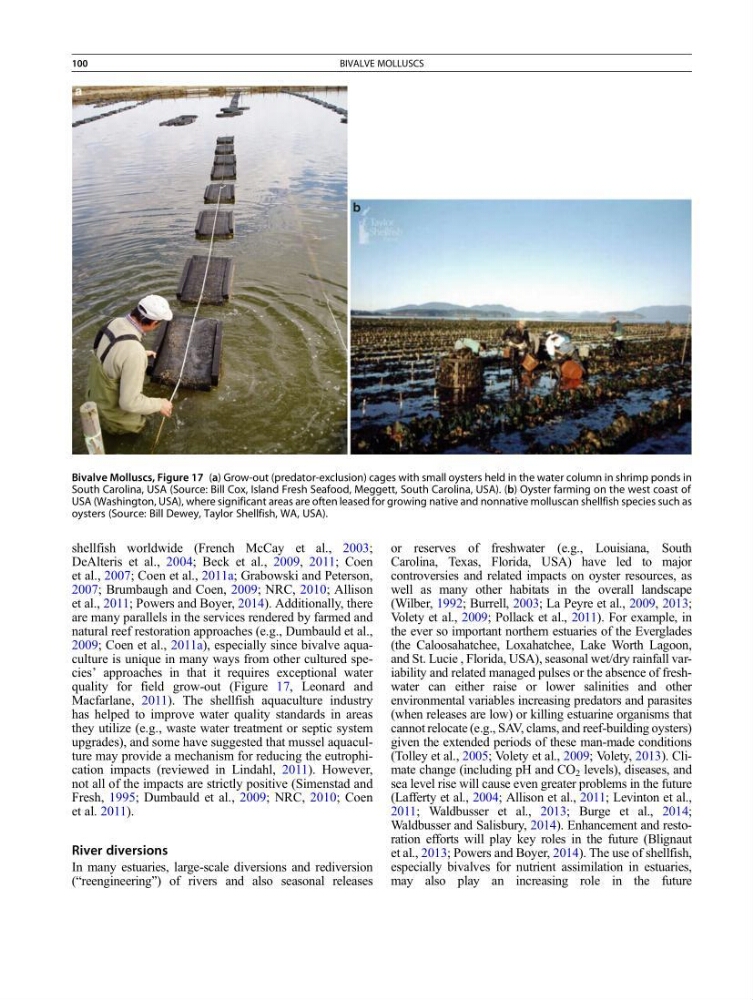
2009; Coen et al., 2011a), especially since bivalve aquaculture is unique in many ways from other cultured species’ approaches in that it requires exceptional water
quality for field grow-out (Figure 17, Leonard and
Macfarlane, 2011). The shellfish aquaculture industry
has helped to improve water quality standards in areas
they utilize (e.g., waste water treatment or septic system
upgrades), and some have suggested that mussel aquaculture may provide a mechanism for reducing the eutrophication impacts (reviewed in Lindahl, 2011). However,
not all of the impacts are strictly positive (Simenstad and
Fresh, 1995; Dumbauld et al., 2009; NRC, 2010; Coen
et al. 2011).
River diversions
In many estuaries, large-scale diversions and rediversion
(“reengineering”) of rivers and also seasonal releases
or reserves of freshwater (e.g., Louisiana, South
Carolina, Texas, Florida, USA) have led to major
controversies and related impacts on oyster resources, as
well as many other habitats in the overall landscape
(Wilber, 1992; Burrell, 2003; La Peyre et al., 2009, 2013;
Volety et al., 2009; Pollack et al., 2011). For example, in
the ever so important northern estuaries of the Everglades
(the Caloosahatchee, Loxahatchee, Lake Worth Lagoon,
and St. Lucie , Florida, USA), seasonal wet/dry rainfall variability and related managed pulses or the absence of freshwater can either raise or lower salinities and other
environmental variables increasing predators and parasites
(when releases are low) or killing estuarine organisms that
cannot relocate (e.g., SAV, clams, and reef-building oysters)
given the extended periods of these man-made conditions
(Tolley et al., 2005; Volety et al., 2009; Volety, 2013). Climate change (including pH and CO 2 levels), diseases, and
sea level rise will cause even greater problems in the future
(Lafferty et al., 2004; Allison et al., 2011; Levinton et al.,
2011; Waldbusser et al., 2013; Burge et al., 2014;
Waldbusser and Salisbury, 2014). Enhancement and restoration efforts will play key roles in the future (Blignaut
et al., 2013; Powers and Boyer, 2014). The use of shellfish,
especially bivalves for nutrient assimilation in estuaries,
may also play an increasing role in the future
Bivalve Molluscs, Figure 17 (a) Grow-out (predator-exclusion) cages with small oysters held in the water column in shrimp ponds in
South Carolina, USA (Source: Bill Cox, Island Fresh Seafood, Meggett, South Carolina, USA). (b) Oyster farming on the west coast of
USA (Washington, USA), where significant areas are often leased for growing native and nonnative molluscan shellfish species such as
oysters (Source: Bill Dewey, Taylor Shellfish, WA, USA).
100
BIVALVE MOLLUSCS
DeAlteris et al., 2004; Beck et al., 2009, 2011; Coen
et al., 2007; Coen et al., 2011a; Grabowski and Peterson,
2007; Brumbaugh and Coen, 2009; NRC, 2010; Allison
et al., 2011; Powers and Boyer, 2014). Additionally, there
are many parallels in the services rendered by farmed and
natural reef restoration approaches (e.g., Dumbauld et al.,
2009; Coen et al., 2011a), especially since bivalve aquaculture is unique in many ways from other cultured species’ approaches in that it requires exceptional water
quality for field grow-out (Figure 17, Leonard and
Macfarlane, 2011). The shellfish aquaculture industry
has helped to improve water quality standards in areas
they utilize (e.g., waste water treatment or septic system
upgrades), and some have suggested that mussel aquaculture may provide a mechanism for reducing the eutrophication impacts (reviewed in Lindahl, 2011). However,
not all of the impacts are strictly positive (Simenstad and
Fresh, 1995; Dumbauld et al., 2009; NRC, 2010; Coen
et al. 2011).
River diversions
In many estuaries, large-scale diversions and rediversion
(“reengineering”) of rivers and also seasonal releases
or reserves of freshwater (e.g., Louisiana, South
Carolina, Texas, Florida, USA) have led to major
controversies and related impacts on oyster resources, as
well as many other habitats in the overall landscape
(Wilber, 1992; Burrell, 2003; La Peyre et al., 2009, 2013;
Volety et al., 2009; Pollack et al., 2011). For example, in
the ever so important northern estuaries of the Everglades
(the Caloosahatchee, Loxahatchee, Lake Worth Lagoon,
and St. Lucie , Florida, USA), seasonal wet/dry rainfall variability and related managed pulses or the absence of freshwater can either raise or lower salinities and other
environmental variables increasing predators and parasites
(when releases are low) or killing estuarine organisms that
cannot relocate (e.g., SAV, clams, and reef-building oysters)
given the extended periods of these man-made conditions
(Tolley et al., 2005; Volety et al., 2009; Volety, 2013). Climate change (including pH and CO 2 levels), diseases, and
sea level rise will cause even greater problems in the future
(Lafferty et al., 2004; Allison et al., 2011; Levinton et al.,
2011; Waldbusser et al., 2013; Burge et al., 2014;
Waldbusser and Salisbury, 2014). Enhancement and restoration efforts will play key roles in the future (Blignaut
et al., 2013; Powers and Boyer, 2014). The use of shellfish,
especially bivalves for nutrient assimilation in estuaries,
may also play an increasing role in the future
Bivalve Molluscs, Figure 17 (a) Grow-out (predator-exclusion) cages with small oysters held in the water column in shrimp ponds in
South Carolina, USA (Source: Bill Cox, Island Fresh Seafood, Meggett, South Carolina, USA). (b) Oyster farming on the west coast of
USA (Washington, USA), where significant areas are often leased for growing native and nonnative molluscan shellfish species such as
oysters (Source: Bill Dewey, Taylor Shellfish, WA, USA).
100
BIVALVE MOLLUSCS