

organisms (Glancy et al., 2003; Tolley and Volety, 2005;
Coen et al., 1999a; Coen et al., 2006; Hosack et al.,
2006; Rodney and Paynter, 2006; ASMFC, 2007; Coen
et al., 2007; La Peyre et al., 2014b). Both subtidal
(Figures 5 and 6) and intertidal (Figures 7 and 8) oyster
habitats can support a diverse suite of sessile and mobile
species (over 300 species in North Carolina; Wells,
1961). Natural reefs support greater numbers than the surrounding natural sand, mud, or even marsh habitats (Coen
et al., 1999a; Glancy et al., 2003; Plunket and La Peyre,
2005; Coen et al., 2006; Hosack et al., 2006; ASMFC,
2007; Shervette and Gelwick, 2008; Taylor and Bushek,
2008; Stunz et al., 2010; Humphries et al., 2011a;
Humphries et al., 2011b; Shervette et al., 2011).
Constructed subtidal and intertidal reefs can also support
diverse communities throughout C. virginica’s range
(e.g., 115 macrofaunal species in South Carolina, Coen
et al., 2006; see also Harding and Mann, 1999; Rozas
and Zimmerman, 2000; Luckenbach et al., 2005; Tolley
and Volety, 2005; Rodney and Paynter, 2006; ASMFC,
2007; Taylor and Bushek, 2008; Gregalis et al., 2009;
Stunz et al., 2010; Kingsley-Smith et al., 2012; Brown
et al., 2014).
Numerous studies have documented positive synergies
between bivalves (especially mussels and oysters) and
other habitats such as seagrass (Figure 1c) (Valentine
and Heck, 1993; Everett et al., 1995; Peterson and Heck
1999; Peterson and Heck 2001a; Peterson and Heck
2001b; Wall et al., 2008, 2011; Booth and Heck, 2009).
This largely results from improved water clarity from
bivalve feeding activities thereby increasing light. Water
flows are also slowed and sediments and seeds fall out
around the reefs. Shellfish release ammonia also and other
metabolites and nutrients for SAV (Williams and Heck,
2001). Native oysters and bivalve aquaculture may potentially play a parallel role with SAV (Newell, 2004; Erbland
and Ozbay, 2008; Dumbauld et al., 2009; NRC, 2010, Coen
et al. 2011a), enhancing or protecting other habitats from
erosion (Meyer et al, 1997; Coen et al., 2004, 2007; Piazza
et al., 2005; Beck et al., 2009). One of the direct and indirect
influences of shallow subtidal or intertidal oyster shell
(reef) construction is protection or enhancement of fringing
marsh habitats (e.g., Meyer et al, 1997; Piazza et al., 2005;
Currin et al., 2010; Scyphers et al., 2011). “Living shorelines” are one set of approaches (Figure 10) that may provide an alternative to stabilization with hardened
structures (bulkheads, revetments, concrete) which have
armored major portions of estuarine shorelines (Douglass
and Pickel, 1999; Scyphers, 2012). Their use attempts to
minimize the relatively poor habitat quality along developed shorelines (e.g., Seitz et al., 2006). Landscape issues
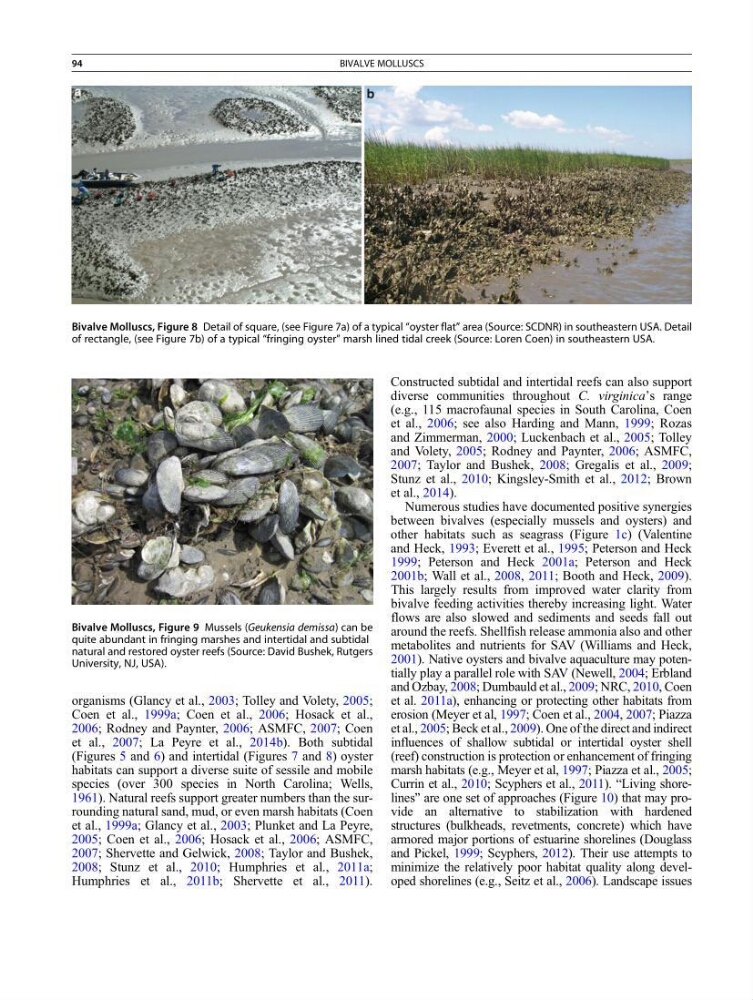
Bivalve Molluscs, Figure 8 Detail of square, (see Figure 7a) of a typical “oyster flat” area (Source: SCDNR) in southeastern USA. Detail
of rectangle, (see Figure 7b) of a typical “fringing oyster” marsh lined tidal creek (Source: Loren Coen) in southeastern USA.
Bivalve Molluscs, Figure 9 Mussels (Geukensia demissa) can be
quite abundant in fringing marshes and intertidal and subtidal
natural and restored oyster reefs (Source: David Bushek, Rutgers
University, NJ, USA).
94
BIVALVE MOLLUSCS
Coen et al., 1999a; Coen et al., 2006; Hosack et al.,
2006; Rodney and Paynter, 2006; ASMFC, 2007; Coen
et al., 2007; La Peyre et al., 2014b). Both subtidal
(Figures 5 and 6) and intertidal (Figures 7 and 8) oyster
habitats can support a diverse suite of sessile and mobile
species (over 300 species in North Carolina; Wells,
1961). Natural reefs support greater numbers than the surrounding natural sand, mud, or even marsh habitats (Coen
et al., 1999a; Glancy et al., 2003; Plunket and La Peyre,
2005; Coen et al., 2006; Hosack et al., 2006; ASMFC,
2007; Shervette and Gelwick, 2008; Taylor and Bushek,
2008; Stunz et al., 2010; Humphries et al., 2011a;
Humphries et al., 2011b; Shervette et al., 2011).
Constructed subtidal and intertidal reefs can also support
diverse communities throughout C. virginica’s range
(e.g., 115 macrofaunal species in South Carolina, Coen
et al., 2006; see also Harding and Mann, 1999; Rozas
and Zimmerman, 2000; Luckenbach et al., 2005; Tolley
and Volety, 2005; Rodney and Paynter, 2006; ASMFC,
2007; Taylor and Bushek, 2008; Gregalis et al., 2009;
Stunz et al., 2010; Kingsley-Smith et al., 2012; Brown
et al., 2014).
Numerous studies have documented positive synergies
between bivalves (especially mussels and oysters) and
other habitats such as seagrass (Figure 1c) (Valentine
and Heck, 1993; Everett et al., 1995; Peterson and Heck
1999; Peterson and Heck 2001a; Peterson and Heck
2001b; Wall et al., 2008, 2011; Booth and Heck, 2009).
This largely results from improved water clarity from
bivalve feeding activities thereby increasing light. Water
flows are also slowed and sediments and seeds fall out
around the reefs. Shellfish release ammonia also and other
metabolites and nutrients for SAV (Williams and Heck,
2001). Native oysters and bivalve aquaculture may potentially play a parallel role with SAV (Newell, 2004; Erbland
and Ozbay, 2008; Dumbauld et al., 2009; NRC, 2010, Coen
et al. 2011a), enhancing or protecting other habitats from
erosion (Meyer et al, 1997; Coen et al., 2004, 2007; Piazza
et al., 2005; Beck et al., 2009). One of the direct and indirect
influences of shallow subtidal or intertidal oyster shell
(reef) construction is protection or enhancement of fringing
marsh habitats (e.g., Meyer et al, 1997; Piazza et al., 2005;
Currin et al., 2010; Scyphers et al., 2011). “Living shorelines” are one set of approaches (Figure 10) that may provide an alternative to stabilization with hardened
structures (bulkheads, revetments, concrete) which have
armored major portions of estuarine shorelines (Douglass
and Pickel, 1999; Scyphers, 2012). Their use attempts to
minimize the relatively poor habitat quality along developed shorelines (e.g., Seitz et al., 2006). Landscape issues
Bivalve Molluscs, Figure 8 Detail of square, (see Figure 7a) of a typical “oyster flat” area (Source: SCDNR) in southeastern USA. Detail
of rectangle, (see Figure 7b) of a typical “fringing oyster” marsh lined tidal creek (Source: Loren Coen) in southeastern USA.
Bivalve Molluscs, Figure 9 Mussels (Geukensia demissa) can be
quite abundant in fringing marshes and intertidal and subtidal
natural and restored oyster reefs (Source: David Bushek, Rutgers
University, NJ, USA).
94
BIVALVE MOLLUSCS