

there are 350 producing wells established (Fig. 44). Normal, accident-free navigation
polluted the seas with 0.5 million t. This amount may now be less because international controls have become strict (see Chap. 10). Likewise pollution by oil tankers
discharge into the sea is declining.
It is estimated that 0.77 million t of oil reached the oceans in 1971 from smaller and
outdated tankers while large, modern, load-on-top ships only discharged 0.31 million t.
If the amount of oil carried by these modern ships had been transported by the types
of tanker that were still standard a few years ago, they would probably have lost
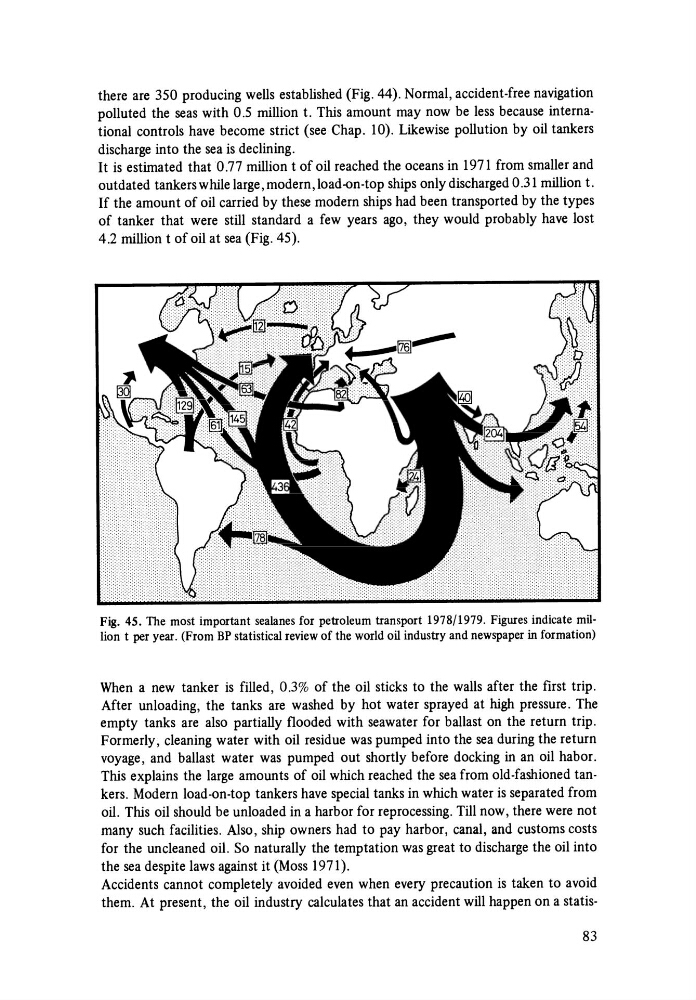
4.2 million t of oil at sea (Fig. 45).
Fig. 45. The most important sealanes for petroleum transport 1978/1979. Figures indicate million t per year. (From BP statistical review of the world oil industry and newspaper in formation)
When a new tanker is filled, 0.3% of the oil sticks to the walls after the first trip.
After unloading, the tanks are washed by hot water sprayed at high pressure. The
empty tanks are also partially flooded with seawater for ballast on the return trip.
Formerly, cleaning water with oil residue was pumped into the sea during the return
voyage, and ballast water was pumped out shortly before docking in an oil habor.
This explains the large amounts of oil which reached the sea from old-fashioned tankers. Modern load-on-top tankers have special tanks in which water is separated from
oil. This oil should be unloaded in a harbor for reprocessing. Till now, there were not
many such facilities. Also, ship owners had to pay harbor, canal, and customs costs
for the uncleaned oil. So naturally the temptation was great to discharge the oil into
the sea despite laws against it (Moss 1971).
Accidents cannot completely avoided even when every precaution is taken to avoid
them. At present, the oil industry calculates that an accident will happen on a statis83
polluted the seas with 0.5 million t. This amount may now be less because international controls have become strict (see Chap. 10). Likewise pollution by oil tankers
discharge into the sea is declining.
It is estimated that 0.77 million t of oil reached the oceans in 1971 from smaller and
outdated tankers while large, modern, load-on-top ships only discharged 0.31 million t.
If the amount of oil carried by these modern ships had been transported by the types
of tanker that were still standard a few years ago, they would probably have lost
4.2 million t of oil at sea (Fig. 45).
Fig. 45. The most important sealanes for petroleum transport 1978/1979. Figures indicate million t per year. (From BP statistical review of the world oil industry and newspaper in formation)
When a new tanker is filled, 0.3% of the oil sticks to the walls after the first trip.
After unloading, the tanks are washed by hot water sprayed at high pressure. The
empty tanks are also partially flooded with seawater for ballast on the return trip.
Formerly, cleaning water with oil residue was pumped into the sea during the return
voyage, and ballast water was pumped out shortly before docking in an oil habor.
This explains the large amounts of oil which reached the sea from old-fashioned tankers. Modern load-on-top tankers have special tanks in which water is separated from
oil. This oil should be unloaded in a harbor for reprocessing. Till now, there were not
many such facilities. Also, ship owners had to pay harbor, canal, and customs costs
for the uncleaned oil. So naturally the temptation was great to discharge the oil into
the sea despite laws against it (Moss 1971).
Accidents cannot completely avoided even when every precaution is taken to avoid
them. At present, the oil industry calculates that an accident will happen on a statis83