

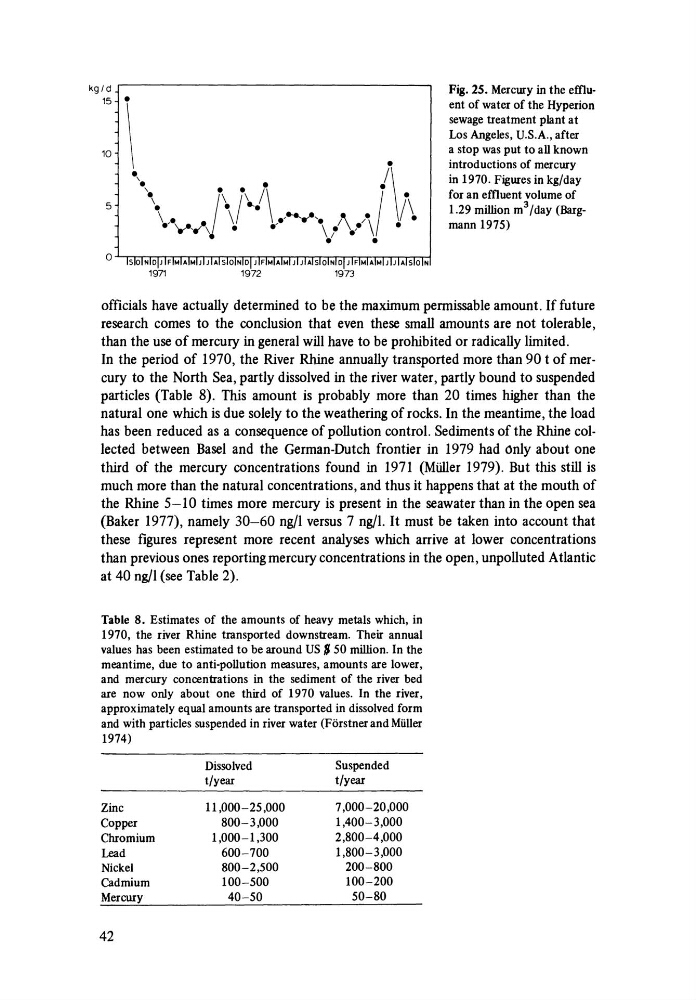
Fig. 25. MercW"y in the effiuent of water of the Hyperion
sewage treatment plant at
Los Angeles, U.S.A., after
a stop was put to all known
introductions of mercW"y
in 1970. FigW"es in kg/day
for an effiuent volume of
1.29 million m 3 /day (Bargmann 1975)
officials have actually determined to be the maximum permissable amount. If future
research comes to the conclusion that even these small amounts are not tolerable,
than the use of mercury in general will have to be prohibited or radically limited.
In the period of 1970, the River Rhine annually transported more than 90 t of mercury to the North Sea, partly dissolved in the river water, partly bound to suspended
particles (Table 8). This amount is probably more than 20 times higher than the
natural one which is due solely to the weathering of rocks. In the meantime, the load
has been reduced as a consequence of pollution control. Sediments of the Rhine collected between Basel and the German-Dutch frontier in 1979 had only about one
third of the mercury concentrations found in 1971 (Miiller 1979). But this still is
much more than the natural concentrations, and thus it happens that at the mouth of
the Rhine 5-10 times more mercury is present in the seawater than in the open sea
(Baker 1977), namely 30-60 ng/l versus 7 ng/l. It must be taken into account that
these figures represent more recent analyses which arrive at lower concentrations
than previous ones reporting mercury concentrations in the open, unpolluted Atlantic
at 40 ng/l (see Table 2).
Table 8. Estimates of the amounts of heavy metals which, in
1970, the river Rhine transported downstream. Their annual
values has been estimated to be around US S 50 million. In the
meantime, due to anti-pollution measures, amounts are lower,
and mercury concentrations in the sediment of the river bed
are now only about one third of 1970 values. In the river,
approximately equal amounts are transported in dissolved form
and with particles suspended in river water (Forstner and Muller
1974)
linc
Copper
Chromium
Lead
Nickel
Cadmium
Mercury
42
Dissolved
t/year
11 ,000-25,000
800-3,000
1 ,000 -1 ,300
600-700
800-2,500
100-500
40-50
Suspended
t/year
7,000 - 20 ,000
1,400-3,000
2,800-4,000
1,800-3,000
200-800
100-200
50-80
sewage treatment plant at
Los Angeles, U.S.A., after
a stop was put to all known
introductions of mercW"y
in 1970. FigW"es in kg/day
for an effiuent volume of
1.29 million m 3 /day (Bargmann 1975)
officials have actually determined to be the maximum permissable amount. If future
research comes to the conclusion that even these small amounts are not tolerable,
than the use of mercury in general will have to be prohibited or radically limited.
In the period of 1970, the River Rhine annually transported more than 90 t of mercury to the North Sea, partly dissolved in the river water, partly bound to suspended
particles (Table 8). This amount is probably more than 20 times higher than the
natural one which is due solely to the weathering of rocks. In the meantime, the load
has been reduced as a consequence of pollution control. Sediments of the Rhine collected between Basel and the German-Dutch frontier in 1979 had only about one
third of the mercury concentrations found in 1971 (Miiller 1979). But this still is
much more than the natural concentrations, and thus it happens that at the mouth of
the Rhine 5-10 times more mercury is present in the seawater than in the open sea
(Baker 1977), namely 30-60 ng/l versus 7 ng/l. It must be taken into account that
these figures represent more recent analyses which arrive at lower concentrations
than previous ones reporting mercury concentrations in the open, unpolluted Atlantic
at 40 ng/l (see Table 2).
Table 8. Estimates of the amounts of heavy metals which, in
1970, the river Rhine transported downstream. Their annual
values has been estimated to be around US S 50 million. In the
meantime, due to anti-pollution measures, amounts are lower,
and mercury concentrations in the sediment of the river bed
are now only about one third of 1970 values. In the river,
approximately equal amounts are transported in dissolved form
and with particles suspended in river water (Forstner and Muller
1974)
linc
Copper
Chromium
Lead
Nickel
Cadmium
Mercury
42
Dissolved
t/year
11 ,000-25,000
800-3,000
1 ,000 -1 ,300
600-700
800-2,500
100-500
40-50
Suspended
t/year
7,000 - 20 ,000
1,400-3,000
2,800-4,000
1,800-3,000
200-800
100-200
50-80