

100001000
100 -
10 -
-North Atlantic westerlies
DSouth Pole
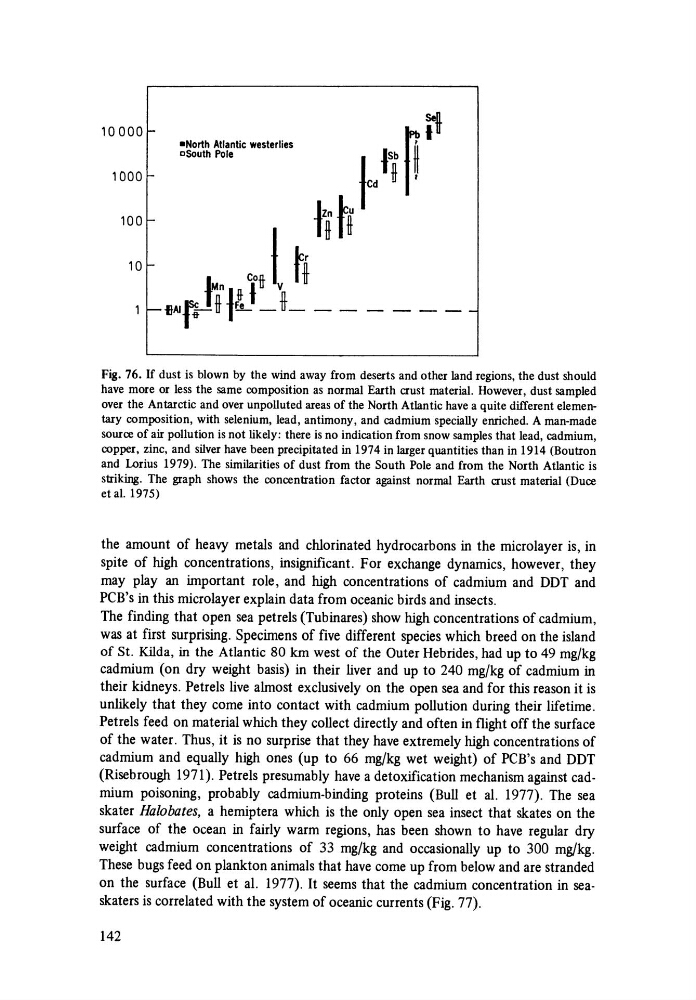
Fig. 76. If dust is blown by the wind away from deserts and other land regions, the dust should
have more or less the same composition as normal Earth crust material. However, dust sampled
over the Antarctic and over unpolluted areas of the North Atlantic have a quite different elementary composition, with selenium, lead, antimony, and cadmium specially enriched. A man-made
source of air pollution is not likely: there is no indication from snow samples that lead, cadmium,
copper, zinc, and silver have been precipitated in 1974 in larger quantities than in 1914 (Boutron
and Lorius 1979). The similarities of dust from the South Pole and from the North Atlantic is
striking. The graph shows the concentration factor against normal Earth crust material (Duce
eta1.1975)
the amount of heavy metals and chlorinated hydrocarbons in the microlayer is, in
spite of high concentrations, insignificant. For exchange dynamics, however, they
may play an important role, and high concentrations of cadmium and DDT and
PCB's in this microlayer explain data from oceanic birds and insects.
The finding that open sea petrels (Tubinares) show high concentrations of cadmium,
was at first surprising. Specimens of five different species which breed on the island
of St. Kilda, in the Atlantic 80 Ian west of the Outer Hebrides, had up to 49 mg/kg
cadmium (on dry weight basis) in their liver and up to 240 mg/kg of cadmium in
their kidneys. Petrels live almost exclusively on the open sea and for this reason it is
unlikely that they come into contact with cadmium pollution during their lifetime.
Petrels feed on material which they collect directly and often in flight off the surface
of the water. Thus, it is no surprise that they have extremely high concentrations of
cadmium and equally high ones (up to 66 mg/kg wet weight) of PCB's and DDT
(Risebrough 1971). Petrels presumably have a detoxification mechanism against cadmium poisoning, probably cadmium-binding proteins (Bull et al. 1977). The sea
skater Halobates, a hemiptera which is the only open sea insect that skates on the
surface of the ocean in fairly warm regions, has been shown to have regular dry
weight cadmium concentrations of 33 mg/kg and occasionally up to 300 mg/kg.
These bugs feed on plankton animals that have come up from below and are stranded
on the surface (Bull et al. 1977). It seems that the cadmium concentration in seaskaters is correlated with the system of oceanic currents (Fig. 77).
142
100 -
10 -
-North Atlantic westerlies
DSouth Pole
Fig. 76. If dust is blown by the wind away from deserts and other land regions, the dust should
have more or less the same composition as normal Earth crust material. However, dust sampled
over the Antarctic and over unpolluted areas of the North Atlantic have a quite different elementary composition, with selenium, lead, antimony, and cadmium specially enriched. A man-made
source of air pollution is not likely: there is no indication from snow samples that lead, cadmium,
copper, zinc, and silver have been precipitated in 1974 in larger quantities than in 1914 (Boutron
and Lorius 1979). The similarities of dust from the South Pole and from the North Atlantic is
striking. The graph shows the concentration factor against normal Earth crust material (Duce
eta1.1975)
the amount of heavy metals and chlorinated hydrocarbons in the microlayer is, in
spite of high concentrations, insignificant. For exchange dynamics, however, they
may play an important role, and high concentrations of cadmium and DDT and
PCB's in this microlayer explain data from oceanic birds and insects.
The finding that open sea petrels (Tubinares) show high concentrations of cadmium,
was at first surprising. Specimens of five different species which breed on the island
of St. Kilda, in the Atlantic 80 Ian west of the Outer Hebrides, had up to 49 mg/kg
cadmium (on dry weight basis) in their liver and up to 240 mg/kg of cadmium in
their kidneys. Petrels live almost exclusively on the open sea and for this reason it is
unlikely that they come into contact with cadmium pollution during their lifetime.
Petrels feed on material which they collect directly and often in flight off the surface
of the water. Thus, it is no surprise that they have extremely high concentrations of
cadmium and equally high ones (up to 66 mg/kg wet weight) of PCB's and DDT
(Risebrough 1971). Petrels presumably have a detoxification mechanism against cadmium poisoning, probably cadmium-binding proteins (Bull et al. 1977). The sea
skater Halobates, a hemiptera which is the only open sea insect that skates on the
surface of the ocean in fairly warm regions, has been shown to have regular dry
weight cadmium concentrations of 33 mg/kg and occasionally up to 300 mg/kg.
These bugs feed on plankton animals that have come up from below and are stranded
on the surface (Bull et al. 1977). It seems that the cadmium concentration in seaskaters is correlated with the system of oceanic currents (Fig. 77).
142