

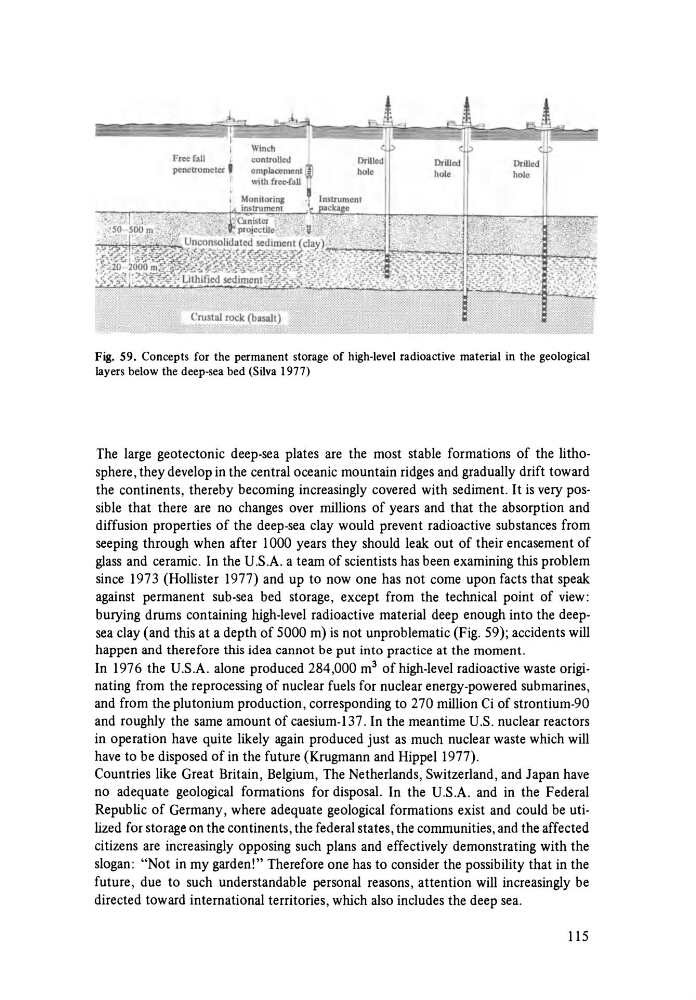
Fig. 59. Concepts for the permanent storage of high·level radioactive material in the geological
layers below the deep·sea bed (Silva 1977)
The large geotectonic deep-sea plates are the most stable formations of the lithosphere, they develop in the central oceanic mountain ridges and gradually drift toward
the continents, thereby becoming increasingly covered with sediment. It is very possible that there are no changes over millions of years and that the absorption and
diffusion properties of the deep-sea clay would prevent radioactive substances from
seeping through when after 1000 years they should leak out of their encasement of
glass and ceramic. In the U.S.A. a team of scientists has been examining this problem
since 1973 (Hollister 1977) and up to now one has not come upon facts that speak
against permanent sub-sea bed storage, except from the technical point of view:
burying drums containing high-level radioactive material deep enough into the deepsea clay (and this at a depth of 5000 m) is not unproblematic (Fig. 59); accidents will
happen and therefore this idea cannot be put into practice at the moment.
In 1976 the U.S.A. alone produced 284,000 m 3 of high-level radioactive waste originating from the reprocessing of nuclear fuels for nuclear energy-powered submarines,
and from the plutonium production, corresponding to 270 million Ci of strontium-90
and roughly the same amount of caesium-137. In the meantime U.S. nuclear reactors
in operation have quite likely again produced just as much nuclear waste which will
have to be disposed of in the future (Krugmann and Hippel 1977).
Countries like Great Britain, Belgium, The Netherlands, Switzerland, and Japan have
no adequate geological formations for disposal. In the U.S.A. and in the Federal
Republic of Germany, where adequate geological formations exist and could be utilized for storage on the continents, the federal states, the communities, and the affected
citizens are increasingly opposing such plans and effectively demonstrating with the
slogan: "Not in my garden!" Therefore one has to consider the possibility that in the
future, due to such understandable personal reasons, attention will increasingly be
directed toward international territories, which also includes the deep sea.
115
layers below the deep·sea bed (Silva 1977)
The large geotectonic deep-sea plates are the most stable formations of the lithosphere, they develop in the central oceanic mountain ridges and gradually drift toward
the continents, thereby becoming increasingly covered with sediment. It is very possible that there are no changes over millions of years and that the absorption and
diffusion properties of the deep-sea clay would prevent radioactive substances from
seeping through when after 1000 years they should leak out of their encasement of
glass and ceramic. In the U.S.A. a team of scientists has been examining this problem
since 1973 (Hollister 1977) and up to now one has not come upon facts that speak
against permanent sub-sea bed storage, except from the technical point of view:
burying drums containing high-level radioactive material deep enough into the deepsea clay (and this at a depth of 5000 m) is not unproblematic (Fig. 59); accidents will
happen and therefore this idea cannot be put into practice at the moment.
In 1976 the U.S.A. alone produced 284,000 m 3 of high-level radioactive waste originating from the reprocessing of nuclear fuels for nuclear energy-powered submarines,
and from the plutonium production, corresponding to 270 million Ci of strontium-90
and roughly the same amount of caesium-137. In the meantime U.S. nuclear reactors
in operation have quite likely again produced just as much nuclear waste which will
have to be disposed of in the future (Krugmann and Hippel 1977).
Countries like Great Britain, Belgium, The Netherlands, Switzerland, and Japan have
no adequate geological formations for disposal. In the U.S.A. and in the Federal
Republic of Germany, where adequate geological formations exist and could be utilized for storage on the continents, the federal states, the communities, and the affected
citizens are increasingly opposing such plans and effectively demonstrating with the
slogan: "Not in my garden!" Therefore one has to consider the possibility that in the
future, due to such understandable personal reasons, attention will increasingly be
directed toward international territories, which also includes the deep sea.
115