

Om
1000
2000
3000
4000
5000
~
~
("
I
I
I
I
I
I
I
I
I
,
,
,
,
,
,
,
,
,
(
I
- - : 1966
,
,
----- : 1968
o 0.05 0.1 0.15 0.2 0.25 0.3 pC; / I
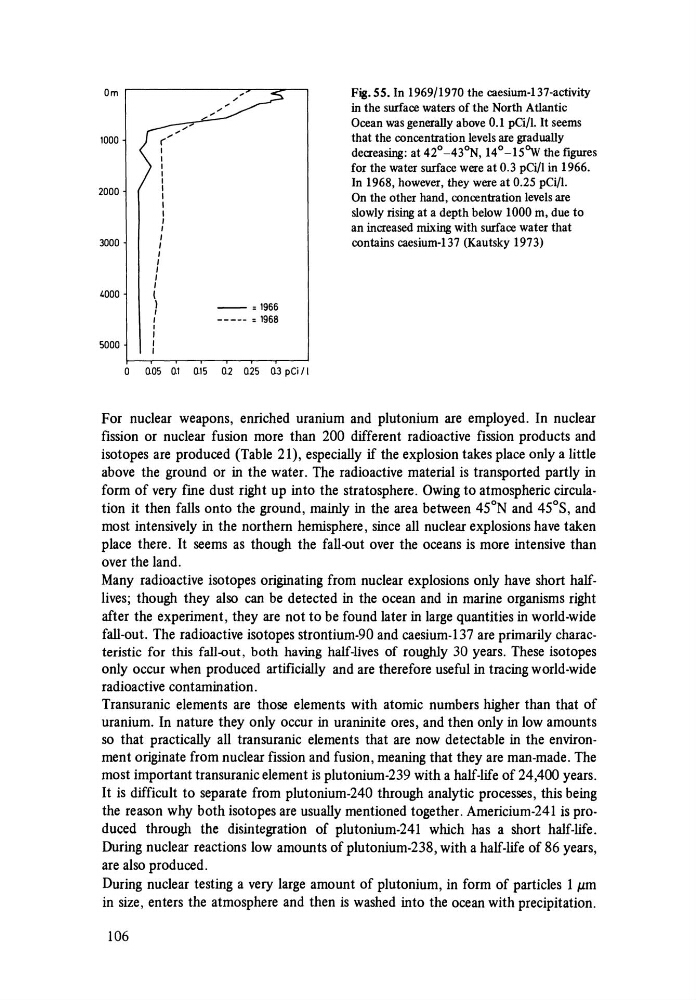
Fig. 55. In 1969/1970 the caesium-137-activity
in the surface waters of the North Atlantic
Ocean was generally above 0.1 pCi/1. It seems
that the concentration levels are gradually
decreasing: at 42° -43°N, 14° -15"w the figures
for the water surface were at 0.3 pCi/1 in 1966.
In 1968, however, they were at 0.25 pCi/1.
On the other hand, concentration levels are
slowly rising at a depth below 1000 m, due to
an increased mixing with surface water that
contains caesium-137 (Kautsky 1973)
For nuclear weapons, enriched uranium and plutonium are employed. In nuclear
fission or nuclear fusion more than 200 different radioactive fission products and
isotopes are produced (Table 21), especially if the explosion takes place only a little
above the ground or in the water. The radioactive material is transported partly in
form of very fine dust right up into the stratosphere. Owing to atmospheric circulation it then falls onto the ground, mainly in the area between 4SoN and 4SoS, and
most intensively in the northern hemisphere, since all nuclear explosions have taken
place there. It seems as though the fall-out over the oceans is more intensive than
over the land.
Many radioactive isotopes originating from nuclear explosions only have short halflives; though they also can be detected in the ocean and in marine organisms right
after the experiment, they are not to be found later in large quantities in world-wide
fall-out. The radioactive isotopes strontium-90 and caesium-137 are primarily characteristic for this fall-out, both having half-lives of roughly 30 years. These isotopes
only occur when produced artificially and are therefore useful in tracing world-wide
radioactive contamination.
Transuranic elements are those elements with atomic numbers higher than that of
uranium. In nature they only occur in uraninite ores, and then only in low amounts
so that practically all transuranic elements that are now detectable in the environment originate from nuclear fission and fusion, meaning that they are man-made. The
most important transuranic element is plutonium-239 with a half-life of 24,400 years.
It is difficult to separate from plutonium-240 through analytic processes, this being
the reason why both isotopes are usually mentioned together. Americium-241 is produced through the diSintegration of plutonium-241 which has a short half-life.
During nuclear reactions low amounts of plutonium-238, with a half-life of 86 years,
are also produced.
During nuclear testing a very large amount of plutonium, in form of particles 1 Iilll
in size, enters the atmosphere and then is washed into the ocean with precipitation.
106
1000
2000
3000
4000
5000
~
~
("
I
I
I
I
I
I
I
I
I
,
,
,
,
,
,
,
,
,
(
I
- - : 1966
,
,
----- : 1968
o 0.05 0.1 0.15 0.2 0.25 0.3 pC; / I
Fig. 55. In 1969/1970 the caesium-137-activity
in the surface waters of the North Atlantic
Ocean was generally above 0.1 pCi/1. It seems
that the concentration levels are gradually
decreasing: at 42° -43°N, 14° -15"w the figures
for the water surface were at 0.3 pCi/1 in 1966.
In 1968, however, they were at 0.25 pCi/1.
On the other hand, concentration levels are
slowly rising at a depth below 1000 m, due to
an increased mixing with surface water that
contains caesium-137 (Kautsky 1973)
For nuclear weapons, enriched uranium and plutonium are employed. In nuclear
fission or nuclear fusion more than 200 different radioactive fission products and
isotopes are produced (Table 21), especially if the explosion takes place only a little
above the ground or in the water. The radioactive material is transported partly in
form of very fine dust right up into the stratosphere. Owing to atmospheric circulation it then falls onto the ground, mainly in the area between 4SoN and 4SoS, and
most intensively in the northern hemisphere, since all nuclear explosions have taken
place there. It seems as though the fall-out over the oceans is more intensive than
over the land.
Many radioactive isotopes originating from nuclear explosions only have short halflives; though they also can be detected in the ocean and in marine organisms right
after the experiment, they are not to be found later in large quantities in world-wide
fall-out. The radioactive isotopes strontium-90 and caesium-137 are primarily characteristic for this fall-out, both having half-lives of roughly 30 years. These isotopes
only occur when produced artificially and are therefore useful in tracing world-wide
radioactive contamination.
Transuranic elements are those elements with atomic numbers higher than that of
uranium. In nature they only occur in uraninite ores, and then only in low amounts
so that practically all transuranic elements that are now detectable in the environment originate from nuclear fission and fusion, meaning that they are man-made. The
most important transuranic element is plutonium-239 with a half-life of 24,400 years.
It is difficult to separate from plutonium-240 through analytic processes, this being
the reason why both isotopes are usually mentioned together. Americium-241 is produced through the diSintegration of plutonium-241 which has a short half-life.
During nuclear reactions low amounts of plutonium-238, with a half-life of 86 years,
are also produced.
During nuclear testing a very large amount of plutonium, in form of particles 1 Iilll
in size, enters the atmosphere and then is washed into the ocean with precipitation.
106