

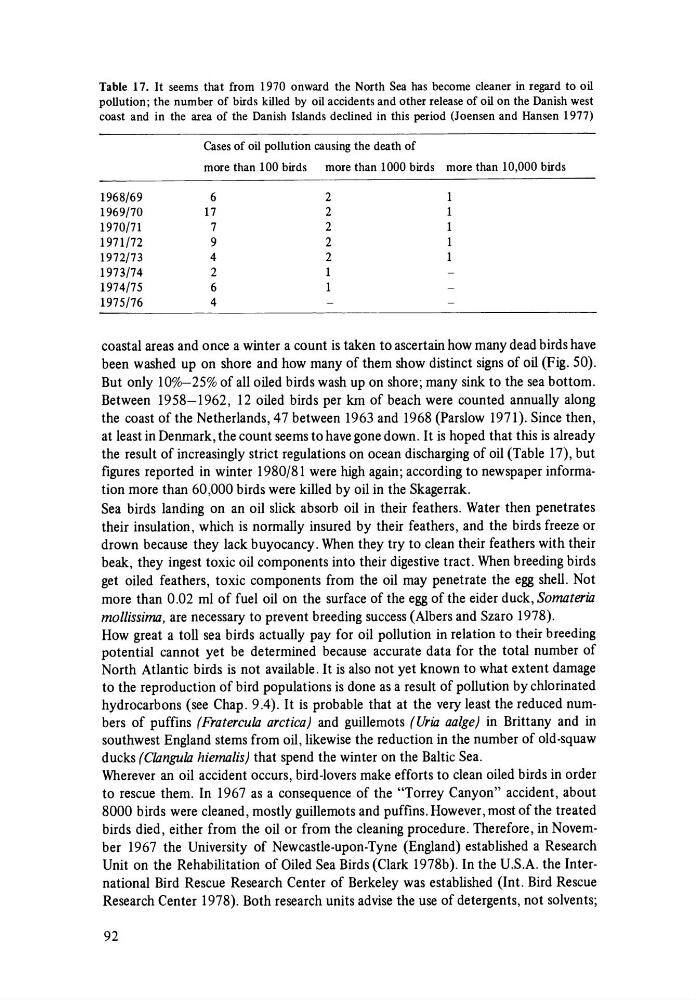
Table 17. It seems that from 1970 onward the North Sea has become cleaner in regard to oil
pollution; the number of birds killed by oil accidents and other release of oil on the Danish west
coast and in the area of the Danish Islands declined in this period (Joensen and Hansen 1977)
Cases of oil pollution causing the death of
more than 100 birds more than 1000 birds more than 10,000 birds
1968/69
6
2
1
1969/70
17
2
1
1970/71
7
2
1
1971/72
9
2
1
1972/73
4
2
1
1973/74
2
1
1974/75
6
1
1975/76
4
coastal areas and once a winter a count is taken to ascertain how many dead birds have
been washed up on shore and how many of them show distinct signs of oil (Fig. SO).
But only 100/0-25% of all oiled birds wash up on shore; many sink to the sea bottom.
Between 1958-1962, 12 oiled birds per km of beach were counted annually along
the coast of the Netherlands, 47 between 1963 and 1968 (Parslow 1971). Since then,
at least in Denmark, the count seems to have gone down. It is hoped that this is already
the result of increasingly strict regulations on ocean discharging of oil (Table 17), but
figures reported in winter 1980/81 were high again; according to newspaper information more than 60,000 birds were killed by oil in the Skagerrak.
Sea birds landing on an oil slick absorb oil in their feathers. Water then penetrates
their insulation, which is normally insured by their feathers, and the birds freeze or
drown because they lack buyocancy. When they try to clean their feathers with their
beak, they ingest toxic oil components into their digestive tract. When breeding birds
get oiled feathers, toxic components from the oil may penetrate the egg shell. Not
more than 0.02 ml of fuel oil on the surface of the egg of the eider duck, Somateria
mollissima, are necessary to prevent breeding success (Albers and Szaro 1978).
How great a toll sea birds actually pay for oil pollution in relation to their breeding
potential cannot yet be determined because accurate data for the total number of
North Atlantic birds is not available. It is also not yet known to what extent damage
to the reproduction of bird populations is done as a result of pollution by chlorinated
hydrocarbons (see Chap. 9.4). It is probable that at the very least the reduced numbers of puffins (Fraterculll arctica) and guillemots (Uria aalge) in Brittany and in
southwest England stems from oil, likewise the reduction in the number of old-squaw
ducks (Cillnguill hiemalis) that spend the winter on the Baltic Sea.
Wherever an oil accident occurs, bird-lovers make efforts to clean oiled birds in order
to rescue them. In 1967 as a consequence of the "Torrey Canyon" accident, about
8000 birds were cleaned, mostly guillemots and puffins. However, most of the treated
birds died, either from the oil or from the cleaning procedure. Therefore, in November 1967 the University of Newcastle-upon-Tyne (England) established a Research
Unit on the Rehabilitation of Oiled Sea Birds (Clark 1978b). In the U.S.A. the International Bird Rescue Research Center of Berkeley was established (Int. Bird Rescue
Research Center 1978). Both research units advise the use of detergents, not solvents;
92
pollution; the number of birds killed by oil accidents and other release of oil on the Danish west
coast and in the area of the Danish Islands declined in this period (Joensen and Hansen 1977)
Cases of oil pollution causing the death of
more than 100 birds more than 1000 birds more than 10,000 birds
1968/69
6
2
1
1969/70
17
2
1
1970/71
7
2
1
1971/72
9
2
1
1972/73
4
2
1
1973/74
2
1
1974/75
6
1
1975/76
4
coastal areas and once a winter a count is taken to ascertain how many dead birds have
been washed up on shore and how many of them show distinct signs of oil (Fig. SO).
But only 100/0-25% of all oiled birds wash up on shore; many sink to the sea bottom.
Between 1958-1962, 12 oiled birds per km of beach were counted annually along
the coast of the Netherlands, 47 between 1963 and 1968 (Parslow 1971). Since then,
at least in Denmark, the count seems to have gone down. It is hoped that this is already
the result of increasingly strict regulations on ocean discharging of oil (Table 17), but
figures reported in winter 1980/81 were high again; according to newspaper information more than 60,000 birds were killed by oil in the Skagerrak.
Sea birds landing on an oil slick absorb oil in their feathers. Water then penetrates
their insulation, which is normally insured by their feathers, and the birds freeze or
drown because they lack buyocancy. When they try to clean their feathers with their
beak, they ingest toxic oil components into their digestive tract. When breeding birds
get oiled feathers, toxic components from the oil may penetrate the egg shell. Not
more than 0.02 ml of fuel oil on the surface of the egg of the eider duck, Somateria
mollissima, are necessary to prevent breeding success (Albers and Szaro 1978).
How great a toll sea birds actually pay for oil pollution in relation to their breeding
potential cannot yet be determined because accurate data for the total number of
North Atlantic birds is not available. It is also not yet known to what extent damage
to the reproduction of bird populations is done as a result of pollution by chlorinated
hydrocarbons (see Chap. 9.4). It is probable that at the very least the reduced numbers of puffins (Fraterculll arctica) and guillemots (Uria aalge) in Brittany and in
southwest England stems from oil, likewise the reduction in the number of old-squaw
ducks (Cillnguill hiemalis) that spend the winter on the Baltic Sea.
Wherever an oil accident occurs, bird-lovers make efforts to clean oiled birds in order
to rescue them. In 1967 as a consequence of the "Torrey Canyon" accident, about
8000 birds were cleaned, mostly guillemots and puffins. However, most of the treated
birds died, either from the oil or from the cleaning procedure. Therefore, in November 1967 the University of Newcastle-upon-Tyne (England) established a Research
Unit on the Rehabilitation of Oiled Sea Birds (Clark 1978b). In the U.S.A. the International Bird Rescue Research Center of Berkeley was established (Int. Bird Rescue
Research Center 1978). Both research units advise the use of detergents, not solvents;
92