

Marine-Derived Fungal Metabolites 32.2 Drug Screening from Marine Organisms 763
Part F | 32.2
Plinabulin
PM1004
(Zalypsis
®
)
Elisidepsin
(Irvalec
®
)
Tasidotin
DMXBA
O
O
O
O
N
N
N
N
N
O
O
O
O
O
O
O
O O
O
O
O
O
O
O
O
N
N
O
N
N
N
O
O
O
O
H
N
H
N
H
N
H
N
N
H
H
N
H
N
N
H
N
H
MeO
HN
HN
HN
HN
HN
H 2 N
Me
Me
HO
OMe
CF 3 COOH
NH
OH
NH
Me
Me
Me
NH
OAc
OH
CF 3
NH
OMe
Me
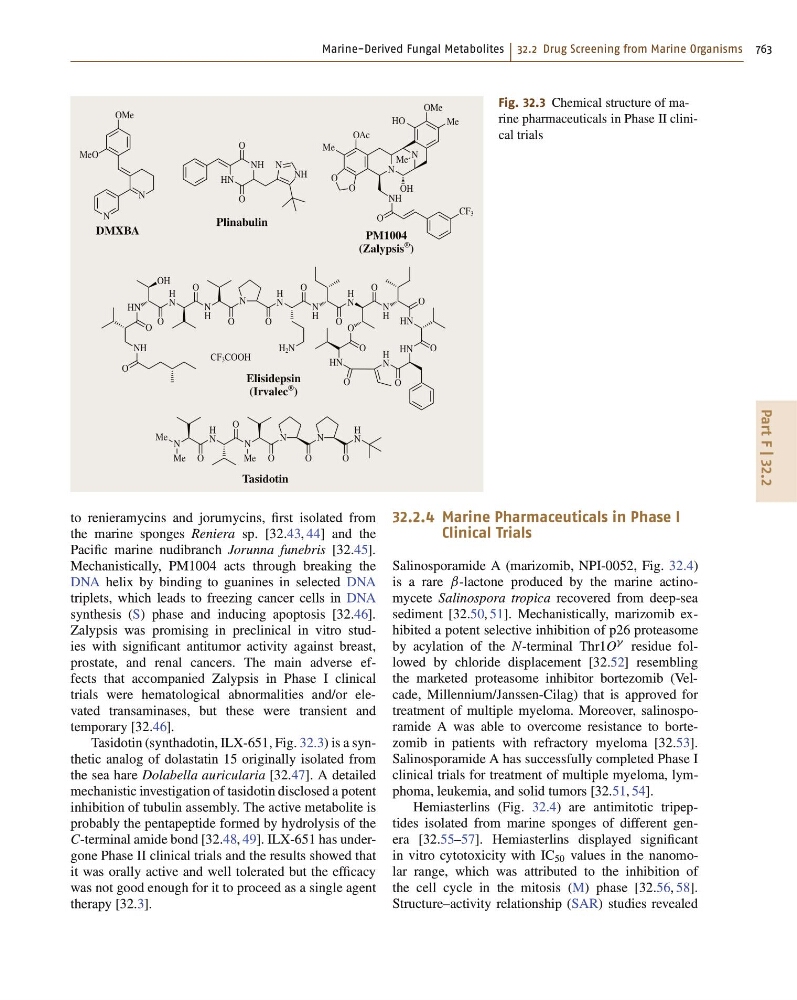
Fig. 32.3 Chemical structure of marine pharmaceuticals in Phase II clinical trials
to renieramycins and jorumycins, first isolated from
the marine sponges Reniera sp. [32.43, 44] and the
Pacific marine nudibranch Jorunna funebris [32.45].
Mechanistically, PM1004 acts through breaking the
DNA helix by binding to guanines in selected DNA
triplets, which leads to freezing cancer cells in DNA
synthesis (S) phase and inducing apoptosis [32.46].
Zalypsis was promising in preclinical in vitro studies with significant antitumor activity against breast,
prostate, and renal cancers. The main adverse effects that accompanied Zalypsis in Phase I clinical
trials were hematological abnormalities and/or elevated transaminases, but these were transient and
temporary [32.46].
Tasidotin (synthadotin, ILX-651, Fig. 32.3) is a synthetic analog of dolastatin 15 originally isolated from
the sea hare Dolabella auricularia [32.47]. A detailed
mechanistic investigation of tasidotin disclosed a potent
inhibition of tubulin assembly. The active metabolite is
probably the pentapeptide formed by hydrolysis of the
C-terminal amide bond [32.48, 49]. ILX-651 has undergone Phase II clinical trials and the results showed that
it was orally active and well tolerated but the efficacy
was not good enough for it to proceed as a single agent
therapy [32.3].
32.2.4 Marine Pharmaceuticals in Phase I
Clinical Trials
Salinosporamide A (marizomib, NPI-0052, Fig. 32.4)
is a rare ˇ-lactone produced by the marine actinomycete Salinospora tropica recovered from deep-sea
sediment [32.50, 51]. Mechanistically, marizomib exhibited a potent selective inhibition of p26 proteasome
by acylation of the N-terminal Thr1O
residue followed by chloride displacement [32.52] resembling
the marketed proteasome inhibitor bortezomib (Velcade, Millennium/Janssen-Cilag) that is approved for
treatment of multiple myeloma. Moreover, salinosporamide A was able to overcome resistance to bortezomib in patients with refractory myeloma [32.53].
Salinosporamide A has successfully completed Phase I
clinical trials for treatment of multiple myeloma, lymphoma, leukemia, and solid tumors [32.51, 54].
Hemiasterlins (Fig. 32.4) are antimitotic tripeptides isolated from marine sponges of different genera [32.55–57]. Hemiasterlins displayed significant
in vitro cytotoxicity with IC 50 values in the nanomolar range, which was attributed to the inhibition of
the cell cycle in the mitosis (M) phase [32.56, 58].
Structure–activity relationship (SAR) studies revealed