

Part F | 32.2
764 Part F Marine Derived Metabolites
HTI-286
R = H
HTI-286 analog R = OMe
Hemiasterlin
Salinosporamide A
Bryostatin-1
N
N
O
O
R
O
O
O
O
O
O
O
O
O
N
H
H
N
MeOOC
C 7 H 11 OC
Cl
HO
OH
OAc
Me
OH
OH
OH
OH
Me
COOMe
NHMe
N
O
O
O
N
H
OH
Me
NHMe
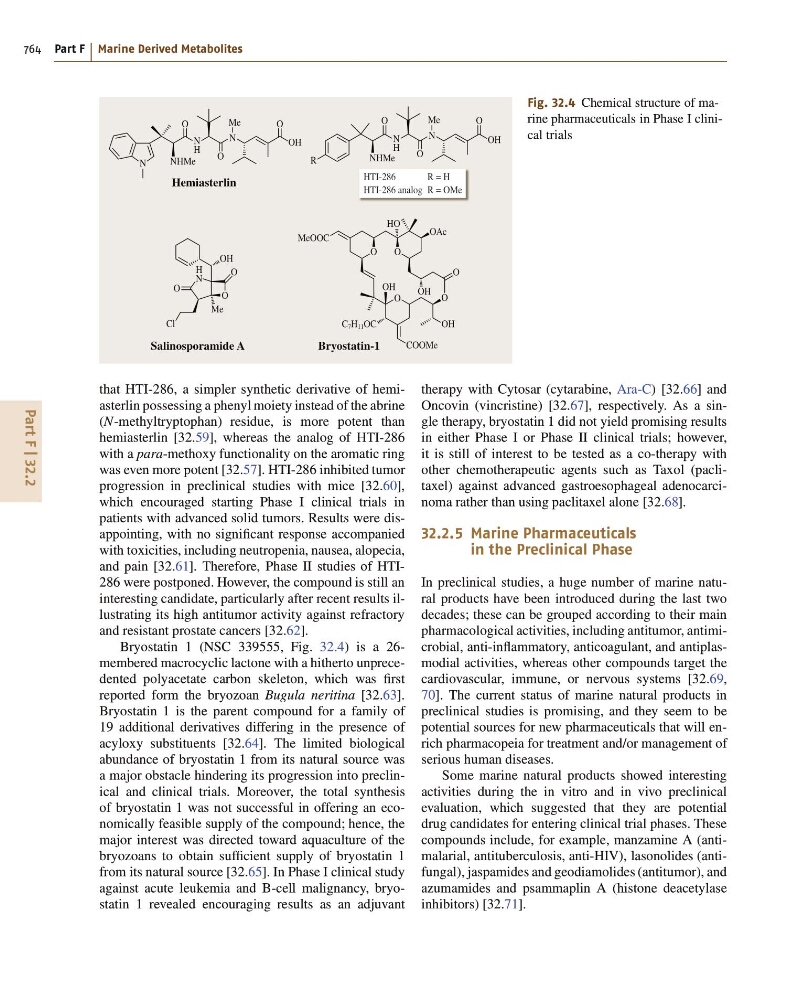
Fig. 32.4 Chemical structure of marine pharmaceuticals in Phase I clinical trials
that HTI-286, a simpler synthetic derivative of hemiasterlin possessing a phenyl moiety instead of the abrine
(N-methyltryptophan) residue, is more potent than
hemiasterlin [32.59], whereas the analog of HTI-286
with a para-methoxy functionality on the aromatic ring
was even more potent [32.57]. HTI-286 inhibited tumor
progression in preclinical studies with mice [32.60],
which encouraged starting Phase I clinical trials in
patients with advanced solid tumors. Results were disappointing, with no significant response accompanied
with toxicities, including neutropenia, nausea, alopecia,
and pain [32.61]. Therefore, Phase II studies of HTI286 were postponed. However, the compound is still an
interesting candidate, particularly after recent results illustrating its high antitumor activity against refractory
and resistant prostate cancers [32.62].
Bryostatin 1 (NSC 339555, Fig. 32.4) is a 26membered macrocyclic lactone with a hitherto unprecedented polyacetate carbon skeleton, which was first
reported form the bryozoan Bugula neritina [32.63].
Bryostatin 1 is the parent compound for a family of
19 additional derivatives differing in the presence of
acyloxy substituents [32.64]. The limited biological
abundance of bryostatin 1 from its natural source was
a major obstacle hindering its progression into preclinical and clinical trials. Moreover, the total synthesis
of bryostatin 1 was not successful in offering an economically feasible supply of the compound; hence, the
major interest was directed toward aquaculture of the
bryozoans to obtain sufficient supply of bryostatin 1
from its natural source [32.65]. In Phase I clinical study
against acute leukemia and B-cell malignancy, bryostatin 1 revealed encouraging results as an adjuvant
therapy with Cytosar (cytarabine, Ara-C) [32.66] and
Oncovin (vincristine) [32.67], respectively. As a single therapy, bryostatin 1 did not yield promising results
in either Phase I or Phase II clinical trials; however,
it is still of interest to be tested as a co-therapy with
other chemotherapeutic agents such as Taxol (paclitaxel) against advanced gastroesophageal adenocarcinoma rather than using paclitaxel alone [32.68].
32.2.5 Marine Pharmaceuticals
in the Preclinical Phase
In preclinical studies, a huge number of marine natural products have been introduced during the last two
decades; these can be grouped according to their main
pharmacological activities, including antitumor, antimicrobial, anti-inflammatory, anticoagulant, and antiplasmodial activities, whereas other compounds target the
cardiovascular, immune, or nervous systems [32.69,
70]. The current status of marine natural products in
preclinical studies is promising, and they seem to be
potential sources for new pharmaceuticals that will enrich pharmacopeia for treatment and/or management of
serious human diseases.
Some marine natural products showed interesting
activities during the in vitro and in vivo preclinical
evaluation, which suggested that they are potential
drug candidates for entering clinical trial phases. These
compounds include, for example, manzamine A (antimalarial, antituberculosis, anti-HIV), lasonolides (antifungal), jaspamides and geodiamolides (antitumor), and
azumamides and psammaplin A (histone deacetylase
inhibitors) [32.71].