

Part F | 32.2
762 Part F Marine Derived Metabolites
Plitidepsin
(Aplidin
®
)
Brentuximab vedotin
(Adcertis
®
)
Soblidotin
HN
HO
OMe
OCH 3
OCH 3
O
O
O
O
H
H
N
N
O
O
O
O
O
O
O
N
O
O
O
O O
O
N
N
N
N
O
O
O
Cit
Val
mAb
O
N
O
O
N
H
N
H
H
N
H
N
Me
Me
Me
N
N
Me
MeO
OMe
NH
NH
Me
OH
NH
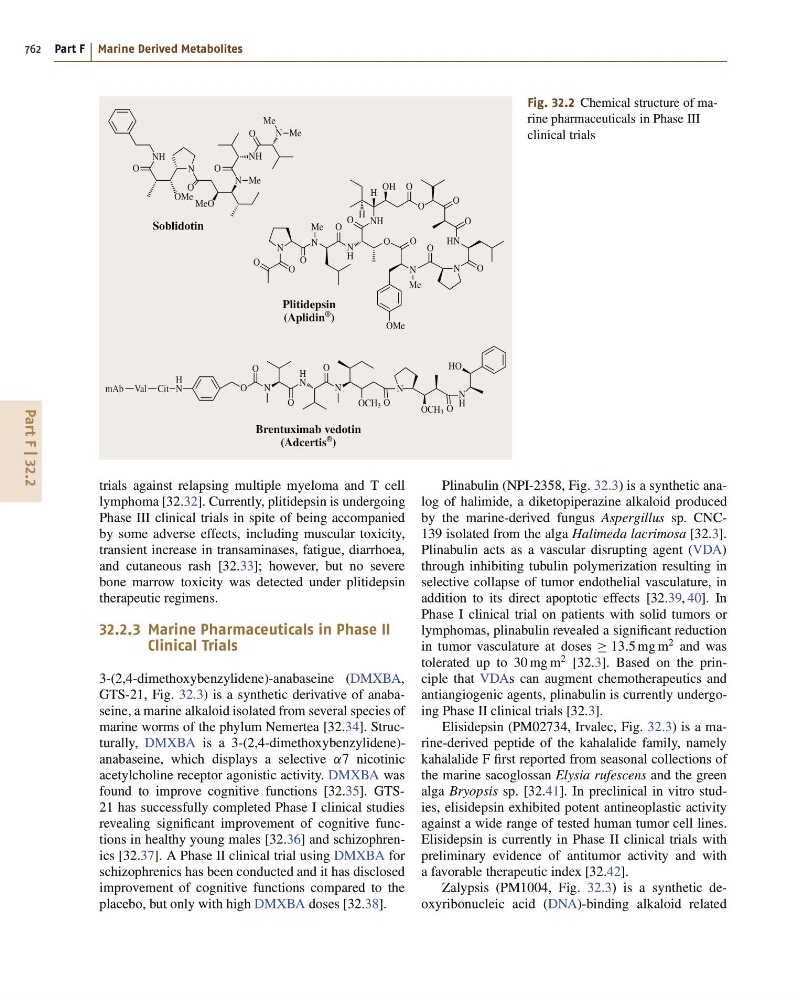
Fig. 32.2 Chemical structure of marine pharmaceuticals in Phase III
clinical trials
trials against relapsing multiple myeloma and T cell
lymphoma [32.32]. Currently, plitidepsin is undergoing
Phase III clinical trials in spite of being accompanied
by some adverse effects, including muscular toxicity,
transient increase in transaminases, fatigue, diarrhoea,
and cutaneous rash [32.33]; however, but no severe
bone marrow toxicity was detected under plitidepsin
therapeutic regimens.
32.2.3 Marine Pharmaceuticals in Phase II
Clinical Trials
3-(2,4-dimethoxybenzylidene)-anabaseine (DMXBA,
GTS-21, Fig. 32.3) is a synthetic derivative of anabaseine, a marine alkaloid isolated from several species of
marine worms of the phylum Nemertea [32.34]. Structurally, DMXBA is a 3-(2,4-dimethoxybenzylidene)anabaseine, which displays a selective ˛7 nicotinic
acetylcholine receptor agonistic activity. DMXBA was
found to improve cognitive functions [32.35]. GTS21 has successfully completed Phase I clinical studies
revealing significant improvement of cognitive functions in healthy young males [32.36] and schizophrenics [32.37]. A Phase II clinical trial using DMXBA for
schizophrenics has been conducted and it has disclosed
improvement of cognitive functions compared to the
placebo, but only with high DMXBA doses [32.38].
Plinabulin (NPI-2358, Fig. 32.3) is a synthetic analog of halimide, a diketopiperazine alkaloid produced
by the marine-derived fungus Aspergillus sp. CNC139 isolated from the alga Halimeda lacrimosa [32.3].
Plinabulin acts as a vascular disrupting agent (VDA)
through inhibiting tubulin polymerization resulting in
selective collapse of tumor endothelial vasculature, in
addition to its direct apoptotic effects [32.39, 40]. In
Phase I clinical trial on patients with solid tumors or
lymphomas, plinabulin revealed a significant reduction
in tumor vasculature at doses 13:5 mg m
2 and was
tolerated up to 30 mg m
2 [32.3]. Based on the principle that VDAs can augment chemotherapeutics and
antiangiogenic agents, plinabulin is currently undergoing Phase II clinical trials [32.3].
Elisidepsin (PM02734, Irvalec, Fig. 32.3) is a marine-derived peptide of the kahalalide family, namely
kahalalide F first reported from seasonal collections of
the marine sacoglossan Elysia rufescens and the green
alga Bryopsis sp. [32.41]. In preclinical in vitro studies, elisidepsin exhibited potent antineoplastic activity
against a wide range of tested human tumor cell lines.
Elisidepsin is currently in Phase II clinical trials with
preliminary evidence of antitumor activity and with
a favorable therapeutic index [32.42].
Zalypsis (PM1004, Fig. 32.3) is a synthetic deoxyribonucleic acid (DNA)-binding alkaloid related