

Antimicrobial Peptides from Marine Organisms 31.4 Future Directions in Marine AMP Applications 753
Part F | 31.4
a)
b)
c)
N
N
N
C
C
C
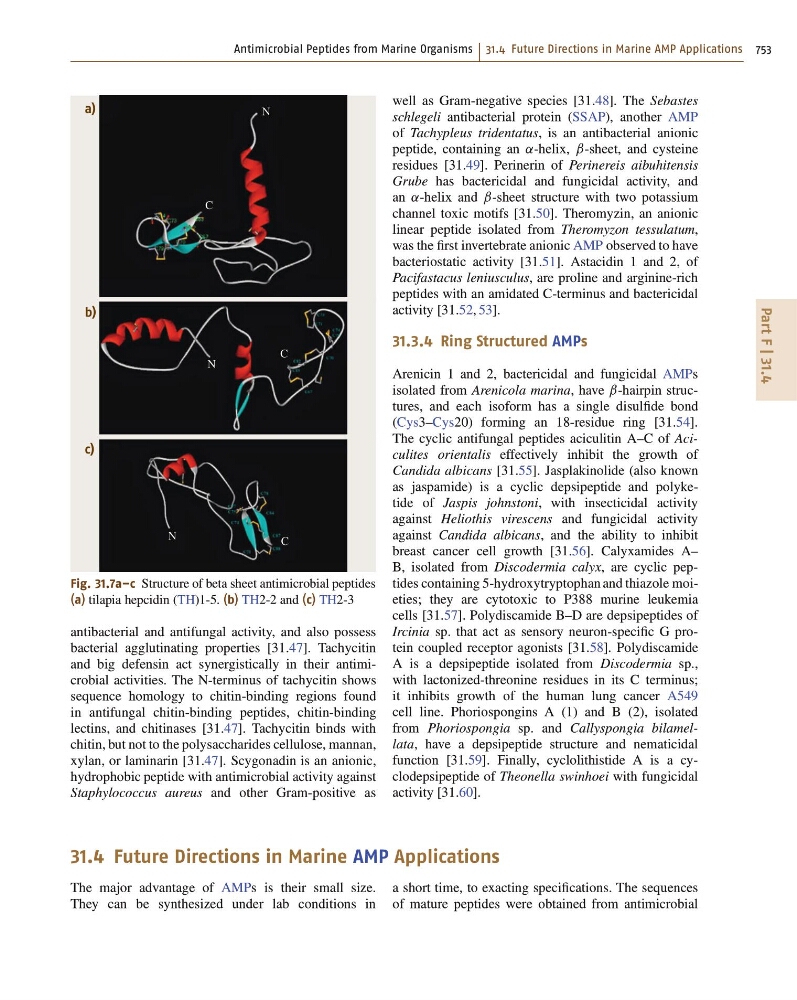
Fig. 31.7a–c Structure of beta sheet antimicrobial peptides
(a) tilapia hepcidin (TH)1-5. (b) TH2-2 and (c) TH2-3
antibacterial and antifungal activity, and also possess
bacterial agglutinating properties [31.47]. Tachycitin
and big defensin act synergistically in their antimicrobial activities. The N-terminus of tachycitin shows
sequence homology to chitin-binding regions found
in antifungal chitin-binding peptides, chitin-binding
lectins, and chitinases [31.47]. Tachycitin binds with
chitin, but not to the polysaccharides cellulose, mannan,
xylan, or laminarin [31.47]. Scygonadin is an anionic,
hydrophobic peptide with antimicrobial activity against
Staphylococcus aureus and other Gram-positive as
well as Gram-negative species [31.48]. The Sebastes
schlegeli antibacterial protein (SSAP), another AMP
of Tachypleus tridentatus, is an antibacterial anionic
peptide, containing an ˛-helix, ˇ-sheet, and cysteine
residues [31.49]. Perinerin of Perinereis aibuhitensis
Grube has bactericidal and fungicidal activity, and
an ˛-helix and ˇ-sheet structure with two potassium
channel toxic motifs [31.50]. Theromyzin, an anionic
linear peptide isolated from Theromyzon tessulatum,
was the first invertebrate anionic AMP observed to have
bacteriostatic activity [31.51]. Astacidin 1 and 2, of
Pacifastacus leniusculus, are proline and arginine-rich
peptides with an amidated C-terminus and bactericidal
activity [31.52, 53].
31.3.4 Ring Structured AMPs
Arenicin 1 and 2, bactericidal and fungicidal AMPs
isolated from Arenicola marina, have ˇ-hairpin structures, and each isoform has a single disulfide bond
(Cys3–Cys20) forming an 18-residue ring [31.54].
The cyclic antifungal peptides aciculitin A–C of Aciculites orientalis effectively inhibit the growth of
Candida albicans [31.55]. Jasplakinolide (also known
as jaspamide) is a cyclic depsipeptide and polyketide of Jaspis johnstoni, with insecticidal activity
against Heliothis virescens and fungicidal activity
against Candida albicans, and the ability to inhibit
breast cancer cell growth [31.56]. Calyxamides A–
B, isolated from Discodermia calyx, are cyclic peptides containing 5-hydroxytryptophan and thiazole moieties; they are cytotoxic to P388 murine leukemia
cells [31.57]. Polydiscamide B–D are depsipeptides of
Ircinia sp. that act as sensory neuron-specific G protein coupled receptor agonists [31.58]. Polydiscamide
A is a depsipeptide isolated from Discodermia sp.,
with lactonized-threonine residues in its C terminus;
it inhibits growth of the human lung cancer A549
cell line. Phoriospongins A (1) and B (2), isolated
from Phoriospongia sp. and Callyspongia bilamellata, have a depsipeptide structure and nematicidal
function [31.59]. Finally, cyclolithistide A is a cyclodepsipeptide of Theonella swinhoei with fungicidal
activity [31.60].
31.4 Future Directions in Marine AMP Applications
The major advantage of AMPs is their small size.
They can be synthesized under lab conditions in
a short time, to exacting specifications. The sequences
of mature peptides were obtained from antimicrobial