

Part E | 28.1
688 Part E Marine Microbiology and Biotechnology
3-hydroxyglutaronitrile
(R)-4-cyano-3hydroxybutyric acid
98.6 –99.4% ee
c ≈ 99%
Lipitor®
OH
NC
CN
OH
NC
COOH
OH
OH OH
OH
N
H
N
F
O
O
NC
COOC 2 H 5
Nitrilase BD9570
NaH 2 PO 4 3M
pH 7,5, 27 °C, 16 h
EtOH/H
+
80 °C
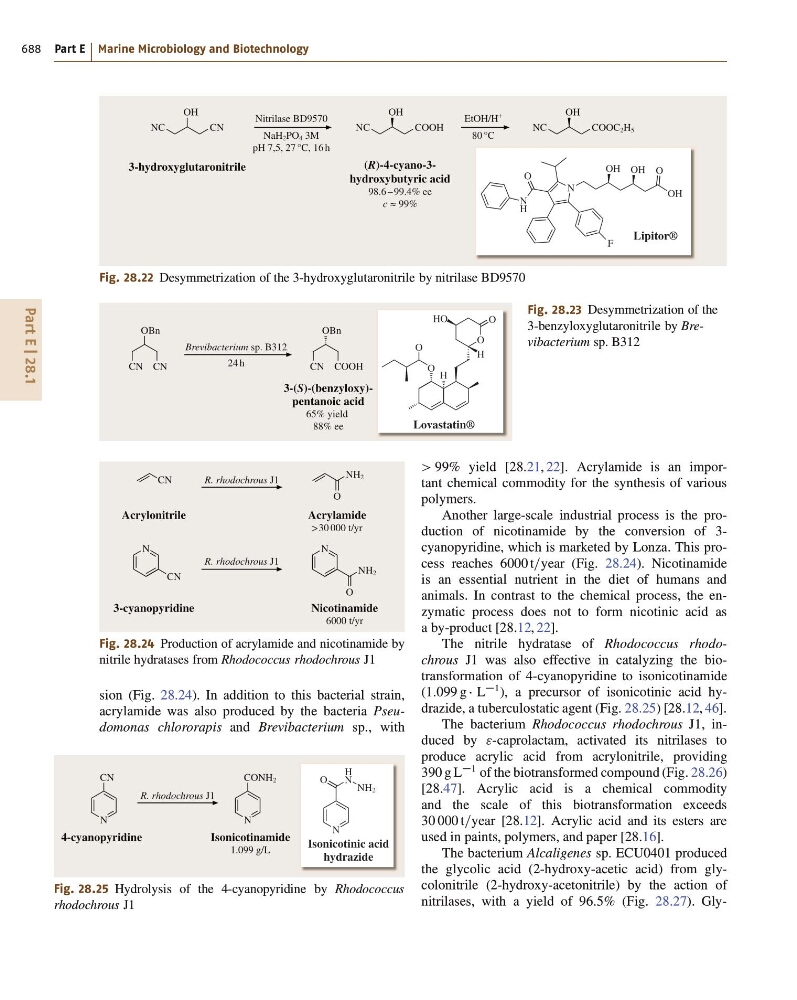
Fig. 28.22 Desymmetrization of the 3-hydroxyglutaronitrile by nitrilase BD9570
OBn
Brevibacterium sp. B312
24 h
CN CN
3-(S)-(benzyloxy)pentanoic acid
65% yield
88% ee
Lovastatin®
OBn
CN COOH
HO
O
O
O
O
H
H
Fig. 28.23 Desymmetrization of the
3-benzyloxyglutaronitrile by Brevibacterium sp. B312
NH 2
O
CN
NH 2
O
CN
Acrylonitrile
Acrylamide
>30 000 t/yr
Nicotinamide
6000 t/yr
3-cyanopyridine
N
N
R. rhodochrous J1
R. rhodochrous J1
Fig. 28.24 Production of acrylamide and nicotinamide by
nitrile hydratases from Rhodococcus rhodochrous J1
sion (Fig. 28.24). In addition to this bacterial strain,
acrylamide was also produced by the bacteria Pseudomonas chlororapis and Brevibacterium sp., with
4-cyanopyridine
Isonicotinamide
1.099 g/L
Isonicotinic acid
hydrazide
R. rhodochrous J1
CN
N
CONH 2
N
N
NH 2
H
N
O
Fig. 28.25 Hydrolysis of the 4-cyanopyridine by Rhodococcus
rhodochrous J1
> 99% yield [28.21, 22]. Acrylamide is an important chemical commodity for the synthesis of various
polymers.
Another large-scale industrial process is the production of nicotinamide by the conversion of 3cyanopyridine, which is marketed by Lonza. This process reaches 6000 t=year (Fig. 28.24). Nicotinamide
is an essential nutrient in the diet of humans and
animals. In contrast to the chemical process, the enzymatic process does not to form nicotinic acid as
a by-product [28.12, 22].
The nitrile hydratase of Rhodococcus rhodochrous J1 was also effective in catalyzing the biotransformation of 4-cyanopyridine to isonicotinamide
(1:099 g L
1 ), a precursor of isonicotinic acid hydrazide, a tuberculostatic agent (Fig. 28.25) [28.12, 46].
The bacterium Rhodococcus rhodochrous J1, induced by "-caprolactam, activated its nitrilases to
produce acrylic acid from acrylonitrile, providing
390 g L
1 of the biotransformed compound (Fig. 28.26)
[28.47]. Acrylic acid is a chemical commodity
and the scale of this biotransformation exceeds
30 000 t=year [28.12]. Acrylic acid and its esters are
used in paints, polymers, and paper [28.16].
The bacterium Alcaligenes sp. ECU0401 produced
the glycolic acid (2-hydroxy-acetic acid) from glycolonitrile (2-hydroxy-acetonitrile) by the action of
nitrilases, with a yield of 96:5% (Fig. 28.27). Gly-