

Biotransformation of Nitriles by Marine Fungi 28.1 Overview 687
Part E | 28.1
41% yield
99.4% ee
22% yield
99% ee
Klebsiella terrigena
DSM 9174
(S)-amidase
Burkholderia sp.
DSM 9925
(R)-amidase
(±)-piperazine-2-amide
(-)-(S)-piperazine-2-carboxylic acid
Crixivan®
(+)-(R)-piperazine-2-carboxylic acid
H
H
CONH 2
N
N
H
+ NH 3
+ NH 3
H
COOH
N
N
H
N
N
N
N
H
N
C(CH 3 ) 3
OH
OH
H
O
O
H
COOH
N
N
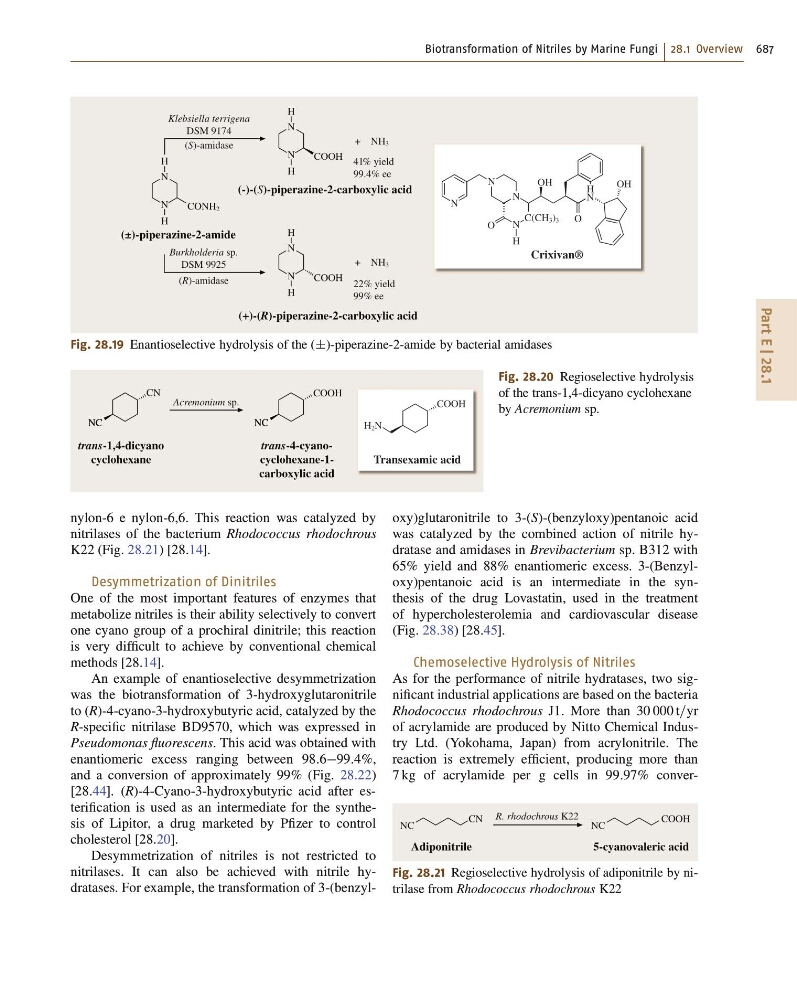
Fig. 28.19 Enantioselective hydrolysis of the (˙)-piperazine-2-amide by bacterial amidases
trans-1,4-dicyano
cyclohexane
cyclohexane-1carboxylic acid
Transexamic acid
Acremonium sp.
CN
NC NC
COOH
NC NC
COOH
H 2 N
Fig. 28.20 Regioselective hydrolysis
of the trans-1,4-dicyano cyclohexane
by Acremonium sp.
nylon-6 e nylon-6,6. This reaction was catalyzed by
nitrilases of the bacterium Rhodococcus rhodochrous
K22 (Fig. 28.21) [28.14].
Desymmetrization of Dinitriles
One of the most important features of enzymes that
metabolize nitriles is their ability selectively to convert
one cyano group of a prochiral dinitrile; this reaction
is very difficult to achieve by conventional chemical
methods [28.14].
An example of enantioselective desymmetrization
was the biotransformation of 3-hydroxyglutaronitrile
to (R)-4-cyano-3-hydroxybutyric acid, catalyzed by the
R-specific nitrilase BD9570, which was expressed in
Pseudomonas fluorescens. This acid was obtained with
enantiomeric excess ranging between 98:699:4%,
and a conversion of approximately 99% (Fig. 28.22)
[28.44]. (R)-4-Cyano-3-hydroxybutyric acid after esterification is used as an intermediate for the synthesis of Lipitor, a drug marketed by Pfizer to control
cholesterol [28.20].
Desymmetrization of nitriles is not restricted to
nitrilases. It can also be achieved with nitrile hydratases. For example, the transformation of 3-(benzyloxy)glutaronitrile to 3-(S)-(benzyloxy)pentanoic acid
was catalyzed by the combined action of nitrile hydratase and amidases in Brevibacterium sp. B312 with
65% yield and 88% enantiomeric excess. 3-(Benzyloxy)pentanoic acid is an intermediate in the synthesis of the drug Lovastatin, used in the treatment
of hypercholesterolemia and cardiovascular disease
(Fig. 28.38) [28.45].
Chemoselective Hydrolysis of Nitriles
As for the performance of nitrile hydratases, two significant industrial applications are based on the bacteria
Rhodococcus rhodochrous J1. More than 30 000 t=yr
of acrylamide are produced by Nitto Chemical Industry Ltd. (Yokohama, Japan) from acrylonitrile. The
reaction is extremely efficient, producing more than
7 kg of acrylamide per g cells in 99:97% converAdiponitrile
NC
CN R. rhodochrous K22
5-cyanovaleric acid
NC
COOH
Fig. 28.21 Regioselective hydrolysis of adiponitrile by nitrilase from Rhodococcus rhodochrous K22